


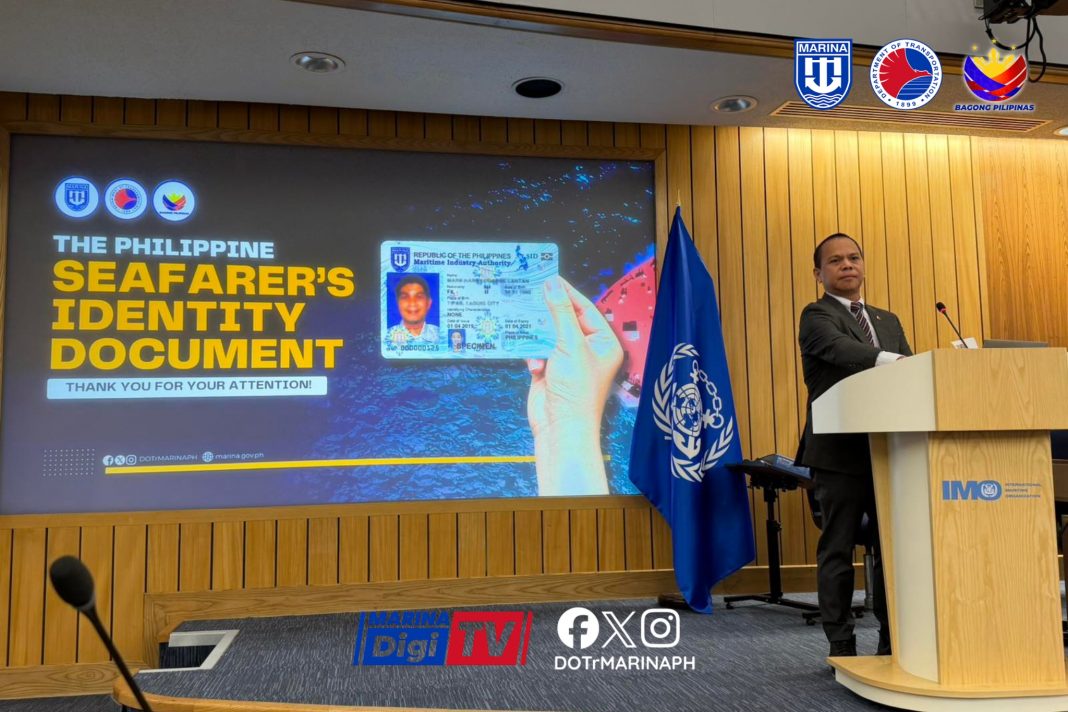
Reaffirming its status as a global maritime powerhouse, the Philippines is playing a pivotal role at the 12th Session of the Sub-Committee on Human Element, Training and Watchkeeping (HTW 12), held at the International Maritime Organization (IMO) headquarters from 23 to 27 February 2026.
The Philippine delegation—a strategic assembly of officials from the Maritime Industry Authority (MARINA), the Department of Migrant Workers (DMW), and key industry stakeholders—is engaging in high-level negotiations to shape the future of international maritime labor.
At the heart of HTW 12 is the comprehensive review of the STCW Convention and Code. As the maritime sector pivots toward decarbonization and smart shipping, the Philippines is advocating for training standards that reflect:
-
Emerging Technologies: Integration of automation and digitalization in bridge and engine room operations.
-
Alternative Fuels: Upskilling seafarers to safely handle green energy sources.
-
The Human Element: A renewed focus on mental health awareness, the eradication of bullying and harassment, and the promotion of inclusive shipboard cultures.
On the second day of the session, the Philippines took center stage with a presentation on the Philippine Seafarer’s Identity Document (SID). Led by Mr. Jose Louie B. Banua, Director of MARINA’s Manpower Development Service, the presentation detailed the country’s latest advancements in biometric security and system integrity.
By enhancing the global recognition of the SID, the Philippines aims to streamline the mobility of its workforce, ensuring that Filipino seafarers can transit international borders with greater security and ease.
As the world’s primary source of qualified maritime professionals, the Philippines views its participation in HTW 12 as a vital mission.
“The maritime industry is undergoing a period of rapid evolution,” the delegation noted. “By actively leading these discussions, we ensure that the STCW review aligns with our national efforts to keep Filipino seafarers globally competitive, future-ready, and protected under the highest international standards.”

