


The Economy and Development (ED) Council, chaired by President Ferdinand R. Marcos Jr., has approved the transition to a three-term school calendar beginning in the 2026-2027 academic year.
This landmark decision, reached during the Council’s 8th meeting on March 19, 2026, serves as a strategic intervention to stabilize the country’s educational outcomes against frequent climate-related disruptions.
The shift from a four-grading-period system to a three-term model is designed to maximize instructional time. Endorsed by the Social Development Committee-Cabinet Level (SDC-CL) and aligned with recommendations from the Second Congressional Commission on Education (EDCOM 2), the policy addresses the recurring issue of class cancellations due to severe weather and national observances.
Under the new structure, students will benefit from longer, uninterrupted instructional blocks, while teachers will be granted dedicated periods for professional development and targeted “catch-up” initiatives for learners.
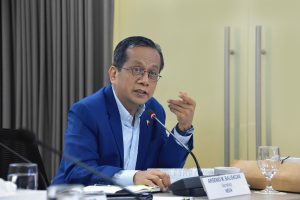
“Our commitment to developing a globally competitive workforce begins with evidence-based solutions to bridge educational gaps,” stated DEPDev Secretary and ED Council Vice-Chair Arsenio M. Balisacan. “We commend the Department of Education for pursuing initiatives that prioritize long-term learning recovery.”
In addition to educational reforms, the Council addressed critical infrastructure bottlenecks to ensure the timely delivery of public services:
-
Unified Grand Central Station (UGCS): The Council approved the termination of the existing Investment Coordination Committee (ICC) approval for the UGCS. This move allows the government to move past stalled design-and-build contracts and transition to alternative delivery arrangements, including the engagement of step-in contractors to complete the station. The UGCS remains a priority for linking LRT-1, MRT-3, and MRT-7.
-
Marawi Rehabilitation (RDPGM2): Approval was granted to increase the budget and extend the timeline for the Reconstruction and Development Plan for a Greater Marawi Stage 2. The adjustments cover updated costs for civil works and right-of-way acquisitions across 26.59 kilometers of vital transport infrastructure.
“The government reaffirms its commitment to rebuilding areas affected by conflict and calamities through resilient infrastructure,” Balisacan added.
The Council also reviewed the progress of the country’s Infrastructure Flagship Projects (IFPs), which currently comprise 201 priority projects valued at PHP 9.970 trillion. Three new projects were officially added to the list to bolster rural connectivity and health:
-
Liloan Bridge Construction Project
-
Farm-to-Market Bridges Development Program
-
Accelerated Water and Sanitation Project in Selected Areas
These actions underscore the Marcos administration’s multi-sectoral approach to driving inclusive and sustained economic growth through 2026 and beyond.

