


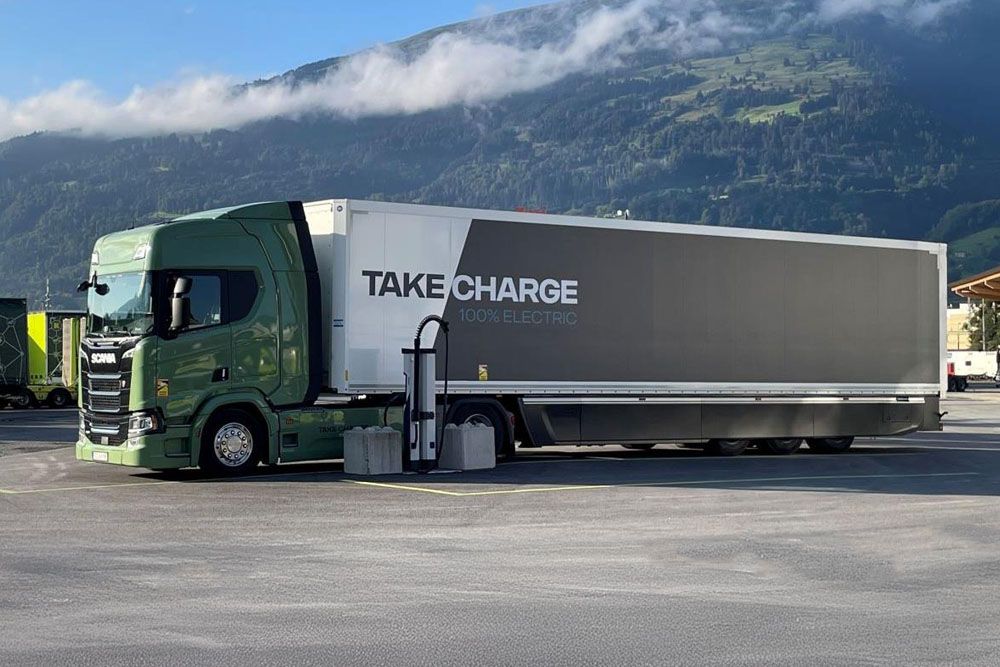
Swedish truck maker Scania AB is entering 2026 with a decisive expansion of its electric vehicle (EV) portfolio, signaling a shift from pilot deployments to full-scale logistics operations.
The company’s latest developments center on faster charging, longer range, and transitional technologies aimed at overcoming infrastructure gaps—three of the biggest barriers to heavy-duty electrification.
At the core of Scania’s 2026 strategy is the introduction of trucks equipped with the Megawatt Charging System (MCS), a next-generation standard designed specifically for heavy transport. These vehicles are expected to become commercially available in early 2026, enabling charging speeds of up to 750 kW. At that level, trucks can recharge from 20 to 80 percent in under 30 minutes, significantly reducing downtime and bringing electric trucks closer to diesel refueling cycles.
The move positions Scania among the first manufacturers to operationalize megawatt-scale charging, a critical step in making long-haul electric trucking viable.
Alongside charging improvements, Scania is expanding its battery-electric lineup with new 400 kWh and 560 kWh battery options. Depending on configuration, the trucks can deliver ranges of up to approximately 560 kilometers for lighter duty applications and over 350 kilometers for heavy long-haul operations.
Rather than simply maximizing battery size, the company is focusing on optimizing the balance between range and payload—an approach that reflects the economic realities of freight operations where carrying capacity directly affects revenue.
To bridge the gap in regions where charging infrastructure remains limited, Scania is also testing an Extended Range Electric Vehicle (EREV) concept in partnership with DHL. The system pairs a battery-electric drivetrain with a fuel-powered generator, allowing the truck to operate primarily on electricity while maintaining operational flexibility over longer distances. Early trials have shown carbon emissions reductions of up to 90 percent.
The development highlights a pragmatic approach to electrification, particularly in emerging markets where charging networks are still developing.
However, Scania’s EV expansion is not without challenges. The company’s battery supply strategy remains in flux following disruptions involving European battery manufacturer Northvolt. In response, Scania is exploring a combination of vertical integration and diversified sourcing to secure long-term battery supply and stabilize production.
Beyond vehicles, Scania is also investing in the broader ecosystem required for electrified logistics. Through its charging infrastructure initiatives, the company is targeting the deployment of tens of thousands of charging points across key freight corridors in the coming years.
Taken together, these developments suggest that 2026 will mark a turning point and not just for Scania, but for the trucking industry as a whole. Electric trucks are moving beyond controlled pilot programs and into real-world freight operations, with the supporting systems—charging, supply chains, and hybrid solutions—beginning to fall into place.

