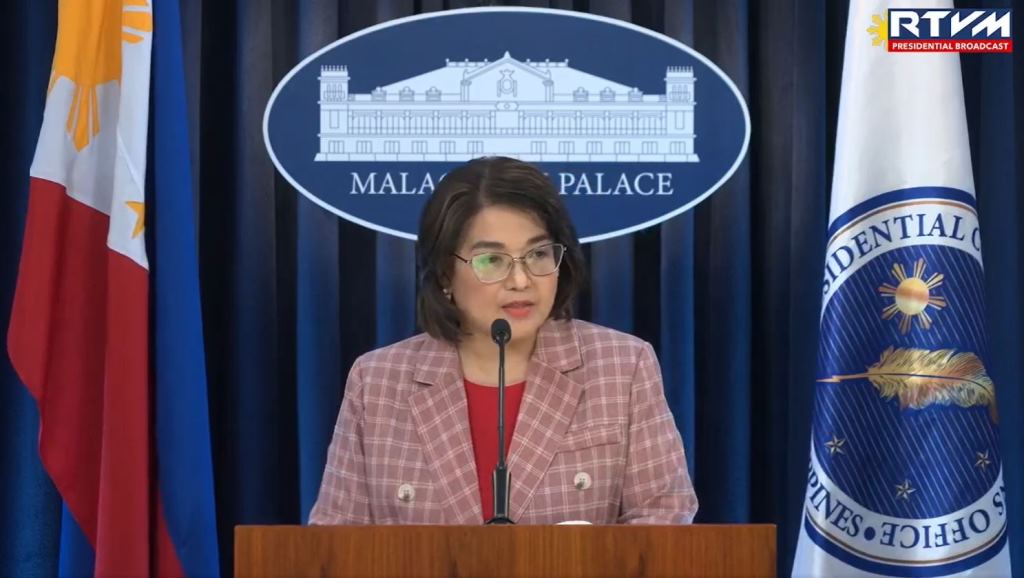
Malacañang on Friday expressed its support for proposals from the business sector to adopt work-from-home (WFH) arrangements as a strategic move to curb fuel consumption and mitigate the impact of rising global oil prices.
Presidential Communications Office (PCO) Undersecretary and Palace Press Officer Claire Castro characterized the suggestions as “helpful” interventions. However, she emphasized that the Executive Branch will respect the autonomy of the private sector in implementing these measures.
“If this is the proposal of private business companies, it will be a significant help,” Castro stated. “But of course, the President will not dictate upon private companies. If they see that this is for the good of the country and the interest of our fellow citizens to save on fuel or petroleum products, then it is a commendable suggestion.”
Addressing the Trade Union Congress of the Philippines (TUCP)’s request for a ₱5,000 monthly subsidy for minimum wage earners, Castro assured the public that no options are “off the table.” She noted, however, that the administration must balance fiscal priorities, focusing relief first on the sectors most severely impacted by the price hikes.
The Palace reaffirmed its commitment to assisting all sectors, provided that such measures remain within the constraints of the national budget.
The support for WFH comes on the heels of President Ferdinand R. Marcos Jr.’s recent declaration of a state of national energy emergency. To lead by example, the President has already mandated the following for government agencies:
-
Four-Day Workweek: Implementation of compressed schedules to reduce commuting and utility usage.
-
Climate Control Limits: Thermostats in government buildings are to be set no lower than 24°C.
-
Direct Relief: Continued 50% discounts on train fares, free bus rides, and subsidies for public utility vehicles (PUVs).
In a decisive move to manage economic stability, President Marcos also signed into law Republic Act No. 12316. This legislation grants the President the temporary authority to suspend or reduce excise taxes on petroleum products during critical price spikes, providing a vital safety valve for the Philippine economy.