


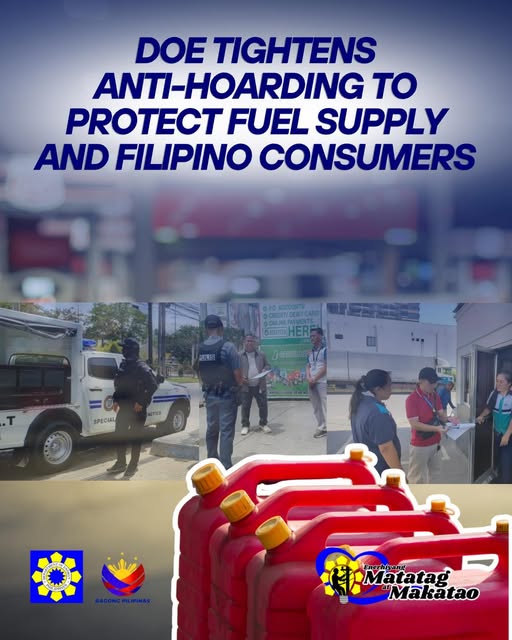
The Department of Energy (DOE) has issued new operating guidelines aimed at preventing fuel hoarding and ensuring that petroleum products remain available and accessible across the country.
The initiative is part of the government’s broader effort to strengthen energy security and help ease the burden on Filipino households.
Under the guidelines, the DOE has reinforced safeguards against potential supply disruptions, including commercial hoarding and excessive consumer purchasing beyond normal requirements.
Enhanced monitoring will be implemented through the Emergency Petroleum Monitoring System (EPMS), alongside stricter oversight of fuel transactions and clearly defined procedures for swift investigation and enforcement.
The DOE emphasized that consumers are encouraged to purchase fuel based only on their regular needs, underscoring that there is no need for advance buying or stockpiling. The department warned that unnecessary bulk purchasing could contribute to artificial shortages and price instability.
To ensure effective implementation, the DOE continues to coordinate closely with key government agencies, including the Department of Justice (DOJ), Department of Trade and Industry (DTI), Philippine National Police (PNP), National Bureau of Investigation (NBI), Bureau of Fire Protection (BFP), and local government units.
The department noted that full cooperation and compliance across all sectors are critical to maintaining stable fuel prices and preventing supply distortions.
By discouraging hoarding and promoting responsible consumption, the guidelines aim to support uninterrupted economic activity and ensure that essential services remain available to the public.
Ultimately, the policy seeks to uphold fairness in fuel distribution—protecting supply, ensuring equitable access, and preventing any sector or community from being left without critical resources during periods of heightened demand.

