


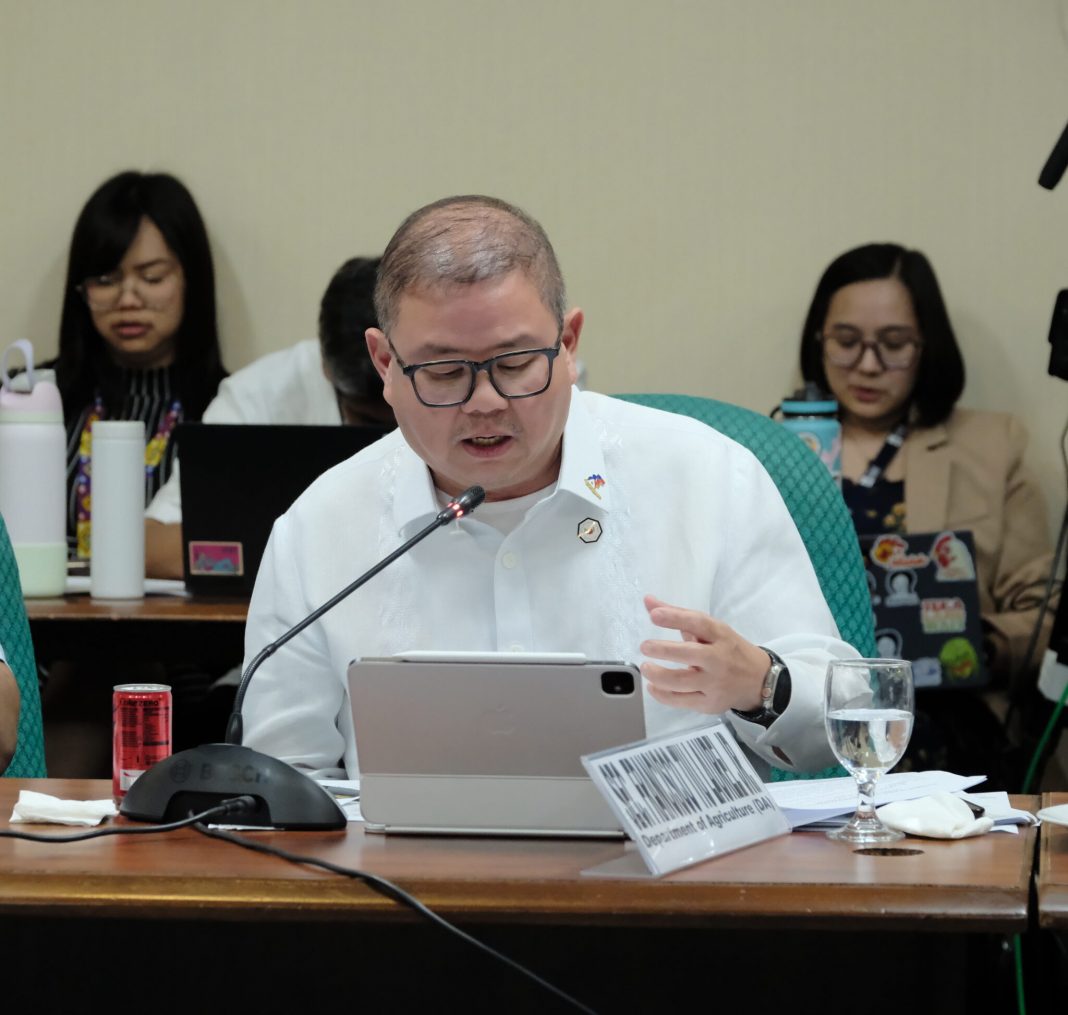
Agriculture Secretary Francisco P. Tiu Laurel Jr. on Monday formally established a Food Security Task Force within the Department of Agriculture (DA) to closely monitor and respond to disruptions in agricultural supply, prices, and trade caused by the ongoing energy emergency and geopolitical tensions in key export markets.
Tiu Laurel said that the move aims to replace the department’s previously ad hoc monitoring system, providing a structured approach to tracking the supply and price situation of essential commodities, as well as imports and exports.
The task force will generate daily briefings on the country’s food situation, which will be shared with Congress and the Office of the President, he said.
“Since the start of the war, we’ve been operating on an ad hoc basis. Now we are formalizing the task force so reports are standardized and more detailed, enabling faster and better decision-making,” the DA chief said.
The task force will track the impact of disrupted shipping routes, particularly in the Middle East, which have affected key Philippine exports such as bananas and pineapples. Laurel noted that the interruptions have created “opportunity losses” for exporters who may need to redirect shipments to alternative markets at lower prices. “If we redirect goods, we may have to sell cheaper. That affects both producers and the broader economy,” he said.
To support the agriculture sector, the DA is coordinating with financial institutions, including Land Bank of the Philippines, to provide assistance to exporters facing losses.
Tiu Laurel also said that opening alternative markets—potentially in Africa, Australia, Europe, and Southeast Asia—is being explored, although logistical challenges and competition could limit opportunities.
The task force will initially operate within the DA.
Tiu Laurel stressed that the broader goal is to consolidate information, standardize reports, and provide timely data to policymakers for faster interventions.
“The situation is complex. Prices, supply, exports, and trade routes all need daily monitoring. A dedicated task force ensures decision-makers have the information they need,” Tiu Laurel said.
He added that the DA has maintained continuous coordination with Malacañang through weekly meetings and communications with executive officials. The formalization of the task force, Tiu Laurel said, will streamline reporting, reduce information gaps, and allow the government to respond quickly to protect both consumers and food producers amid the current uncertainty.
“The task force is about more than just food supply—it’s about safeguarding our economy and ensuring that both producers and consumers are shielded from shocks,” Tiu Laurel concluded.

