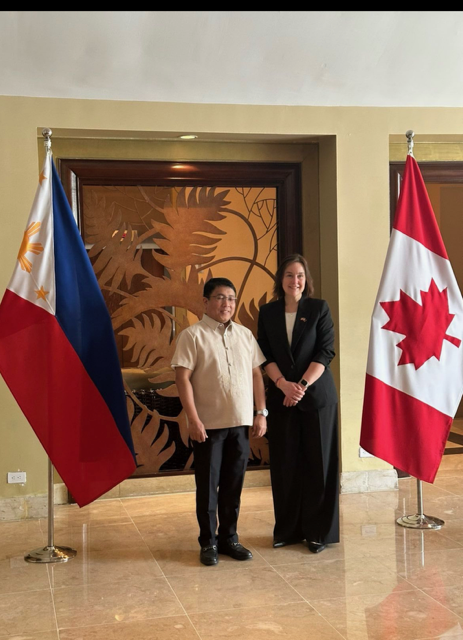
The Philippines and Canada are left with two more rounds of negotiations before concluding discussions for a bilateral free trade agreement (FTA) this year, in time also for the conclusion of the ASEAN-Canada negotiations for the regional trade deal.
This developed as Philippine and Canadian negotiators successfully wrapped up the second round of PH-CA FTA negotiations on April 13–17 in Manila, according to Philippine lead negotiator Undersecretary Allan B. Gepty and his counterpart Mary Catherine Speirs, director general for trade negotiations at Global Affairs Canada and Canada’s chief negotiator for the Canada-ASEAN Free Trade Agreement negotiations.
“In general, it was a very productive round and we achieved substantial progress in almost all the text based negotiations,” said Undersecretary Gepty.
The second round has put the negotiations well on track, with both parties targeting to conclude the talks this year. “We have two more rounds, and we hope to stabilize the text by the 3rd round in July. In the meantime, we will continue with intersessional work as well as consultations,” he said.
The next, or third, round will be held in Ottawa. Undersecretary Gepty said that the plan to conclude the bilateral FTA also coincides with the ASEAN-Canada FTA, whose negotiations are also set to conclude within the year.
According to the Philippine delegation, the agreement is firmly anchored in the parties’ strategic shift toward trade diversification.
For Canada, it broadens its trade partnerships, particularly in the Indo-Pacific region, especially as it is also negotiating the ASEAN-Canada FTA.
Meanwhile, the Philippines stands not only as a trading partner but also as a strategic gateway—an economy with strong growth fundamentals, a dynamic workforce, and a vantage position within ASEAN. This also presents a clear opportunity to embed the country within Canada’s diversification framework and to secure more stable and expanded access to a high-value market.
“The Philippines views its relationship with Canada not merely as a bilateral engagement but as a forward-looking alliance anchored in resilience, diversification strategy, and shared values, especially commitment to a rules based system,” he added.