


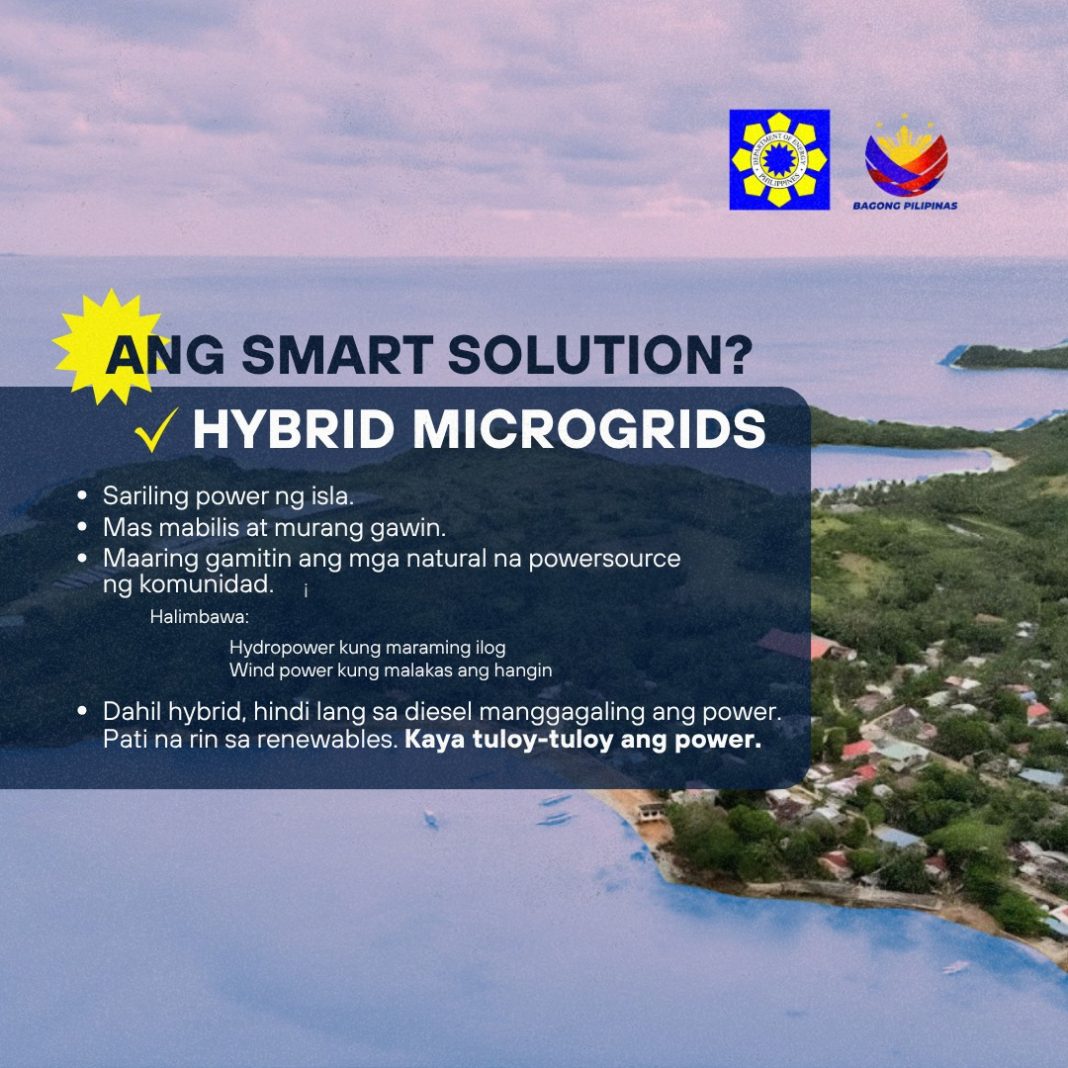
In a major move toward total rural electrification and energy security, the Department of Energy (DOE) is accelerating the deployment of Hybrid Microgrid Systems across the nation’s most remote archipelagos. By integrating renewable energy with traditional power sources, the initiative ensures that off-grid communities, including the frontier islands of Kalayaan, transition from intermittent power to a reliable, 24/7 electricity supply.
Traditional energy infrastructure often fails to reach isolated maritime regions due to geographical barriers and the high cost of undersea cabling. The DOE’s Hybrid Microgrid strategy solves this by creating “energy islands” that operate independently of the national grid.
These systems utilize a sophisticated blend of:
-
Solar Photovoltaic (PV) Arrays: Capturing abundant local sunlight to provide clean, primary power.
-
Energy Storage Systems (ESS): High-capacity batteries that store excess solar energy for use during the night or cloudy periods.
-
High-Efficiency Diesel Generators: Serving as a secondary backup to ensure continuous supply during peak demand or extended inclement weather.
The implementation in the Kalayaan Island Group serves as a flagship model for the program. Previously dependent on limited shipments of expensive fuel, these communities now benefit from a diversified energy mix that reduces carbon emissions and lowers operational costs.
“Our goal is to ensure that no community is left in the dark, regardless of how remote they are,” said a spokesperson for the Department of Energy. “By leveraging Hybrid Microgrids, we are not just providing light; we are powering schools, supporting local fisheries with refrigeration, and strengthening the overall resilience of our off-grid populations.”
The shift to hybrid systems represents a “win-win” for both the economy and the environment:
-
Sustainability: Significantly reduces the carbon footprint of island municipalities by displacing diesel consumption with solar energy.
-
Economic Resilience: Lower fuel dependency protects local economies from the volatility of global oil prices.
-
Reliability: The “hybrid” nature of the grid eliminates the risk of total blackouts, providing a steady $230\text{V}$ (or standard local voltage) stream essential for modern appliances and medical equipment.
The DOE remains committed to its mandate of achieving 100% electrification for the Philippines. Following the success in Kalayaan, the Department is currently identifying additional sites in the Visayas and Mindanao regions for microgrid integration.
These projects are part of a broader roadmap to modernize the Philippine energy landscape through decentralized, green technology.

