Friday, May 22, 2026

PITX losses persist as office space vacancies stay high; Megawide eyes new revenue streams

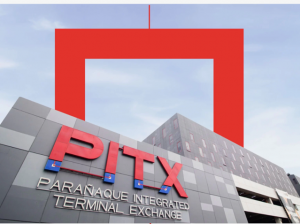
Megawide Construction Corp. is exploring new revenue streams for the Parañaque Integrated Terminal Exchange (PITX) as the country’s first and largest landport continues to incur losses following the government’s ban on Philippine offshore gaming operators (POGOs) and the prevalence of work-from-home arrangements.
PITX is operated and managed by Megawide’s wholly-owned subsidiary MWM Terminals Inc. under a 35 year build-operate-transfer contract with the Department of Transportation’s Public Private Partnership program. It was inaugurated in 2018 as the  country’s first land-based intermodal transport terminal.
A company source explained that PTIX has been experiencing poor occupancy with only 40 percent the terminal’s 72,000-square-meter office component being occupied following the POGO ban and the continued prevalence of work-from-home arrangements. Its  14,000-sqm commercial area continues to perform well, but not enough to offset weak office leasing demand.
Among the options being studied, subject to concession terms, is the conversion of vacant office space into a mall. Megawide is also looking to attract more government offices to PITX, citing its strategic location and accessibility to public transportation. PITX is linked to the LRT-1 and serves land transport routes connecting Metro Manila to Luzon, Visayas, and Mindanao.
Meanwhile, Megawide’s consolidated revenues in the first quarter rose 14 percent to PHP4.81 billion, with improved performance across its portfolio.
Construction remained the biggest contributor at PHP3.84 billion, up 5 percent, while real estate revenues more than doubled to PHP831 million. PITX generated PHP138 million in revenues.
Consolidated gross margin improved to 24 percent from 22 percent, while net margin rose to 6 percent from 5 percent. EBITDA margin was steady at 25 percent.
“Our results in the first three months is consistent with our back-ended target for the year. While we sustained a healthy performance early on, we have yet to quantify the impact of the Middle East War and a newly replenished construction order book in the coming months. Nonetheless, we are actively assessing the situation and strategically evaluating the developments to keep us on track with our goals,” said Edgar Saavedra, Megawide chairman and CEO.
“As the impact of the Middle East War that erupted in February this year has yet to be measured, the Company remains grounded on its strategy and focused on achieving its dual objective of topline growth and balance sheet strengthening to shore up profitability.
“The other side of our value creation strategy is boosting our financial position to ease the debt servicing burden and provide financial flexibility. Already, we have pared down almost PHP6.0 billion of our short-term debt in the first quarter alone, which should translate to an estimated interest cost savings of around PHP250-300 million for the year based on our average cost of debt,” added Saavedra.
Megawide’s bank debt-to-equity ratio improved to 1.1x as of end-March 2026 from 1.54x at end-December 2025, while net debt-to-equity ratio declined to 0.8x from 1.1x.
“For the remainder of the year, we are programmed to pay down another PHP2.5-3.0 billion from our short-term obligations as we aim to boost our liquidity and free up more debt headroom to support our long-term growth aspirations,” said Group CFO Jez dela Cruz.
Megawide’s construction order book stood at PHP48.7 billion as of end-March 2026. The company is also building around 11,000 socialized housing units under the government’s expanded 4PH program and is advancing the Carbon Market Redevelopment project.
It is likewise developing the Baguio City Integrated Terminal, the South Luzon Integrated Terminal Exchange, and the Cavite Bus Rapid Transit System as part of efforts to expand its transport-oriented development portfolio.
- Advertisement -spot_img
spot_img

LATEST

- Advertisement -spot_img