


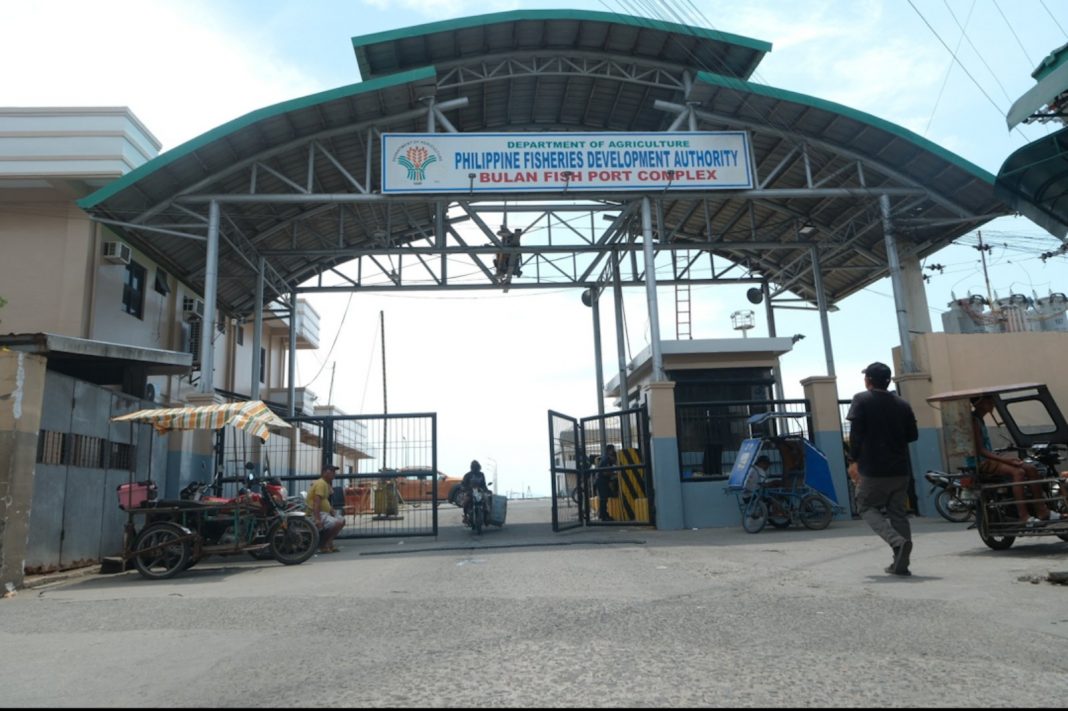
The Marcos administration’s initiative to modernize the country’s fisheries sector is gaining fresh momentum in Sorsogon, a southern Luzon province, where the Philippine Fisheries Development Authority (PFDA) is building a PHP96.7 million ice plant designed to keep more fish fresh, reduce waste, and raise incomes across fishing communities in the Bicol Region.
Agriculture Secretary Francisco P. Tiu Laurel Jr. and PFDA Acting General Manager Atty. Glen A. Pangapalan inspected the facilities of the PFDA-Bulan Fish Port Complex (BFPC), including the 60-metric ton (MT) Ice Plant and Ice Storage, on Monday, underscoring the Department of Agriculture’s broader effort to strengthen the country’s cold-chain network and protect the value of every fish landed.
Tiu Laurel said the modern post-harvest facilities are as critical as boosting fish production and extending market reach.
“Food security is not only about catching more fish. It is about making sure every kilogram that reaches our ports is preserved, marketed efficiently and delivered to Filipino families in the best possible condition,” said the DA chief. “Investments like the Bulan ice plant help reduce post-harvest losses, strengthen the fisheries value chain and improve the incomes of our fisherfolk.”
Located at the southwestern tip of Luzon, the facility occupies a strategic position along important fishing routes connecting Bicol, Eastern Visayas, and neighboring island provinces.
The port provides accessible landing and trading facilities for both municipal and commercial fishing vessels operating in the surrounding waters. Its location enables it to support fisheries activities from Northern Samar, Masbate, Leyte, and nearby fishing communities.
The fish port served 1,236 clients in 2025, including fisherfolk, fish brokers, traders, and vessel operators who rely on its fish landing, trading, and post-harvest facilities. It recorded a total fish unloading volume of 23,780.50 MT in 2025, averaging 65.15 MT per day. During the peak fishing months of March to June, unloading activities increased to an estimated 81.87 MT per day, underscoring the importance of rehabilitated facilities in sustaining efficient fish handling, trading, and distribution operations.
The new ice plant can produce around 1,200 blocks weighing 50 kilograms each, every 24-hour production cycle. It also has storage capacity for 120 metric tons, equivalent to about 2,400 ice blocks, ensuring a stable supply during the peak tamban, or sardine, fishing season when landings surge. With this increased capacity, the facility is expected to boost the ice supply in the municipality of Bulan and help preserve larger volumes of fish for longer periods.
Ice is sold at P130 per 50-kilogram block and is available in whole blocks or crushed ice. The facility will provide fisherfolk, fish brokers, and traders with a reliable and affordable source of ice, helping preserve fish quality, minimize post-harvest losses, and maintain the freshness of seafood throughout the supply chain.
Water from deep wells and the local water system undergoes treatment before entering the ice-making process, ensuring a clean and reliable supply for fish preservation. Every kilo of ice can preserve a kilo of fish for seven days.
“This ice plant is more than a post-harvest facility; it is an investment in people,” Pangapalan said. “A reliable supply of ice allows fisherfolk to preserve the quality of their catch, traders and processors to reduce losses, and consumers to enjoy safer and fresher seafood. Every block of ice produced here represents fish saved from spoilage, livelihoods protected, and food secured for Filipino families.”
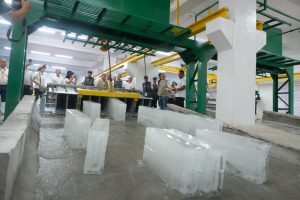
Modern post-harvest facilities enable fishing communities to retain more value from every catch by minimizing spoilage, improving product quality, expanding market opportunities, and supporting jobs throughout the fisheries value chain.
As part of its continuing efforts to strengthen fisheries infrastructure in the Bicol Region, PFDA is implementing the Phase I expansion of BFPC. The project will address the growing demand for fish port services by expanding post-harvest facilities and providing additional space for fish trading, handling, and packing activities, ensuring the complex can efficiently accommodate increasing fish landings and the growing number of port users.
The expansion will feature a new trading hall, ice stalls, and a Materials Recovery Facility. Once completed, these facilities are expected to improve operational efficiency, sanitation, and the overall capacity of the fish port to better serve fisherfolk, fish traders, and other stakeholders.
“The expansion of the Bulan complex will reinforce the government’s drive for a more resilient fisheries sector and stronger national food security,” Tiu Laurel said.

