


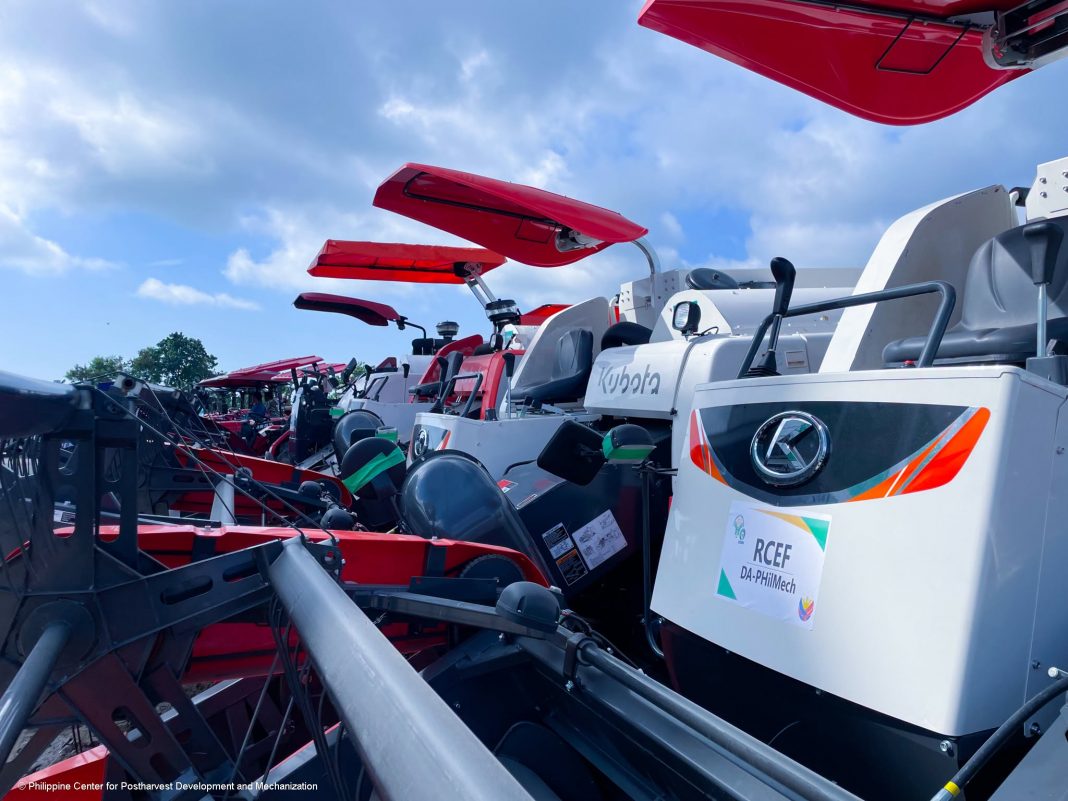
The Philippine Center for Postharvest Development and Mechanization (PHilMech) accelerated the government’s farm modernization program in the first half of 2026, deploying more than 1,700 farm machines nationwide as the country edges closer to the mechanization levels needed to make rice farming more productive, resilient and profitable.
As of June 30, PHilMech had delivered 1,731 units of machinery, or nearly 76 percent of the 2,289 units procured under the 2025 allocation of the Rice Competitiveness Enhancement Fund (RCEF). The rollout benefited 1,238 farmers’ cooperatives, associations and local government units.
The latest deliveries included 900 four-wheel tractors, 700 combine harvesters, 95 recirculating dryers and 36 precision seeders, equipment designed to reduce dependence on manual labor, speed up farm operations and minimize losses after harvest.
PHilMech also completed procurement of all machines under the 2025 budget, with the remaining units scheduled for distribution. The investments are already showing up in one of agriculture’s key performance indicators. By the end of 2025, the country’s rice farm mechanization level had risen to 2.81 horsepower per hectare, up from 2.68 hp/ha in 2022, driven largely by combine harvesters and four-wheel tractors.
PHilMech expects the figure to reach 3.40 hp/ha as the RCEF program advances, bringing the Philippines closer to the mechanization levels of its regional peers and strengthening the competitiveness of its rice sector. “Every machine we deploy helps farmers produce more with less,” said PHilMech Executive
Director Dionisio G. Alvindia.
“Mechanization lowers labor costs, speeds up critical farm operations and minimizes losses from planting to postharvest. These improvements translate directly into higher productivity, better grain quality and increased incomes for our rice farmers.”
Alvindia said postharvest technologies such as combine harvesters, mechanical dryers and integrated Rice Processing Systems are just as important because they preserve grain quality and prevent losses that would otherwise erode farmers’ earnings and the country’s rice supply. The latest deployments build on the gains made since RCEF mechanization funding was launched in 2019.
Over the program’s first phase, PHilMech distributed 32,990 production and postharvest machines to 7,588 farmers’ cooperatives, associations and local government units, exceeding its original deployment targets through savings generated from competitive bidding. Combined with this year’s deliveries, total deployments have reached 34,721 machines nationwide.
A PHilMech study involving 895 farmers’ cooperatives and 5,428 farmers across 57 provinces found the program reduced labor costs by about P2 per kilogram of palay, increasing farmers’ income by roughly P9,000 per hectare. Across farms covered by RCEF, that translates to an estimated P2.66 billion in additional annual income.
Mechanization has also prevented an estimated 31,841 metric tons of postharvest losses each year, equivalent to around P541.3 million worth of rice. Agriculture Secretary Francisco P. Tiu Laurel Jr. said mechanization is central to building a more efficient and resilient rice industry, but its benefits extend beyond higher productivity. “We are building an integrated system that enables farmers to harvest more efficiently, dry and mill their palay properly, reduce waste and earn more from every crop,” said Tiu Laurel.
“Mechanization is also becoming increasingly important as our farming population ages. Modern equipment allows our farmers to continue cultivating their land with less physical strain while helping address labor shortages during planting and harvest.” He added that expanding Rice Processing Systems and mechanization is essential to achieving food security, raising farmers’ incomes, improving the competitiveness of Philippine rice and creating stronger, more prosperous rural communities.

