


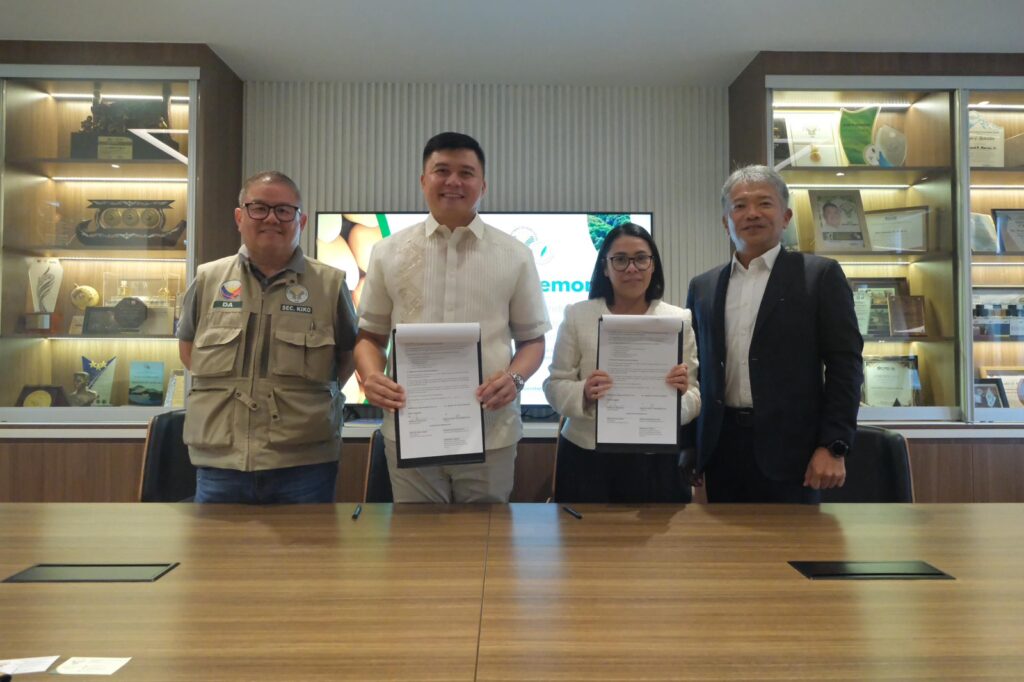
The Philippine Coconut Authority (PCA) has signed a partnership with Japan’s Mitsui to test nanotechnology for coconut farming, a step toward realizing President Ferdinand R. Marcos Jr.’s vision of a modern, technology-driven and sustainable agriculture sector that boosts productivity and improves farmers’ livelihoods.
The Memorandum of Agreement, signed on July 27 after eight months of negotiations, will see the two parties conduct two years of field trials to determine whether the advanced technology can help raise coconut yields and improve tree health under Philippine conditions.
Under the agreement, Mitsui will provide its proprietary nano-formulated nutrient technology, while the PCA will identify trial sites and provide technical support throughout the project.
Unlike conventional fertilizers that are spread on the soil, the technology delivers nutrients directly into the coconut tree. Tiny capsules containing agricultural inputs, such as nutrients and crop protection materials, tailored to the tree’s requirements are injected into the trunk, allowing more efficient absorption while using only a small amount of nutrient solution. The technology, already used successfully in oil palm plantations, may also help manage pest infestations.
PCA Administrator and Chief Executive Officer Dexter Buted said the initiative marks a significant step in bringing cutting-edge agricultural technologies to an industry that supports millions of Filipino farmers.
“This partnership opens the door to innovations that could transform coconut farming by improving productivity, strengthening tree health and making our farms more resilient. If the technology proves effective, it can help our coconut farmers produce more with fewer inputs while making the industry more globally competitive,” Buted said.
Agriculture Secretary Francisco P. Tiu Laurel Jr. said modernizing the coconut sector would generate benefits far beyond agriculture, noting that coconut remains the Philippines’ largest agricultural export and a vital source of livelihood across rural communities.
“A healthier and more productive coconut industry means stronger rural incomes, more export earnings and greater economic opportunities for millions of Filipinos who depend on coconut for their livelihood. Investments in innovation such as this will help ensure that our biggest agricultural export remains globally competitive while supporting the President’s vision of a modern and sustainable agriculture sector,” Tiu Laurel said.
The partnership reflects the government’s broader strategy of combining science, technology and international collaboration to raise farm productivity, strengthen food and export security, and build a more competitive agricultural economy.

