


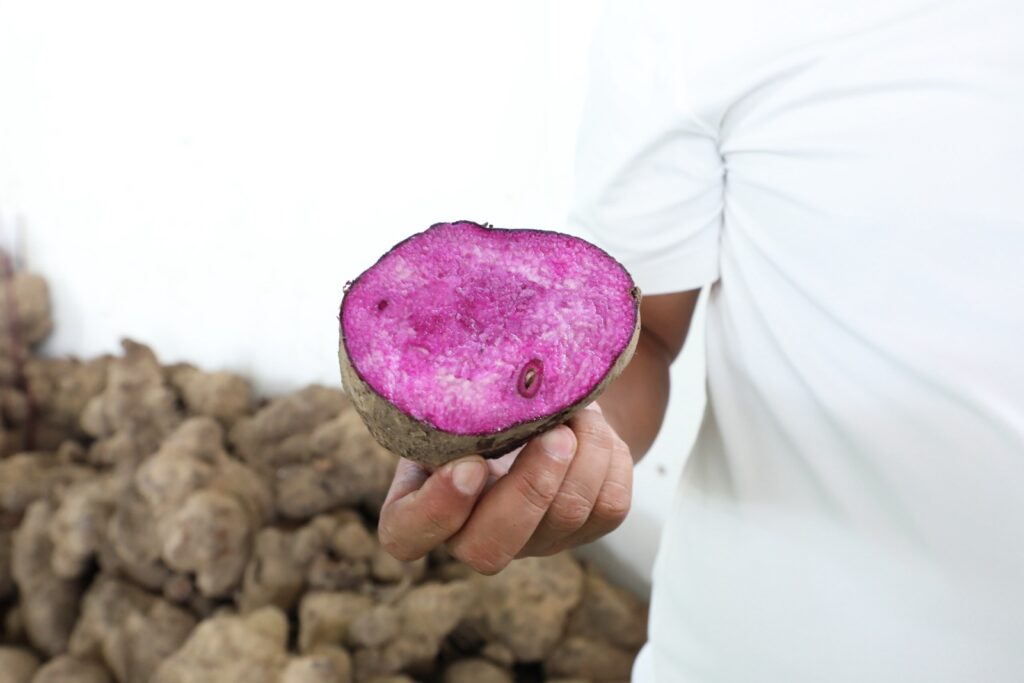
The world has fallen head over heels for ube.
What was once the quiet purple yam climbing backyard trellises in Filipino homes is now swirling through cheesecakes in New York, croissants in Paris, and lattes in Sydney. Ube has gone global.
But if the Philippines wants more than a fleeting moment in the culinary spotlight, it needs something stronger than social media buzz. It needs better ube.
That is precisely what scientists at the University of the Philippines Los Baños (UPLB) have been digging for. After combing through 188 greater yam (Dioscorea alata) accessions from farms and gene banks across the country, they have unearthed 10 standout contenders that could anchor the next chapter of the country’s ube story.
Some pile up impressive harvests. Others boast richer purple flesh, better flavor, stronger natural pigments, or unique genes that plant breeders prize. No single variety checks every box, but together they hold the blueprint for a stronger, smarter ube industry. And that blueprint starts with a simple realization.
Not all ube are created equal.
Some wear a royal purple worthy of dessert displays. Others are creamy white, while a few surprise with orange flesh beneath their rough skins. They are as colorful and diverse as the languages and dialects spoken across the Philippines’ more than 7,000 islands. Beneath those colors lies an even richer diversity written in DNA.
That is where the real treasure hunt begins. Using thousands of genetic markers, researchers built DNA fingerprints for Philippine ube varieties, allowing them to tell one yam from another with scientific precision. Think of it as giving every prized ube its own passport.
That matters because an export industry lives or dies on consistency. A bakery in California ordering premium purple ube expects the same color, taste, and texture every shipment. Genetic mapping can support future varietal identification and certification, helping ensure that farmers plant authentic stocks and giving exporters confidence that what leaves Philippine ports is exactly what buyers ordered.
The research also points breeders toward tomorrow’s winners. Villasis 2 emerged as a yield champion, producing more than 60 tons per hectare, while Kinampay remained the gold standard for flavor. Other varieties excelled in aroma, color, or anthocyanins, the natural compounds behind ube’s vivid hue and antioxidant punch.
The next Philippine export superstar may not come from discovering a new crop at all. It may already be quietly growing in a backyard somewhere. The challenge is making sure the right ube reaches the world and keeps winning hearts long after the next viral food craze has faded into yesterday’s feed.

