The Philippines seeks to achieve 86 percent self-sufficiency in steel supply and requirements by 2040 with USD11.5 billion of foreign exchange savings, and a strong domestic supply chains with the implementation of various government policy interventions, including government financing programs, a new iron and steel industry law, a ban on steel scrap exports, and trade remedies, among others.
This was contained in the recently completed 2026-2040 Philippine Iron and Steel Industry Roadmap crafted by the Philippine Iron and Steel Institute (PISI) and submitted to the Board of Investments (BOI), the government’s lead industry development and promotion agency.
Two scenarios
The 14-year roadmap presented two scenarios: business as usual (BAU) and ASEAN-Style industrialization. The BAU scenario, which assumes a Philippines-only approach, has a lower target of 21 million metric tons (MMT) in apparent steel consumption (ASC), growing at an annual rate of 5.22 percent.
This scenario also targets finished steel production of 7.1 MMT, representing annual growth of 3.76 percent. This includes finished long steel production of 4.2 MMT and ASC of 12.9 MMT, while finished flat steel production is targeted at 2.8 MMT and ASC at 8.6 MMT.
Meanwhile, the ASEAN-Style scenario sets higher targets of 29 MMT in ASC, with a faster annual growth rate of 7.1 percent through 2040, and 25 MMT in finished steel production, representing annual growth of 11.3 percent.
Under this scenario, the domestic industry is expected to produce 15 MMT of finished long steel, while ASC or local consumption reaches 17.5 MMT. Production of finished flat steel is targeted to reach 10 MMT, with domestic demand or ASC at 11.7 MMT.
The BAU scenario also projects slower GDP per capita growth, reaching USD8,000 to USD9,000 by 2040, compared with USD11,000 to USD13,000 under the faster-growing ASEAN-Style scenario.
Notably, the roadmap did not specify the interventions for the ASEAN-Style scenario.
Overall, however, the roadmap sets out a three-phase development plan for the domestic steel industry, supported by various government policy interventions and private-sector participation.
2026-2030
For the period 2026-2030, the roadmap calls for updating the Iron and Steel Industry Act under Republic Act No. 7103 or enacting a new law.
It also calls for stricter mandatory standards and a ban on the use of induction furnace (IF) technology; the implementation of regulations and trade remedies to ban the export of scrap metal; protection of roofing and galvanized iron (GI) sheets; and prioritization of local procurement.
During this period, the roadmap identified government financing programs, green financing/green climate funds, and a national industrial fund as potential sources of financing for steel projects.
Investments during this period are expected to be directed toward the purchase and construction of more electric arc furnaces, medium- and heavy-section mills, and wire rod mills; modernization of rebar mills; and investments in downstream flat steel sectors.
2031-2035
For the succeeding five years, from 2031 to 2035, the roadmap targets the rollout of a shipbuilding and ship repair steel program and the development of small and medium enterprises in downstream steel sectors.
It also calls for the promotion of green government procurement of steel, human capital development, and investments in cold reduction mills.
The roadmap also said that the industry’s development should be aligned with the Philippines’ Self-Reliant Defense Posture program for national security.
2036-2040
For the final phase, the roadmap calls for the recalibration of school curricula to prepare workers for future roles in the industry. Investments are expected to focus on the establishment of hot strip mills.
Notably, the Roadmap’s anticipated impacts include a PHP1 trillion of finished steel
production and USD11.5 billion of foreign exchange savings due to import substitution.
The Roadmap also determines other multiplier effects for for every PHP100 increase in
final demand for iron and steel products to the economy, household income, and indirect income for other sectors.
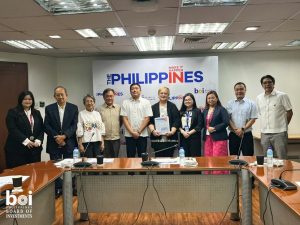
BOI Executive Director Ma. Corazon Halili-Dichosa said the roadmap reflects the collective views of industry associations, the private sector, and other government agencies in identifying the strategic directions and implementation pathways needed to strengthen the country’s iron and steel industry.
“This roadmap represents more than a planning document; it embodies the stakeholders’ shared vision for a more resilient and globally competitive Philippine iron and steel industry. The BOI recognizes that a competitive steel industry is important for industrialization. Through this roadmap, the government and industry would be able to jointly identify priority initiatives to address supply chain gaps, improve industry competitiveness, and foster the adoption of more sustainable and innovative production processes,” she added.
Halili-Dichosa thanked PISI for co-leading the initiative and sharing its expertise, insights, and commitments throughout the roadmap updating process.
According to her, PISI’s cooperation shows that meaningful industry development can only be achieved through sustained dialogue and partnership between the public and private sectors.
Meanwhile, for PISI President Joel Ronquillo, the roadmap is more than a policy document; it is the whole vision for the Philippines to achieve industrial strength, economic resilience, and sustainable growth. The iron and steel industry is the backbone of modern economies; it shapes our infrastructure, powers our industries, and safeguards the quality of life of our people.
“By charting a clear path for the next 14 years, the BOI has provided us with a framework to ensure that Philippine steel is not only competitive but also aligned with global standards for safety, sustainability, and innovation. This roadmap addresses three critical imperatives: industrial competitiveness by strengthening local production; sustainability by promoting green steel technologies and cleaner processes, ensuring that growth does not come at the expense of the environment; and the imposition of standards to uphold the integrity of the infrastructure,” he said.