


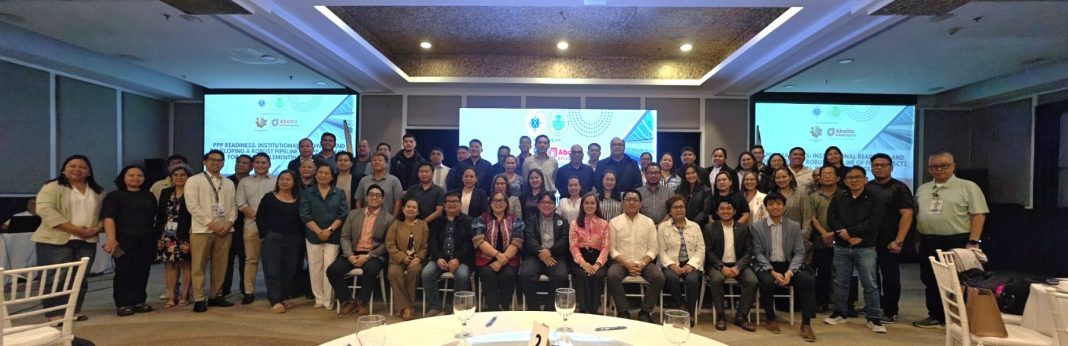
CEBU CITY, Philippines — Public and private sector leaders stepped forward to strengthen collaboration and accelerate infrastructure development across Central Visayas through PPP Ready: Institutional Readiness and Developing a Robust Pipeline of PPP Projects for Local Implementing Agencies, a seminar and consultation workshop held on July 28–29, 2026 at the Cebu Parklane International Hotel.
Organized by the Department of Economy, Planning, and Development Region VII (DEPDev 7) in partnership with the Public-Private Partnership (PPP) Center and Aboitiz InfraCapital, Inc. (AIC), the two-day program brought together local government leaders, planning officers, and infrastructure practitioners from across Cebu and Bohol to strengthen institutional readiness under the Philippine PPP Code.
Opening the event, Anthony L. Noel, Regional Development Council 7 – Infrastructure Development Committee (RDC-IDC 7) Chairperson, underscored the importance of public-private partnerships as a shared commitment to delivering better outcomes for communities.
“Public-private partnerships are at their best when the government and the private sector work as true partners—bringing together their respective strengths to deliver infrastructure that creates lasting value for communities. Building this partnership starts with strengthening institutional readiness, fostering trust, and ensuring we are aligned in our shared goal of improving the lives of the people we serve.”
Highlighting the private sector’s role in advancing PPP readiness, Christopher Camba, AIC First Vice President and Head of Corporate Affairs, emphasized that effective partnerships begin with equipping local governments to translate development priorities into implementable projects.
“Public-private partnerships work because they bring together the strengths, expertise, and resources of both government and the private sector to deliver better infrastructure and improve lives. Through PPP Ready, we hope to equip local government units with the knowledge, tools, and confidence to turn priority infrastructure needs into bankable projects that create lasting impact.”
The PPP Ready program forms part of the government’s continuing advocacy to strengthen local institutional capacity and help local implementing agencies independently conceptualize, evaluate, and manage PPP projects under the Philippine PPP Code.
Through practical workshops, technical consultations, and real-world case studies, the program promoted standardized approaches to project development, transparent and competitive procurement, and streamlined processes that support faster project implementation. Participants also explored opportunities to expand PPPs beyond traditional infrastructure into sectors such as health, education, agriculture, solid waste management, and climate-resilient infrastructure—broadening the role of PPPs in delivering sustainable development across communities.
“Our goal is not only to help local governments understand the PPP process but to empower them to confidently pursue well-prepared, investment-ready projects that respond to the needs of their communities. The PPP Center, working alongside our LGUs, will provide the technical guidance, facilitation, and capacity-building support necessary to transform promising project ideas into sustainable partnerships that deliver quality infrastructure and better public services,” said PPP Center Executive Director Undersecretary Rizza Blanco-Latorre.
As one of the program’s partners, AIC supported the initiative as part of its continuing advocacy to strengthen collaboration between government and the private sector in delivering transformative infrastructure.
Drawing from its experience in public-private partnership projects—including the operations and modernization of Mactan-Cebu International Airport, Laguindingan International Airport, and Bohol-Panglao International Airport—the company continues to support efforts that build institutional capacity, encourage sound project preparation, and promote transparent, sustainable infrastructure development alongside its government partners.
Stay updated with Aboitiz InfraCapital Airports – subscribe to our AeroConnect newsletter today! [SIGN UP HERE: https://tinyurl.com/aeroconnect2025]
The workshop featured technical sessions led by the PPP Center, with Deputy Executive Director Jeffrey I. Manalo serving as one of the principal resource speakers.
Participants also heard from John Emmanuel R. Pronto, Director of the Project Evaluation Service, who guided local government representatives through project identification, prioritization, value-for-money principles, and the development of bankable PPP proposals. Together with consultations and project critiques, the sessions provided participating LGUs with practical tools to strengthen their local PPP pipelines.
In her closing message, Cebu Governor Pamela S. Baricuatro, Chairperson of the RDC 7, underscored the importance of sustained collaboration in advancing the region’s development priorities.
“Strong partnerships between national government, local governments, and the private sector are essential to delivering the infrastructure our communities need. By strengthening our capacity to implement quality PPP projects, we are creating more opportunities for inclusive growth across Central Visayas.”
Meanwhile, DEPDev Undersecretary Joseph J. Capuno highlighted the role of well-prepared PPPs in supporting local governments as they take on greater responsibilities under full devolution.
“The success of public-private partnerships begins with strong project preparation. By helping local governments develop well-structured, investment-ready projects that align with national and regional development priorities, we can accelerate infrastructure delivery and improve public services where they are needed most.”
The two-day seminar reflected the shared commitment of the DEPDev 7, the PPP Center, AIC, local government units, and industry stakeholders to strengthen the pipeline of well-prepared PPP projects across Central Visayas.
By building institutional capability, promoting transparent and efficient PPP processes, and encouraging stronger collaboration, the initiative supports the effective implementation of infrastructure projects that improve public services, attract long-term investments, and contribute to sustainable regional development.

