


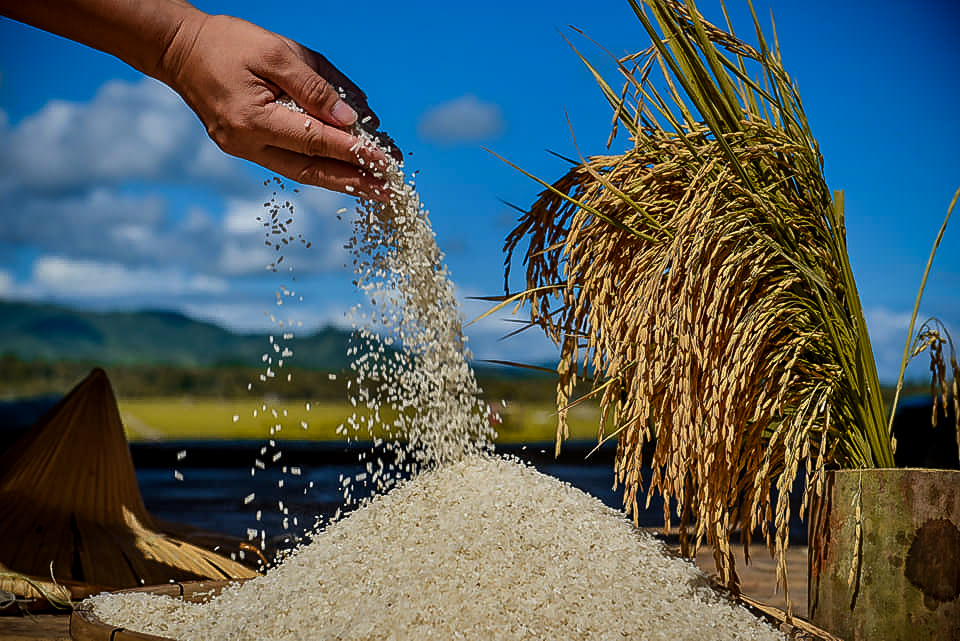
The Department of Agriculture (DA) is taking its fight against rice wastage to Filipino dining tables, urging consumers to waste less, support local farmers, and choose healthier rice as it pushes the Be RICEponsible campaign year-round.
Led by the Philippine Rice Research Institute (PhilRice), the campaign promotes three simple habits, avoid rice wastage, buy farmers’ rice, and choose healthier rice.
Agriculture Secretary Francisco P. Tiu Laurel Jr. said responsible rice consumption should become an everyday practice, given the staple’s importance to Filipino households and national food security.
“Every grain of rice carries the work of a Filipino farmer. When we waste less, choose wisely, and support locally produced rice, we strengthen not only our farmers’ livelihoods but also our country’s food security,” Tiu Laurel said.
Launched in 2014 as a legacy program of the 2013 National Year of Rice, Be RICEponsible was initially observed mainly in November. PhilRice has since made it a year-round advocacy, underscoring that responsible consumption should not be limited to a single month.
Agriculture Undersecretary for Rice Industry Development Christopher Morales said the shift to a year-round campaign reflects the need to make responsible consumption a daily discipline rather than a seasonal reminder.
“Increasing production and reducing postharvest losses are critical to strengthening our rice supply, but these efforts will not be enough if we continue to waste what we already have on our plates,” Morales said.
“Disciplined consumption is just as important. Every grain saved from waste effectively adds to the food available to our people without requiring additional land, water, inputs, or production costs,” he added.
The campaign highlights the scale of rice waste. PhilRice estimates that every Filipino throws away about two tablespoons of cooked rice daily, equivalent to 10.85 million sacks of rice worth P24.4 billion a year.
That wasted rice could feed about 5.17 million Filipinos for an entire year, underscoring the potential food security gains from simply putting less rice in the trash.
The DA is also urging consumers to buy locally produced rice, including PhilGAP-certified products, to support Filipino farmers and help strengthen domestic supply.
Healthier choices are another focus, with the campaign promoting brown, pigmented, low-glycemic index, and high-zinc rice, along with rice mixes using corn, saba, camote, and adlai. These alternatives can provide more fiber, vitamins, minerals, and other nutrients.
PhilRice and its partners will bring the campaign to schools, communities, markets, workplaces, terminals, and other high-traffic areas through information drives, food-tasting activities, exhibits, social media, and public events.
The campaign also seeks to revive the Half-Cup Rice Ordinance in participating areas, encouraging restaurants to offer smaller servings to help diners avoid taking more than they can eat.
“Riceponsibility starts with something as simple as taking only what we can finish,” Tiu Laurel said. “If every Filipino does a little, the country gains a lot, from less waste and healthier diets to stronger farmers and a more secure food supply.”

