


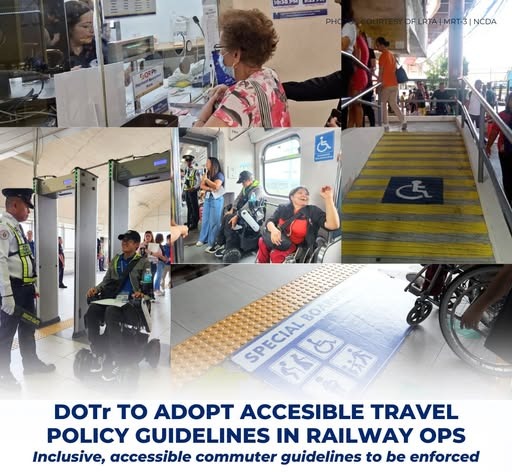
Following a direct mandate from President Ferdinand Marcos Jr. to prioritize commuter inclusivity, the Department of Transportation (DOTr) has officially adopted the Accessible Travel Policy (ATP) Guidelines for all railway operations and maintenance providers nationwide.
The move marks a transformative shift in the nation’s transport landscape, specifically designed to create an enabling environment for Persons with Disabilities (PWDs), senior citizens, and pregnant passengers.
Under Department Order No. 2025-024, Transportation Secretary Giovanni Lopez emphasized that the ATP Guidelines are essential to building a transport network that is not only reliable but also safe and welcoming for every Filipino. “President Marcos Jr. has been clear: we must ensure that daily commutes are easier and that our railways are inclusive for all,” said Secretary Lopez. “Our fellow citizens—especially those with physical limitations, our seniors, and expectant mothers—can look forward to faster, more comfortable, and more dignified travel.”
The new Department Order requires all railway operators to immediately begin integrating the following accessibility standards:
-
Specialized Staff Training: Mandatory programs on disability awareness and gender sensitivity for all frontline personnel.
-
Enhanced Mobility Support: Provision of wheelchair boarding assistance and clearly marked, accessible help points throughout stations.
-
Inclusive Communication: Implementation of accessible information formats, including high-clarity audio announcements and enhanced visual signage.
-
Accountability & Audits: Establishment of dedicated feedback channels and the conduct of regular accessibility audits to ensure sustained compliance.
The ATP Guidelines are not limited to existing lines. The DOTr confirmed that these standards will be fully integrated into the design and operation of the country’s flagship infrastructure projects, including the North-South Commuter Railway (NSCR) and the Metro Manila Subway Project (MMSP).
For existing railway operators, the DOTr has outlined a structured transition period. Operators are required to submit comprehensive compliance plans to ensure that accessibility improvements are rolled out systematically over the coming years.
By formalizing these guidelines, the DOTr ensures—for the first time in Philippine history—that railway services are structurally and operationally responsive to the diverse needs of the riding public.

