


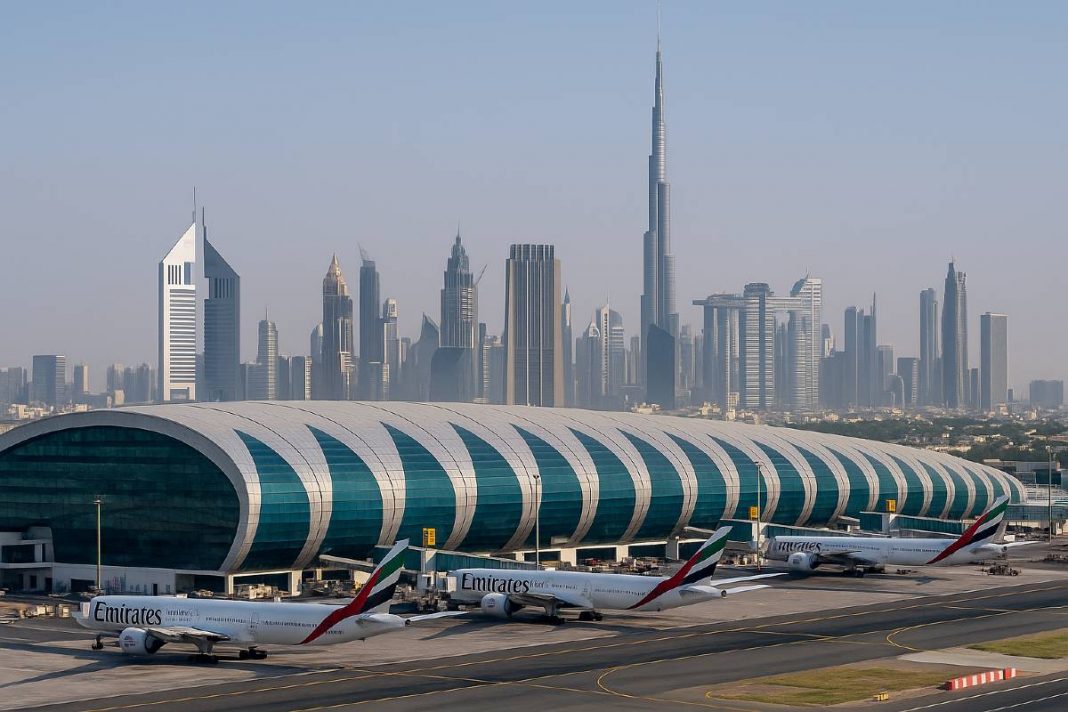
Dubai International Airport (DXB) has once again solidified its status as the primary gateway for global travel, securing the title of the World’s Busiest International Airport for 2025. According to the latest data from OAG, DXB led the global rankings with 62.4 million international seats, continuing a dominant streak that spans back through 2024, 2023, and the pre-pandemic benchmark of 2019.
The surge in DXB’s capacity highlights a robust 4% year-on-year growth, placing the hub a staggering 16% above 2019 levels. The scale of Dubai’s lead is significant; in 2025, DXB offered 13.5 million more international seats than its closest competitor, London Heathrow (LHR).
While Dubai maintains a comfortable lead, the race for the remaining top spots remains highly competitive:
-
Dubai International (DXB): 62.4M seats (+4% YoY).
-
London Heathrow (LHR): 49.0M seats. Despite a modest 1% increase from 2024, LHR remains 4% above 2019 levels.
-
Seoul Incheon (ICN): 43.0M seats. Growing by 3% YoY, ICN has signaled a full recovery, now sitting 2% above its 2019 capacity.
-
Singapore Changi (SIN): 42.6M seats. A 3% increase has brought Changi’s capacity exactly back in line with 2019 levels.
-
Istanbul Airport (IST): 41.2M seats. IST recorded a strong 7% increase this year and remains the fastest climber compared to the pre-pandemic era, up a remarkable 27% vs. 2019.
The 2025 data reveals a tale of two recoveries. Hong Kong International (HKG) recorded the most explosive growth in the top ten, surging 12% to 38.7 million seats and jumping into eighth place. However, it remains 14% below its 2019 peak, indicating further room for growth.
Conversely, hubs like Doha (DOH) have transitioned from recovery to expansion, sitting 20% ahead of 2019 levels with 32.7 million seats. European mainstays like Frankfurt (FRA) continue to see steady progress, ranking ninth with 36.4 million seats, though still trailing their 2019 performance by 8%.

