



The Chamber of Real Estate and Builders’ Associations (CREBA) has sought the intervention of the Senate to address their complaints against the centralization of approvals of housing projects, stating that such move only leads to delays instead of facilitating project construction needed to address the huge housing backlog in the country.
CREBA questioned Memorandum Circular No. 2025-14 issued by the department in November last year. Among others, the MC 2025-14shifted the processing and approval of all housing applications, including development permits and licenses to sell, from the Department of Human Settlements and Urban Development (DHSUD) regional offices to the central office in Metro Manila.
CREBA the centralized approval would only lead to bottlenecks, backlogs, and increased incidence of arbitrariness and corruption.
Senate Deputy Majority Leader JV Ejercito urged DHSUD to address complaints by developers of bottlenecks and backlogs in the approval of housing projects.
Presiding over the hearing of the Senate Committee on Urban Planning, Housing and Resettlement last Wednesday, Sen. Ejercito said, “We cannot do it alone, we need the developers to produce socialized housing and other housing needs.”
Acting on the information provided by CREBA, Ejercito filed Senate Resolution No. 318 directing the committee to inquire into the adverse effects of the regulatory changes on the housing sector and the homebuyers.
In the hearing on the resolution, Ejercito said that the developers are “our partners in delivering housing projects across the country”, stressing that “Their voices are important to ensure that our policies are not only good on paper but are effective and responsive in actual implementation.”
Given the housing backlog which is estimated to reach 22 million by 2040, Ejercito said “We cannot allow the number of Filipinos waiting for decent housing to increase simply because of system inefficiencies.”
Meanwhile, DHSUD Undersecretary Sharon Paquiz said that the rule “was issued in order to ensure that all applications are acted upon on time, with competence and integrity.”
However, CREBA President Noel “Toti” Cariño said that on the contrary, the centralization effectively created a bottleneck that would lengthen processing timelines anywhere from 6 to 12 months.
Presenting a list of affected development projects in the regions, Cariño said that where previously there were 16 regional offices simultaneously processing applications, “because of the policy change all projects across the country are now competing for a single processing pipeline.”
He said CREBA is proposing instead a hybrid approval system, wherein regional offices would handle standard projects while the central office would focus on large or complex developments.
Cariño also questioned the duplication and redundancy in documentary requirements, whereby developers are compelled to resubmit and revalidate documents already approved by LGUs and national agencies, instead of respecting duly issued certifications by these government entities.
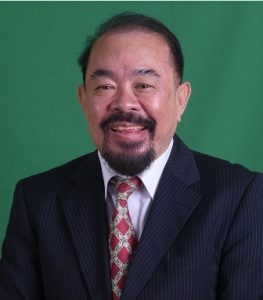
(Photo credit: https://creba.ph/directors-officers-2024-2026)
“Delays tie up capital, increase cost, stall housing delivery, and ultimately make housing less affordable especially for the socialized sector”, he added.
He also said that to eliminate or reduce corruption and arbitrariness, (1) a post-audit mechanism must be instituted; (2) discretionary scope must be reduced to the bare minimum; (3) the zero contact mandate of the Ease of Doing Business Law must be implemented; (4) specific parameters and quantitative criteria must be prescribed, particularly in valuation of projects for balanced housing compliance purposes; (5) specifications of required documents must be accurately described; and (6) workflows, responsibilities and accountabilities must be clearly specified.
Echoing CREBA’s complaints, Real Estate Brokers Association of the Philippines (REBAP) president Carla Abegail Calleja said, “Centralization does not eliminate corruption – it relocates it.”
“The intent we are told was to standardize processes and address corruption, but the result has been the opposite,” she added.

