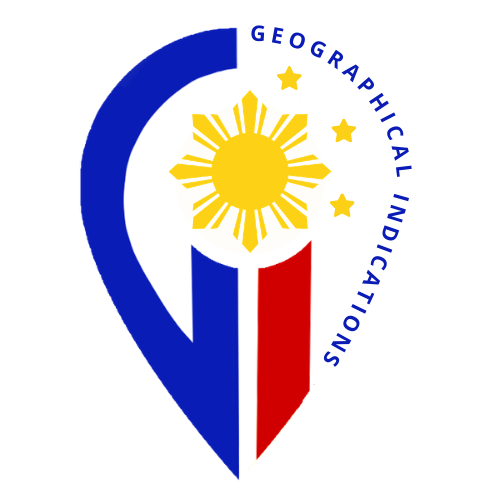
The Philippines, through the Intellectual Property Office of the Philippines (IPOPHL), launched on Tuesday the Philippine Geographical Indications (GI) Logo, marking a key step in strengthening the country’s GI system and elevating the visibility of Philippine origin-based products in the market.
The GI Logo, developed by the Bureau of Trademarks, is designed to serve as an official mark that certifies authentic GI products, allowing consumers to easily identify goods linked to specific geographic origins and recognized qualities. It is also expected to support producers by reinforcing product reputation, improving market visibility and enhancing value through government-backed protection.
The logo features a location pin shape to highlight the idea of origin, marking products as inseparable from where they come from. The three stars, drawn from the Philippine flag, signify Luzon, Visayas and Mindanao, reflecting that GI products can emerge from any region. At the center, the sun symbolizes vitality, excellence and the richness of Philippine heritage. Rendered in blue, red and gold, the Logo affirms a mark that is distinctly and proudly Filipino.
The introduction of the logo comes as the country advances efforts to improve the development, administration and protection of GIs, while working toward a more coordinated institutional framework amid evolving policies and pending legislation.
“A GI is more than a label. It is a declaration of origin, that a product possesses a quality or characteristic essentially attributable to where it comes from: to the land, the climate, and the people who produce it. The GI Logo gives that declaration a face and a promise. Governed by clear guidelines, its presence on a product carries real meaning, including provenance, quality, and the assurance that a community stood behind it,” IPOPHL Director General Teodoro C. Pascua said.
GIs are signs that identify goods as originating from a specific place, where a given quality, reputation or other characteristic is essentially attributable to that origin.
GIs may be applied to agricultural, industrial and handicraft products, encouraging diversity across sectors. They enable products to command premium value in the market. At the same time, GIs protect consumers from misleading claims on origin and product characteristics, and help foster trade at the national, regional and international levels.
In her keynote message, Senator Loren B. Legarda highlighted the cultural and economic importance of the initiative.
“The GI Logo is a symbol and recognition of the deep connection between our products and the land from which they originate, our culture and the knowledge of our local communities. Through this mark, we provide stronger protection and dignity to products that can only be found in the Philippines,” the message of Senator Legarda read in Filipino.
Marie Fontanel, Ambassador of the French Republic to the Philippines and Non-Resident Ambassador-Designate to Palau, the Federated States of Micronesia and the Marshall Islands, underscored the role of GIs in addressing global challenges such as climate change, and reaffirmed France’s continued support through the PHP30.1 million project funded by the Agence Française de Développement (AFD) to support climate resilience through GI protection.
“Climate change is definitely reshaping our own world, and GIs are one of the tools that can be used to fight back. We have seen that in France, where the very identity of wines of Champagne, for example, is increasingly under threat from shifting temperatures. If it can happen there, it can definitely happen here also. Registering and protecting the ‘kapookan’ of Filipino products is an urgent necessity. France’s commitment to strengthening its relationship with the Philippines and protecting the natural realm of the Philippines on land and at sea runs deep,” Amb. Fontanel said.
Rep. Maximo Y. Dalog Jr. underscored the broader impact of strengthening geographical indications on local industries such as agriculture.
“For too long, our local products have suffered from a lack of recognition. When we protect a product through a GI, we are not merely adding a label. We are telling the world that this product is unique to its origin, its story and its people. This recognition helps boost farmer incomes by identifying high-potential GIs and supporting their registration, enabling producers to command premium prices and improve productivity,” read Rep. Dalog’s message as delivered.
The logo will be issued and governed by IPOPHL, with use limited to registered GI products that comply with established specifications and authorization requirements.
Under the proposed guidelines, the logo:
- Certifies recognized Philippine GI products
- May only be used by authorized GI registrants
- Must appear alongside the official GI name
- Should follow prescribed visual standards to ensure consistency and integrity