


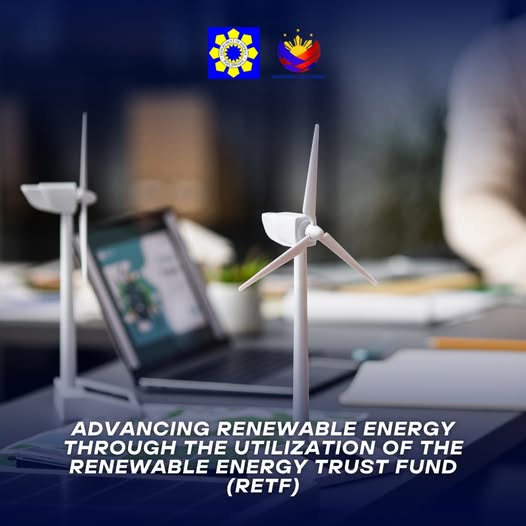
In a decisive move to accelerate the nation’s transition toward a sustainable energy future, the Department of Energy (DOE) successfully convened a public consultation recently, to discuss the draft Department Circular for the Renewable Energy Trust Fund (RETF).
The consultation brought together industry stakeholders, policy experts, and research institutions to refine the guidelines that will govern how this critical fund is utilized to modernize the Philippine energy landscape.
Established under Republic Act No. 9513, or the Renewable Energy Act of 2008, the RETF is a dedicated fiscal tool designed to bankroll the advancement of green technologies. The newly proposed guidelines seek to transition the fund from a passive reserve into an active catalyst for innovation.
The DOE’s enhanced strategy focuses on three strategic pillars:
-
Competitive Edge: Strengthening the economic viability of RE projects to compete with traditional power sources.
-
Scientific Innovation: Funding targeted Research and Development (R&D) to localize renewable technologies and improve efficiency.
-
Resource Mapping: Advancing nationwide resource assessments to identify untapped potential in solar, wind, hydro, and geothermal energy.
The draft circular emphasizes “transparent and effective fund management,” ensuring that every peso allocated from the RETF is traceable and yields high-impact results. By streamlining the application and disbursement process, the DOE aims to lower the barriers for academic and private sector partners to access funding for legitimate RE breakthroughs.
“Our goal is to ensure that the RETF serves its true purpose: to be the engine of innovation for our renewable energy sector,” a DOE representative stated during the proceedings. “These guidelines will provide the clarity and accountability needed to turn ambitious research into grid-ready reality.”
The initiative reflects the DOE’s broader commitment to achieving the country’s aggressive renewable energy targets. By fostering an environment where R&D is properly funded and resources are scientifically mapped, the Philippines is positioned to reduce its reliance on imported fuels and move closer to energy independence.
The DOE is currently reviewing the feedback gathered during the April 27 session. A final version of the Department Circular is expected to be issued following the integration of stakeholder inputs, marking a new chapter in Philippine energy policy.

