


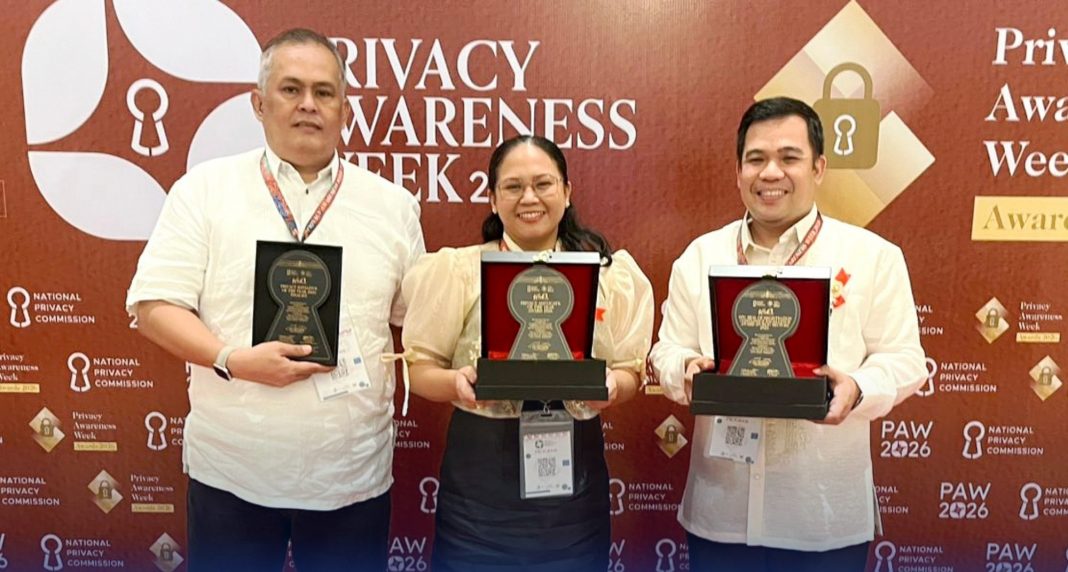
The Philippine Statistics Authority (PSA) solidified its standing as a gold standard in data governance after hauling major recognitions at the prestigious National Privacy Commission (NPC) Awards.
Competing against top-tier government agencies and institutions, the PSA was honored with the NPC Seal of Registration Compliance Excellence Award (Public Sector) and the highly coveted Privacy Advocate of the Year Award. Adding to the evening’s triumphs, the agency was also named a top finalist for the Privacy Initiative of the Year Award.
These accolades underscore the PSA’s rigorous adherence to the Data Privacy Act of 2012 and its continuous effort to champion data security across all its massive operations, including national censuses, civil registration, and the implementation of the Philippine Identification System (PhilSys).
The awards were received by key legal and data privacy champions within the agency, representing the collective effort of the PSA workforce:
-
Atty. Eliezer P. Ambatali, Head of the PSA Data Protection and Security Unit, accepted the NPC Seal of Registration Compliance Excellence Award, recognizing the agency’s flawless regulatory compliance and proactive risk management.
-
Atty. Kristine A. Tendencia-Bartolome was individually honored with the Privacy Advocate of the Year Award for her outstanding leadership, systemic influence, and relentless promotion of data privacy rights. “At the core of the PSA’s work—whether we are conducting nationwide statistics, managing vital civil registries, or rolling out the National ID—is a steadfast dedication to upholding the highest standards of data privacy. We prove that efficiency in public service does not need to come at the cost of data security,” said Atty. Ambatali.
As the primary research and data collection arm of the Filipino government, the PSA handles vast amounts of sensitive personal information daily. Winning these awards highlights the agency’s success in building a robust, privacy-centric culture.
Moving forward, the PSA pledges to continuously innovate its security protocols, ensuring that as public services become more digitized, the data of every single Filipino remains fiercely protected, secure, and private.

