


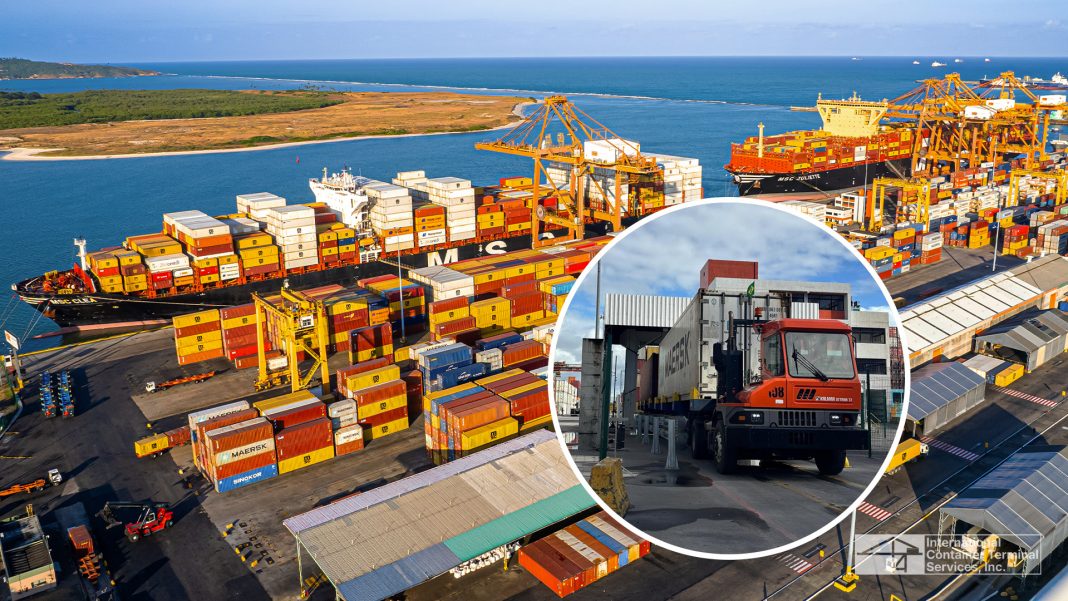
Tecon Suape S.A. (Tecon Suape), International Container Terminal Services, Inc.’s (ICTSI) container terminal operation at the Suape Industrial Port Complex in Recife, Brazil, has deployed a new container scanner to strengthen security processes and enhance operational efficiency.
With the new Linev DTP 7500LVX scanner, Tecon Suape expects to streamline inspection and support faster cargo handling for shipping lines, cargo owners and logistics operators in the region. The equipment also supports more efficient coordination of quay cranes and terminal tractors by reducing equipment idle time and maintaining steady cargo flow.
“The new scanner allows us to inspect cargo more efficiently while meeting all compliance requirements. It forms part of our continuous investment program to provide safe, reliable and high-quality services for our customers,” said Thomas Jefferson de Lima, TSSA chief executive officer.
“Investments such as this ensure that our operations remain responsive, efficient and competitive, while safeguarding the integrity and security of the supply chain for our customers and partners,” added Lima.
The new scanner is strategically positioned near the berth and fully integrated into existing terminal workflows. The location improves yard traffic flow and minimizes unnecessary truck movement. The scanning technology is expected to reduce truck cycle times and increase scanning productivity by up to 40 percent.
The equipment uses high-energy X-ray technology to generate detailed images of container contents without requiring physical inspection. The system also allows operators to identify irregularities in cargo density and structure, enabling faster screening and more targeted inspections. By highlighting differences in materials, X-ray imaging helps detect undeclared or suspicious cargo while minimizing delays in container clearance.
The investment reinforces TSSA’s compliance with customs and security requirements while supporting its strategy of continuous operational improvement. It also enhances customer satisfaction by meeting increasing demands for speed, reliability and efficiency across terminal operations.

