


Mitsui O.S.K. Lines, Ltd. (MOL) and IBM Japan, Ltd. today announced the joint development of an AI-powered platform that integrates a wide range of information related to vessel operations to enhance decision-making.
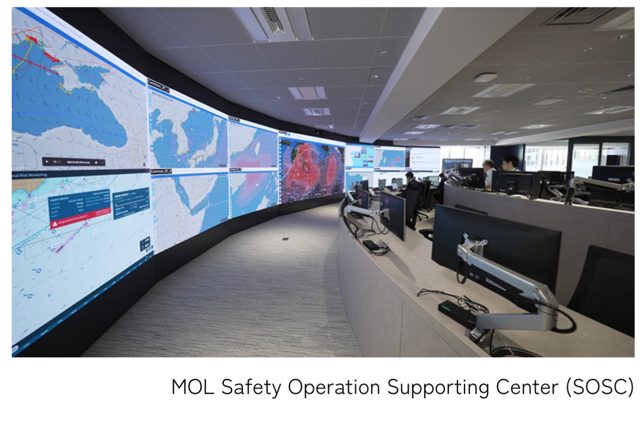
Centered on MOL’s Safety Operation Supporting Center (SOSC), the platform supports the safe operation of MOL-affiliated vessels around the world, the platform centrally manages information—such as weather and sea conditions, navigation status, and geopolitical developments—that was previously dispersed across multiple sources.
By rapidly identifying critical information for vessels, the platform not only speeds up decision making but also increases the quality of operational decisions.
In a joint statement, both companies noted that MOL in recent years, the environment surrounding vessel operations has become increasingly complex due to rapid changes in weather and sea conditions, as well as the growing influence of geopolitical factors.
Under these circumstances, MOL’s SOSC has faced the challenge of balancing both the quality and speed of decision-making—by extracting critical events from a vast and dispersed volume of information, synthesizing multiple factors, and simultaneously making important judgments.
This platform, which has gone live on July 1, was developed by integrating SOSC’s accumulated expertise in vessel operations, the AI technologies of MOL INFORMATION TECHNOLOGY INDIA PVT. LTD. (MOLIT), ] and IBM Japan’s expertise in AI and data utilization. The development leveraged the IBM Garage methodology, which enables an end-to-end approach—from proposing system designs tailored to customer needs through development and implementation.
Key features of the platform include real-time situation awareness through Integration of Vessel-Related Information, data management platform that integrates weather and sea condition data, vessel operation data, and geopolitical information in real time enables the system to monitor the surrounding environment of vessels underway and visualize it in a centralized manner.
The platform also provides decision support via AI Assistant By utilizing generative AI that identifies and extracts risks faced by vessels in real time based on historically accumulated vessel operation records and current operational information, the system supports monitoring vessel movements, situation assessment, and prioritization of operational decisions.
In addition it has an Advanced Knowledge Utilization system, leveraging past accident information, response case studies, and insights gained in the field to enable organization-wide sharing and analysis.
These features help SOSC personnel quickly identify critical incidents from a vast volume of information, enabling more proactive and accurate decision-making than ever before. By combining AI-driven data analysis with the expertise of experienced captains, the platform further enhances the quality of operational judgments.
Going forward, the MOL Group said they will continue to work in collaboration with affiliated companies to expand the system’s functionality and broaden the scope of operations it supports, while contributing to enhanced safety across the entire shipping industry.
The project is one of the measures aimed at creating value centered on “Safety” and “Digital Transformation (DX)”— key pillars for strengthening MOL Group’s management foundation under “BLUE ACTION 2035 Phase 2” management plan.
As a leader in safety, MOL will continue to advance its preventive safety management through more sophisticated decision-making, while also strengthening the value the group delivers to society and stakeholders by further enhancing the reliability of maritime transport.
The SOSC serves as the central hub that continuously monitors the status of MOL vessels 24 hours a day, 365 days a year, and provides advice on operational decisions as well as recommendations for corrective actions.
By taking into account weather and sea conditions, geopolitical developments, and navigation status, SOSC supports the decision-making of captains and operations managers and works to prevent serious accidents before they occur, the statement concluded.

