


Lipa-Malvar, Batangas – As the Philippines seeks to attract higher-value manufacturing and strengthen its position in regional supply chains, the availability of skilled engineers and technical professionals is becoming increasingly important to national industrial competitiveness.
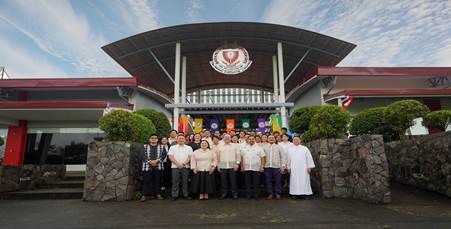
Batangas State University–LIMA Campus recently opened its doors to close to 800 first-year engineering students inside LIMA Estate, advancing a shared effort by Batangas State University and Aboitiz Economic Estates to develop industry-ready talent for Batangas and the wider region.
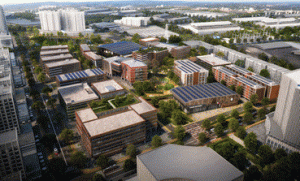
The interim campus marks the first operational phase toward the planned 10-hectare Batangas State University–LIMA Campus, envisioned as the Philippines’ first learning hub for industry-based learning. The model brings engineering education closer to manufacturing, technology, and actual workplace requirements, giving students opportunities to apply classroom learning in an environment shaped by evolving industry needs.
The Industry-Based Learning model also creates a more direct role for industry in preparing future engineers. Through curriculum alignment, professional placements, and skills development, companies can help shape academic programs around emerging technologies and workforce requirements while gaining earlier engagement with emerging talent.
For Aboitiz Economic Estates, the campus is a major implementation milestone under Talent Edge, its broader workforce capability framework covering Academe, Workforce, Upskilling, and Engagement. The framework connects education and applied learning with recruitment, skills development, workforce planning, and long-term workforce capability within its estates.
“Industrial competitiveness increasingly depends not only on infrastructure and investment capacity, but on whether companies can access the skills they need as technologies and production requirements evolve,” shared Rafael P. Fernandez de Mesa, President and CEO of Aboitiz Economic Estates and Aboitiz Land. “The Batangas State University–LIMA Campus is one way we are responding to that challenge by bringing education closer to industry and building a stronger, more sustainable talent pipeline for the businesses and communities growing alongside LIMA Estate.”

LIMA Estate, located in Lipa-Malvar, Batangas, is a 1,100-hectare industry-anchored development home to more than 200 companies and 75,000 workers. Its concentration of manufacturing and business activity provides a strong environment for connecting engineering education with the skills, technologies, and career opportunities shaping the region’s industrial growth.
Located within LIMA Estate, the campus places engineering education in one of the region’s major industrial and employment centers. The estate currently hosts more than 200 locator companies and approximately 75,000 workers, creating opportunities for students to gain greater awareness of manufacturing operations, technologies, workplace practices, and career pathways.
The partnership also supports broader regional workforce development. For Batangas and the wider CALABARZON region, stronger access to industry-aligned engineering education can help expand economic mobility, deepen the local talent pool, and support the workforce requirements of companies investing in the region.
“As educators, we have a responsibility to prepare our students for the professions they will enter. The Batangas State University–LIMA Campus gives our engineering students a learning environment where they can develop practical skills, understand professional expectations, and see how their education can translate into meaningful careers. We are proud to give our students this opportunity as we strengthen engineering education in Batangas and the country,” said Dr. Tirso A. Ronquillo, President of Batangas State University.
As the pioneer batch begins classes, the Batangas State University–LIMA Campus demonstrates how education and industrial development can advance together, strengthening the engineering talent pipeline needed to support growth across Batangas and Southern Luzon while creating clearer pathways to skilled careers and economic opportunity.

