


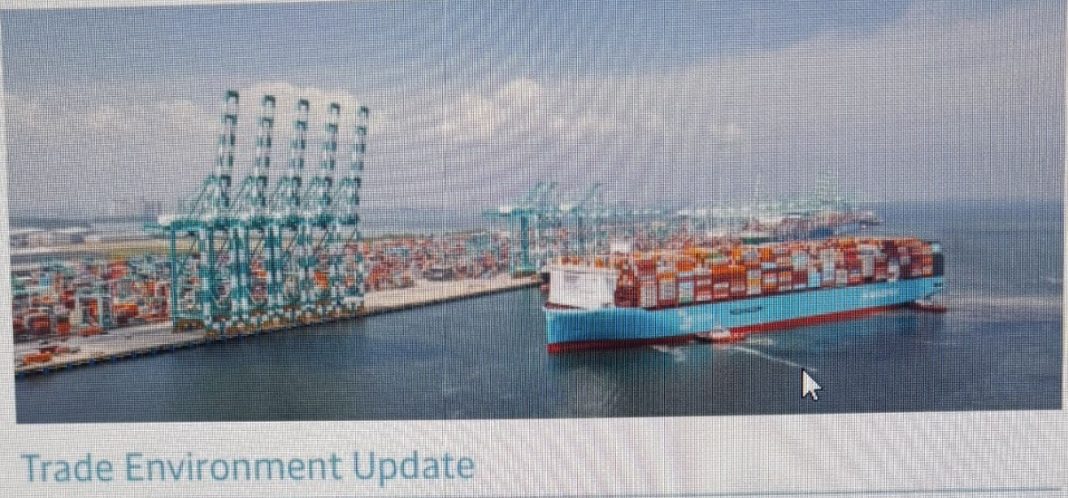
Ongoing port and depot congestion in Indonesia and the Philippines continues to create challenges for inland operations, affecting equipment availability, truck turnaround times, and shipment planning, the latest Maersk Asia Pacific Monthly Market Update – August 2026 said.
“These conditions are increasing the importance of proactive planning, supply chain visibility, and flexible inland solutions,” the market report of the world’s leading shipping and logistics provider noted.
The report was also bolstered by vessel waiting time indicator for major Asian ports.
According to the Maersk Market Update, Manila and Shanghai registered longer vessel waiting time indicator of more than three days compared to less than a day in Busan, Dalian, Jakarta, Singapore, Laem Chabang, Semarang, Hong Kong, Xiamen, Nasha, Tanjung Pelepas, Vung Tau, Haiphong, Brisbane, Sydney, Auckland, Melbourne, and Tauranga. Vessel waiting time indicator is between 1-3 days in Qingdao, Ningbo, Yantian, Shekou, Ho Chi Minh, Port Klang, and Chittagong.
“As manufacturing and sourcing networks across Asia Pacific continue to expand, inland logistics is becoming an increasingly important part of supply chain planning. Businesses are managing more complex origin and destination networks, creating greater interest in reliable transportation options, alternative corridors, and improved connectivity between production centers and key trade gateways,” according to the Maersk Market Update.
Emerging regional corridors
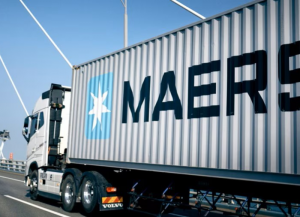
This development, however, is also creating emerging regional corridors and new opportunities for customers seeking more flexible connectivity across Asia. For instance, Maersk cited the Mekong area where integrated road and rail solutions are supporting stronger connectivity between Southeast Asia and China. The China–Laos–Thailand railway corridor continues to provide an alternative transportation option for selected cargo flows, including industrial goods, automotive components, electronics, consumer products, and agricultural commodities.
New cross-border solutions linking Cambodia with Laos and onward to China are supporting faster movement of temperature-controlled cargo, including commodities such as durian and longan, while providing additional options for emerging production origins in the region.
Cross-border trucking networks across Vietnam, Cambodia, Laos, and neighboring markets continue to develop as customers look for more seamless regional transportation solutions.
Integrated road solutions can help simplify cross-border movements by reducing handling requirements and supporting more efficient connections between factories, ports, and inland markets.
The market update also considers the impact of weather disruptions. While these disruptions are often temporary, they highlight the importance of maintaining visibility across supply chains and allowing sufficient planning time for inland transportation requirements.
In the air freight market, the report said this remains an important solution for supporting speed, inventory management and supply chain responsiveness.
Technology is also becoming an important contributor to Asia Pacific air freight activity, particularly across high-value and time-sensitive commodities such as electronics and semiconductor-related goods.
Trade environment
Other factors compounding the global trade flow are tariff policies, regulatory requirements, and increased focus on supply chain transparency.
The study noted that governments across key markets are strengthening controls around product origin, responsible sourcing, and
import compliance, increasing the importance of accurate documentation and supplier visibility.
Meantime, investments are geared towards regional manufacturing to support more diversified supply chains, while customers continue to prioritize visibility and proactive planning to manage changing requirements.
“This is contributing to more complex cargo flows and a growing need for logistics solutions that connect diverse production and consumption markets,” the study added.

