


MANILA — The Aurora Pacific Economic Zone and Freeport Authority (APECO) welcomed Department of National Defense Secretary Gilbert Teodoro Jr.’s call for the development of key defense facilities overlooking the country’s Pacific waters, saying the proposal underscores the growing importance of the eastern seaboard in the Philippines’ national security and long-term economic strategy.
This, as the defense chief made the statement during his department’s budget hearing emphasizing the need for infrastructure to support and sustain the country’s defense capabilities, including strategic installations positioned to oversee the eastern seaboard.
APECO President and CEO Usec. Gil G. Taway IV said the statement reinforces the need to view defense infrastructure not only as a security requirement but also as part of a national industrial policy that can build domestic capabilities, attract technology and investment, and create new economic activities in strategically located areas.
“Secretary Teodoro’s statement recognizes that areas facing the Pacific have a role to play in national security, but that role can also generate economic opportunities. Strategic infrastructure can support defense readiness while creating an ecosystem for manufacturing, maintenance, logistics, technology and other dual-use industries,” Usec. Taway said.
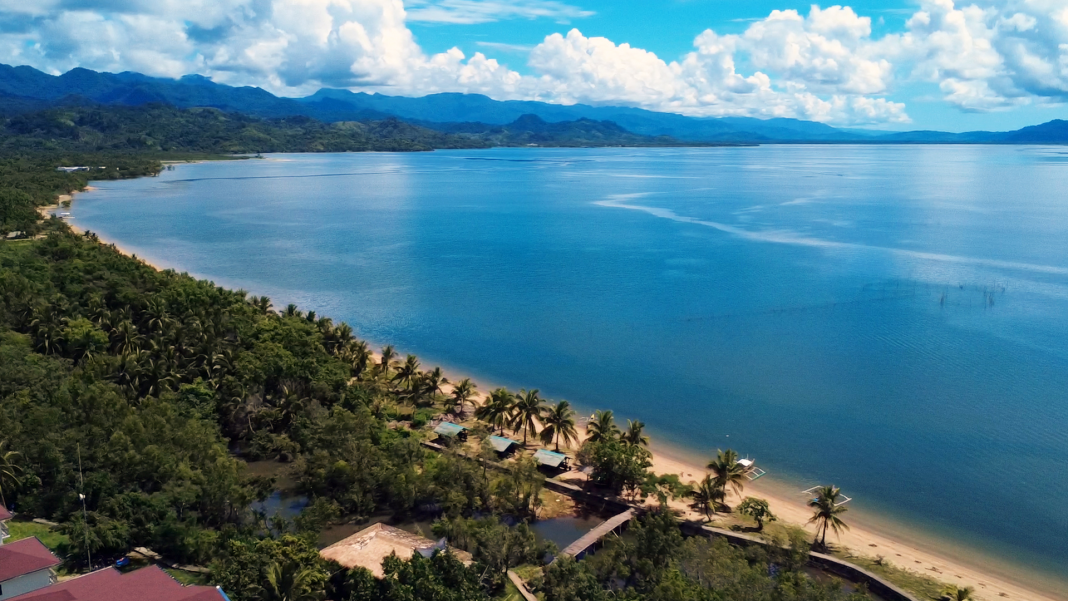
Located in Casiguran, Aurora, APECO sits on the eastern seaboard of Luzon with direct access to the Pacific Ocean, the Philippine Rise and the wider Indo-Pacific. Its 12,923-hectare area naturally sheltered by the San Ildefonoso Peninsula in the east and the Sierra Madre in the west, existing airstrip, and the planned Casiguran International New Port provide a potential platform for specialized industries that require space, maritime access and proximity to Pacific routes.
Taway said this makes defense and security-related activities a natural niche for APECO alongside other priority sectors such as logistics, energy, fisheries, digital infrastructure, and advanced industrial activities.
He added that APECO sees opportunities in the broader defense-industrial ecosystem, including maintenance, repair and overhaul, aerospace and unmanned systems, maritime logistics, warehousing, research and other technologies with both civilian and security applications.
“The development of such an ecosystem in APECO could also strengthen the Philippines’ role in Indo-Pacific stability while contributing to economic resilience,” Usec. Taway said.
“APECO hopes to be part of that national effort by developing a responsible industrial ecosystem in the Pacific seaboard that serves both the country’s security interests and its economic ambitions,” he added.
APECO, which sits at the convergence of Indo-Pacific trade and the government’s national defense priorities, is well positioned to explore this niche within a broader industrial policy framework.

