


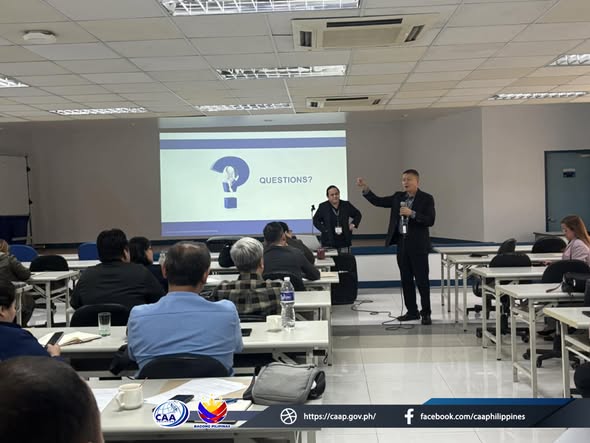
Following a successful series of nationwide awareness workshops, the Civil Aviation Authority of the Philippines (CAAP), through the Aeronautical Information Service (AIS), reached a major milestone in its modernization journey. The final Stakeholders Meeting was held on 10 December 2025 at the Civil Aviation Training Center (CATC), marking the completion of a strategic initiative to revolutionize aeronautical data management in the country.
The meeting served as the culmination of an intensive roadshow designed to align all CAAP Areas with global standards in digital information. By bringing together internal regulatory bodies and private sector airport operators, the AIS is ensuring that the Philippine aviation sector moves toward a seamless, data-driven future.
The session was characterized by high-level collaboration between key internal services and major external stakeholders. Representatives in attendance included:
-
Internal CAAP Services: Air Traffic Services (ATS), Air Navigation Services (ANS), Aerodrome Data Management System (ADMS), Flight Standards Inspectorate Service (FSIS), and the Aerodromes and Air Navigation Services Oversight Office (AANSOO).
-
Key Aerodrome Operators: New NAIA Infra Corp. (NNIC), Mactan-Cebu International Airport Authority (MCIAA), Luzon International Premiere Airport Development (LIPAD) Corp., and Trans Aire Development Holdings Corp.
The primary objective of these workshops is the transition from traditional Aeronautical Information Services to Aeronautical Information Management (AIM). This shift focuses on the digital exchange of high-quality, real-time data, which is essential for the safety and efficiency of modern air navigation.
This initiative underscores CAAP’s unwavering commitment to:
-
Digital Transformation: Moving away from paper-based systems to integrated digital platforms.
-
Quality Assurance: Guaranteeing that all aeronautical information is accurate, timely, and compliant with international standards.
-
Operational Excellence: Empowering airport personnel with the tools and knowledge required to maintain the highest levels of aviation safety.
“The conclusion of these workshops is not just the end of a series of meetings, but the beginning of a more digitally resilient Philippine aviation sector,” said a representative from the AIS. “By synchronizing our efforts with our partners at NNIC, MCIAA, LIPAD, and Trans Aire, we are ensuring that our skies remain among the safest in the region.”

