


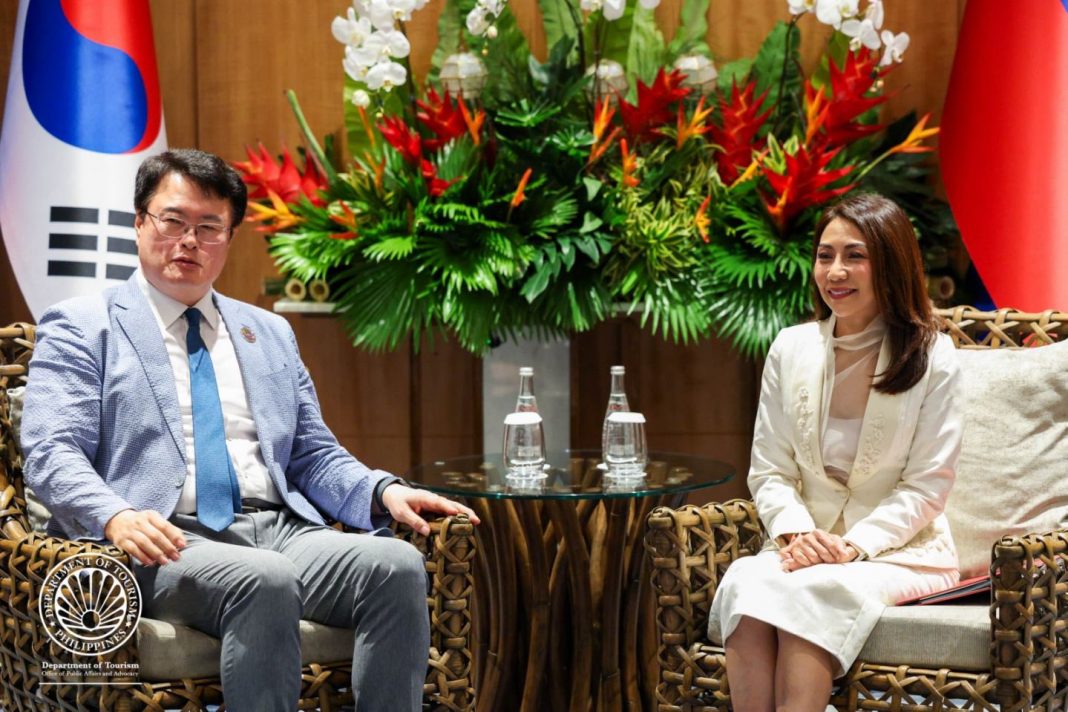
Tourism Secretary Christina Garcia Frasco met with high-ranking officials from the South Korean Ministry of Culture, Sports, and Tourism on Thursday, January 29, to reinforce the long-standing tourism partnership between the two nations. The bilateral meeting, held during the high-level sessions of the ASEAN Tourism Forum (ATF) 2026, focused on maintaining South Korea’s 15-year streak as the Philippines’ top source market for visitors.
The discussions were led by South Korean Vice Minister H.E. Kim Dae Hyun and Secretary Frasco, focusing on strategic collaborations to expand air connectivity between the two countries. Both parties expressed a commitment to resolving pertinent issues that affect travel fluidity, ensuring that the Philippines remains the primary choice for Korean travelers.
Addressing recent travel alerts, Secretary Frasco reaffirmed the Philippine government’s “unequivocal position” on tourist safety. While acknowledging isolated incidents, she emphasized that the Department of Tourism (DOT) is working tirelessly to protect the mutual “love affair” between the two nations. “We view with grave concern the travel alerts issued for our destinations as a result of isolated incidents,” said Secretary Frasco. “The safety and welfare of our tourists remain our absolute priority, and we are dedicated to reinforcing the Philippines as a safe and reliable destination.”
To better serve South Korean visitors, the DOT has launched several language-specific support programs:
-
TOPCOP Korean Language Training: In partnership with the Korean Culture Center (KCC), the Tourist-Oriented Police for Community Order and Protection (TOPCOP) program now includes Korean language training. This allows security personnel in hubs like Cebu, Boracay, Palawan, Davao, Bohol, and Clark to communicate effectively with visitors.
-
Multilingual Assistance: The Tourist Assistance Call Center (TACC) has integrated dedicated Korean-speaking agents to provide real-time support and emergency response for tourists.
Through these localized efforts, the Philippines aims to provide a seamless and secure experience for the millions of South Koreans who contribute significantly to the livelihoods of local tourism workers and enterprises.

