


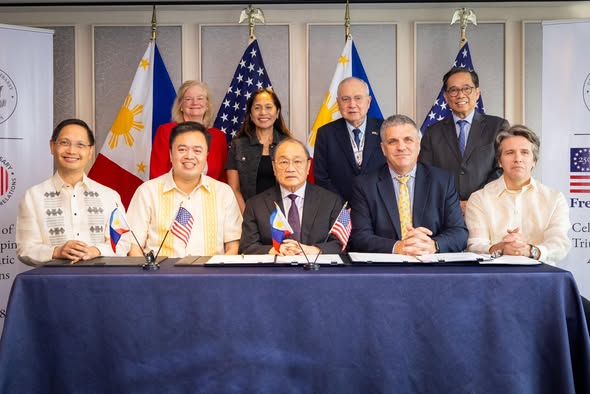
Marking the 80th anniversary of diplomatic relations (#USPH80), the United States and the Philippines have launched a series of strategic initiatives to accelerate the deployment of safe, reliable, and innovative nuclear energy in the Philippines.
This multi-agency collaboration underscores the shared commitment to the “Partners in Prosperity” mission, focusing on the deployment of Small Modular Reactor (SMR) technologies and the development of a world-class nuclear workforce.
Through the U.S. Department of State’s Foundational Infrastructure for Responsible Use of Small Modular Reactor Technology (FIRST) Program, the United States will provide the Philippines with a state-of-the-art nuclear control room simulator.
Located within the Luzon Economic Corridor, this simulator will serve as a cornerstone for Philippine energy independence, offering:
-
Hands-on Training: Practical technical experience for Filipino students in a controlled environment.
-
Technical Literacy: Skills development to manage future nuclear infrastructure safely and securely.
-
Institutional Support: Facilitated academic and government exchanges to share U.S. regulatory frameworks and policy expertise.
To move from theory to implementation, the U.S. Trade and Development Agency (USTDA) has committed $2.7 million to fund a comprehensive feasibility study for Meralco. This study will:
-
Evaluate leading U.S.-designed SMR technologies.
-
Identify viable sites for future reactor deployment.
-
Deliver a high-level implementation roadmap for the Philippines’ energy grid.
The partnership further extends to vocational and higher education. Fulbright Philippines, in collaboration with TESDA and Aboitiz Power Corporation, will dispatch nuclear experts to the Philippines. These specialists will develop specialized curricula designed to prepare the next generation of engineers and technicians for the growing civil nuclear industry. “These announcements mark a pivotal step in our bilateral energy cooperation. By combining U.S. technology with Philippine talent, we are ensuring a clean, secure, and resilient energy future for the Indo-Pacific region.”

