


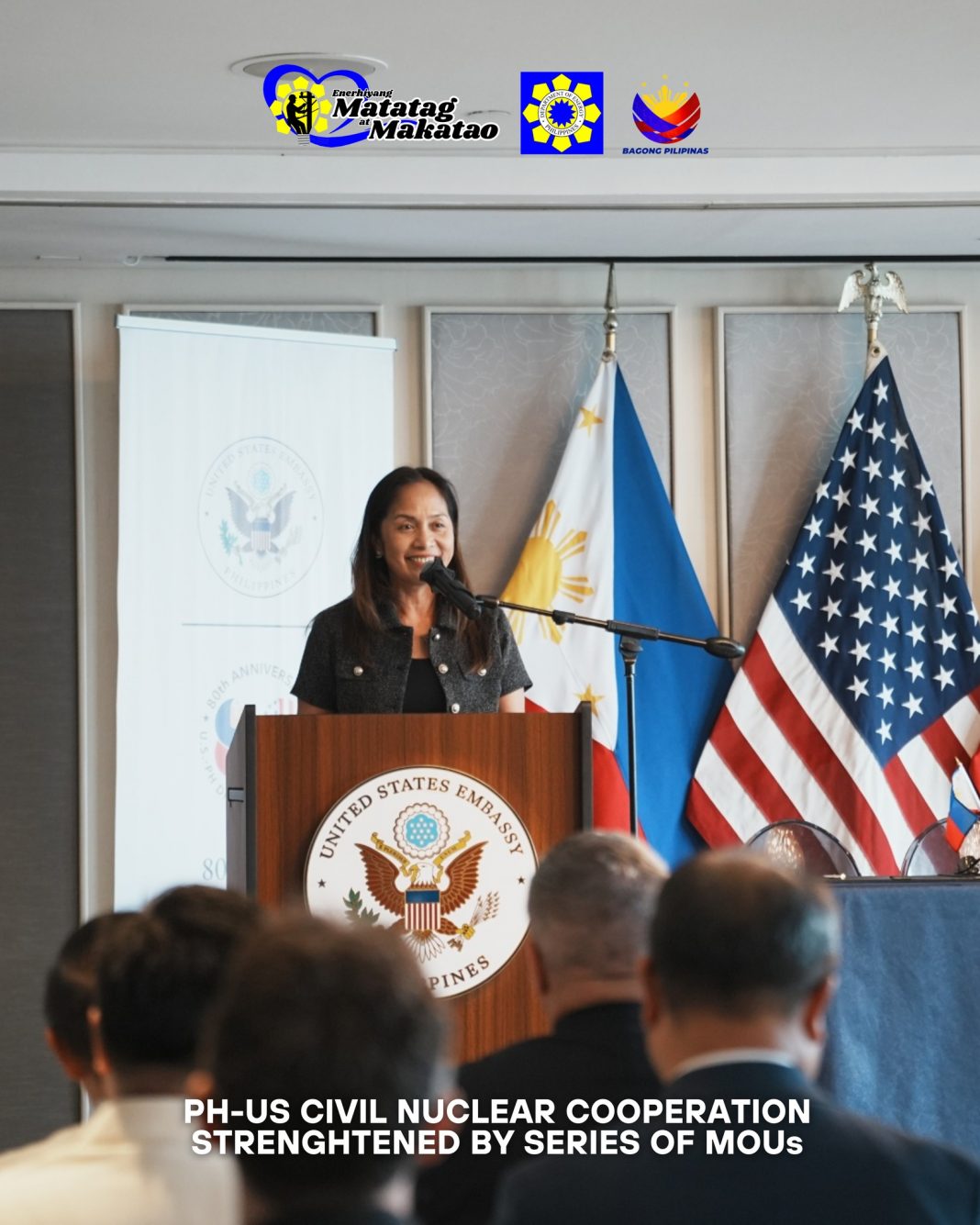
The Department of Energy (DOE) today announced a landmark expansion of civil nuclear cooperation between the United States and the Philippines. Building on the momentum of the “123 Agreement,” these new initiatives mark a decisive step in the Philippines’ strategy to integrate nuclear energy into the national power mix by 2032.
This collaboration is centered on three core pillars: technological feasibility, workforce readiness, and regulatory excellence.
The partnership introduces several high-impact programs designed to bridge the gap between policy and implementation:
-
-
Small Modular Reactor (SMR) Feasibility: A U.S.-funded study will evaluate the deployment of SMRs, which offer a versatile and scalable solution for the Philippine archipelago’s unique geography.
-
Advanced Workforce Development: To build a specialized local workforce, the U.S. will provide a nuclear reactor control room simulator. This allows Filipino engineers and technicians to undergo rigorous, hands-on training in a controlled environment.
-
Regulatory & Legislative Exchange: Philippine legislators and energy stakeholders will participate in study tours and trade missions to the United States. These missions focus on global best practices in nuclear safety, security, and oversight.
-
Knowledge Ecosystems: The agreement expands public-private and academic partnerships, ensuring that the transition is supported by local expertise and long-term research capabilities.
-
The integration of nuclear power is a key component of the Philippines’ broader goal for energy security and economic resilience. By diversifying the energy mix, the Philippines aims to provide more reliable, low-carbon power to its citizens. “These efforts ensure that the Philippines’ nuclear path is not just technically sound, but also people-centered,” the Department stated. “Every step is being taken to align with the highest global safety standards and ensure our technological readiness for a resilient future.”

