


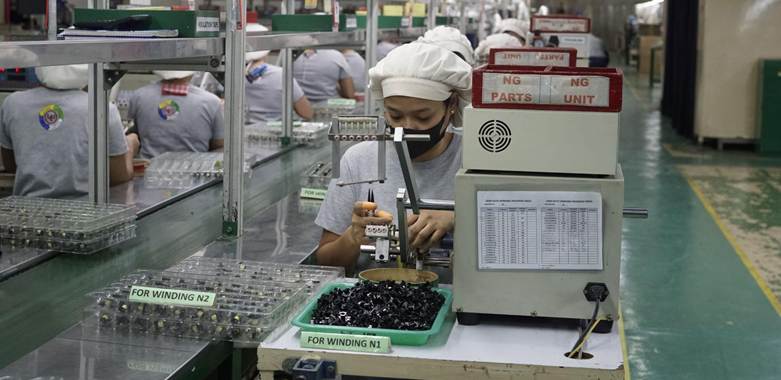
The Philippine export sector extended its growth momentum to 13 consecutive months, with total earnings reaching USD7.1 billion in January 2026, up from $6.6 billion in the same month last year with more than 70 percent of shipments went to countries where the country has free trade agreements (FTAs) and Generalized Schemes of Preferences (GSP).
The 7.9 percent year-on-year increase marked the longest expansion in over a year and the highest export level since October 2025.
Preliminary data from the Philippine Statistics Authority attribute the performance to robust growth in electronic products and mineral exports, underscoring sustained global demand for Filipino goods.
A defining factor in this sustained growth is the country’s aggressive expansion of market access. Based on 2026 data, more than 70 percent of Philippine exports were shipped to markets where the country holds Free Trade Agreements (FTAs) and Generalized Schemes of Preferences (GSP).
This strategic advantage is a direct result of the Philippines securing its most extensive list of FTAs in history under the administration of President Ferdinand R. Marcos Jr. By prioritizing high-impact bilateral and multilateral deals, the PBBM administration has effectively opened doors for Filipino businesses, surpassing the trade-reaching milestones of all previous administrations.
Trade Secretary Cristina A. Roque noted that these figures prove that the strategy of diversifying and deepening trade ties is paying off.
“The broad-based gains across electronics, minerals, and agro-based products demonstrate that Filipino products are already consumed and recognized globally, reflecting the high quality and reliability of our industries,” Roque said. “We will build on this performance by further deepening market reach through our expanded FTA network, strengthening value chains, and enhancing exporter support to secure steady growth throughout the year.”
Electronic products remained the country’s top export in January, generating more than USD4 billion and accounting for 56.5 percent of total shipments. Industry insights indicate that increased semiconductor exports and industrial production stemmed from robust international demand for artificial intelligence-related semiconductor components, as cited in the World Bank Group’s January 2026 Global Economic Prospects report.
Gold followed with USD488.8 million in export earnings, while machinery and transport equipment added USD383.2 million.
By commodity group, manufactured goods comprised the majority of total exports at USD5.6 billion or 79.3 percent. Mineral products accounted for USD732.3 million or 10.3 percent, after nickel ore shipments resumed early this year following weather-related disruptions in late 2025. Industry sources said export volumes of critical minerals rebounded at the start of 2026 due to renewed production and stable global demand.
Agro-based products posted USD573.8 million, representing 8.1 percent of total exports. Fresh banana shipments increased due to higher output and firmer demand compared to a year ago, while desiccated coconut exports rose on stronger prices year-on-year.
Meanwhile, exporters continue to comply with regulatory requirements in key markets. For tuna shipments, the implementation of import comparability rules under the US Marine Mammal Protection Act starting January 1, 2026 requires additional documentation for certain products.
By destination, the US remained the Philippines’ largest export market at USD1.2 billion or 16.4 percent of total shipments. Other major markets included Hong Kong ($1.1 billion or 15.9%), Japan ($871.7 million or 12.3%), China ($691.8 million or 9.8%) and South Korea ($391.8 million or 5.5%).

