


As the Philippine cold chain market is projected to reach $1.65 billion by 2033, industry innovators are warning that massive investment alone won’t solve the nation’s logistics hurdles.
Jonathan Harvey and Joe Khoo Liqiang, Founders of Polar Cold, argue that the current landscape suffers from a “missing middle” that leaves small-to-medium enterprises (SMEs) behind and contributes to an estimated PHP 25 billion in annual food wastage.
In a recent industry assessment, the founders highlighted a significant disconnect: while massive “mega-sites” are being built for big business, the local restaurant owner and regional distributor are often forced to build their own expensive, fixed cold rooms.
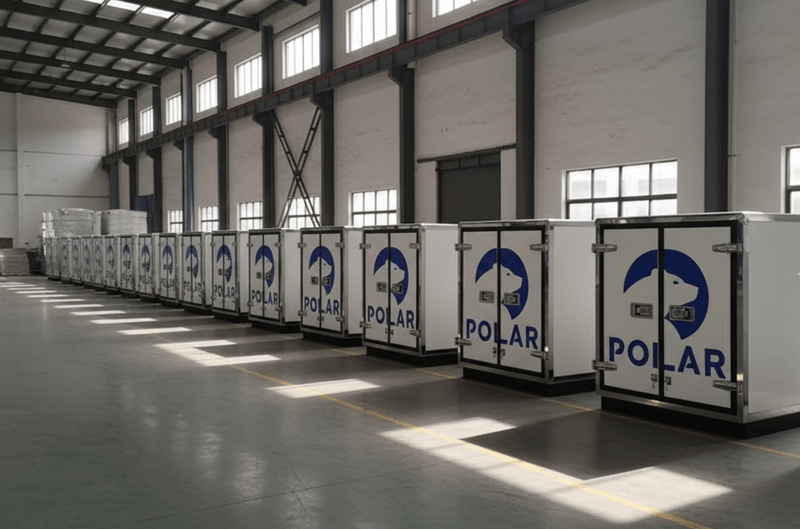
Polar Cold is championing a shift from massive, centralized hubs to a decentralized connectivity layer. By deploying containerized micro-hubs (ranging from 10 to 50 pallets) directly within urban centers, Polar Cold aims to shrink the delivery radius for last-mile logistics.
“Real efficiency is achieved by moving the ‘starting line’ closer to the consumer,” says the leadership team. “Being 15 minutes away from a customer rather than two hours away is a massive competitive advantage. It doesn’t just lower costs; it cuts down on heat exposure and spoilage, ensuring peak product quality.”
The founders identified two critical areas where capital must be redirected to ensure a sustainable future for Philippine logistics:
-
The Last-Mile Gap: Investment must flow toward decentralized micro-hubs embedded in cities to support the independent businesses that mega-warehouses cannot serve.
-
The Energy Gap: With electricity prices in the Philippines among the highest in Southeast Asia—accounting for 30% of operational expenses—the industry must pivot toward renewable integration and solar-hybrid systems.
Supported by the BLOCK71 startup ecosystem, Polar Cold is not looking to compete with large-scale operators. Instead, they are building the infrastructure that links large-scale production to the final point of consumption.
“The next phase of cold chain development will be decided by density of access, not just the size of the facility,” the founders concluded. “The Philippines does not just need more investment; it needs investment that actually reaches the last mile.”

