


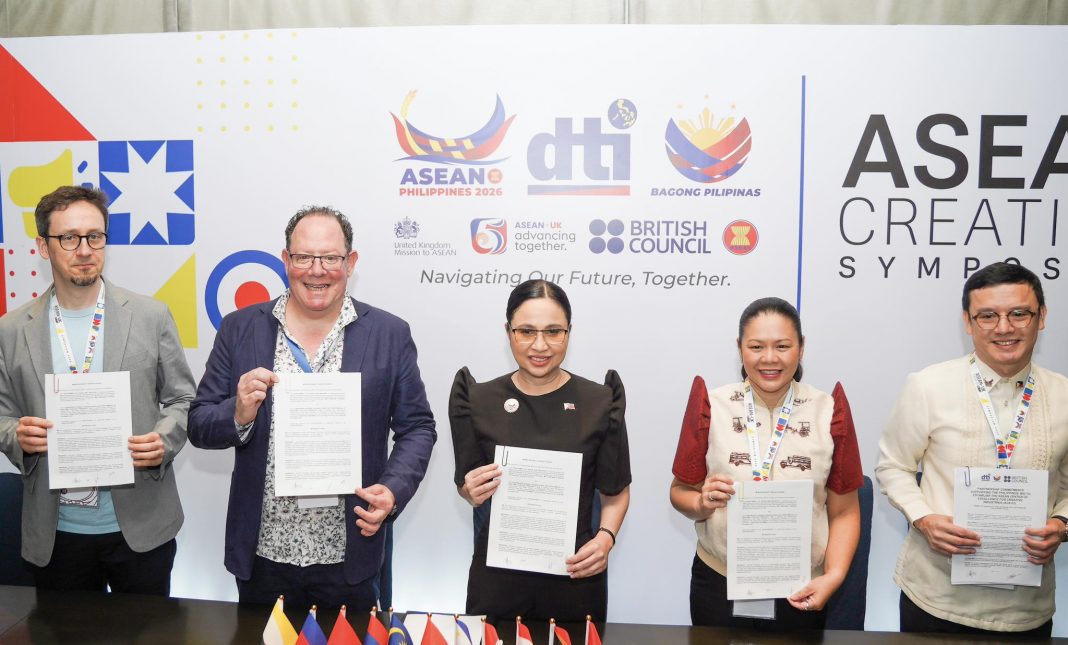
The Department of Trade and Industry (DTI) has solidified the Philippines’ position as a primary catalyst for creative growth following the successful ASEAN-UK Creative Economy Symposium 2026.
The high-level summit brought together a powerhouse assembly of policymakers, industry titans, and international development partners to bridge the creative gap between Southeast Asia and the United Kingdom.
The symposium served as the premier platform for operationalizing the ASEAN Creative Economy Sustainability Framework. Moving beyond theoretical policy, the event focused on converting regional goals into tangible, high-impact initiatives designed to foster innovation and long-term economic inclusivity.
In a move that significantly boosts the country’s global standing, the DTI spearheaded the signing of several pivotal partnership agreements. These collaborations are designed to inject world-class expertise and data-driven strategies into the local and regional creative sectors:
-
CoSTAR Foresight Lab & British Council: New agreements will focus on R&D for creative technology and cultural exchange programs.
-
Creative Policy and Evidence Centre (PEC): Strengthening evidence-based policymaking to ensure creative investments yield maximum economic returns.
-
Regional Synergy: The DTI deepened ties with Indonesia’s Ministry of Creative Economy and the Thailand Creative Economy Agency (CEA) to harmonize standards and cross-border creative trade.
Central to these discussions was the proposed ASEAN Center of Excellence for Creative Industries (ACE-CI). Slated to be headquartered in the Philippines, the Center is envisioned as a central nervous system for regional collaboration.
The ACE-CI will serve three primary functions:
-
Innovation Incubator: Providing creative startups with access to advanced UK-pioneered technologies.
-
Policy Harmonization: Aligning intellectual property and digital trade standards across ASEAN.
-
Skills Development: Bridging the talent gap through specialized training programs in animation, game development, and digital arts. “The Philippines is not just participating in the global creative dialogue; we are shaping it,” said a DTI spokesperson. “By hosting the ACE-CI and partnering with institutions like the British Council and CoSTAR, we are ensuring that Filipino and ASEAN creatives are at the forefront of the global orange economy.”
The creative economy has become a vital pillar of the Philippines’ GDP. This symposium underscores the government’s commitment to “Creative Philippines,” an initiative aimed at transforming the country into a premier creative hub by 2030.
Through these UK and ASEAN partnerships, the DTI expects to see a marked increase in job creation, intellectual property registrations, and creative services exports over the next fiscal cycle.

