


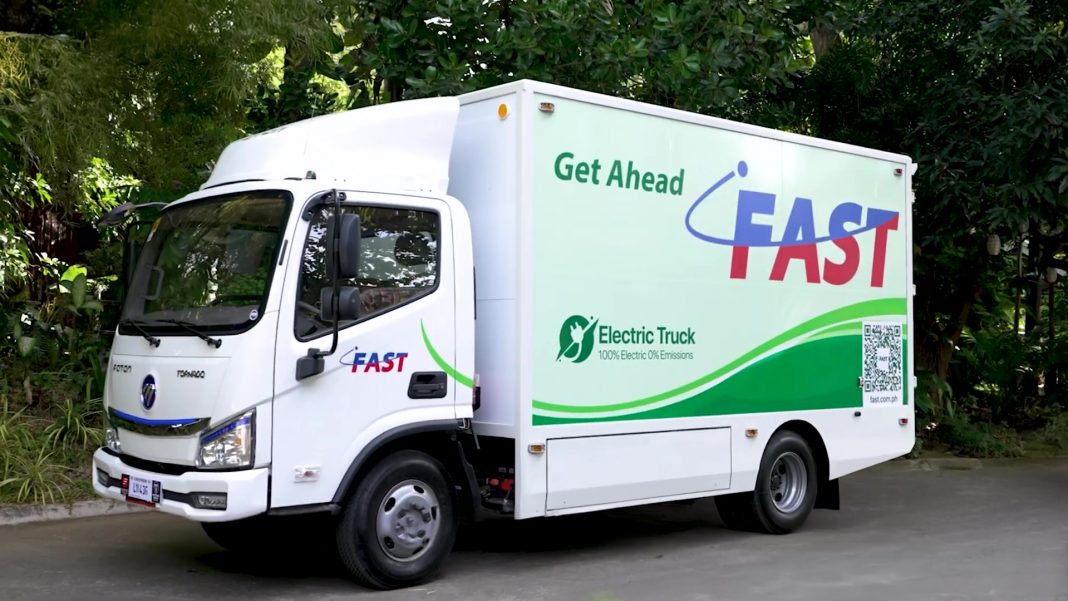
Farmers and agricultural stakeholders should consolidate their products and adopt backhaul logistics to help ensure food security and reduce fuel consumption amid the state of national energy emergency, according to FAST Logistics Group, as it prepares to roll out a farm-to-market initiative with farmers of Aritao, Nueva Vizcaya and industry stakeholders.
The initiative will bring together FAST, the Department of Trade and Industry (DTI)-Supply Chain and Logistics Group, DTI Nueva Vizcaya, the local government of Aritao, and agri-tech firms Agro-DigitalPH and Mayani to improve farm-to-market efficiency by linking farmers directly with buyers and maximizing backhaul logistics, which refers to utilizing delivery trucks’ return trips to carry cargo.
FAST CEO for Logistics Manuel L. Onrejas Jr. emphasized that increasing backhaul logistics capacity would reduce “empty miles” and help cushion the impact of rising food prices on Filipino consumers amid the energy crisis.
“In the face of rising fuel prices and food insecurity, strengthening backhaul logistics is an immediate and practical solution. Every empty return trip is a missed opportunity to move essential goods and ease cost pressures on consumers,” Manny said.
The country’s largest third-party logistics provider (3PL) estimates that around 70% of trucks on Philippine roads return empty after completing deliveries — an inefficiency that contributes to higher transport costs and supply chain gaps.
These inefficiencies are reflected in food prices, which can reach up to three times the farmgate price in major urban centers due to multiple handling points, wastage, and underutilized transport capacity, based on FAST’s monitoring and industry consultations.
To address these issues, the consortium will establish an e-fulfillment and logistics facility in Aritao, aimed at helping smallholder farmers meet institutional requirements while reducing reliance on intermediaries.
FAST will leverage its nationwide logistics capabilities — the country’s largest transport fleet of over 3,100 trucks and the biggest warehouse network, with more than 2 million square meters of space and over 1 million pallet positions — to transport produce more efficiently from Nueva Vizcaya to Metro Manila by utilizing otherwise empty return trips.
Agro-DigitalPH and Mayani will support farmers’ access to markets such as supermarkets, hotels, and restaurants.
Nueva Vizcaya produces around 120,000 metric tons of vegetables annually and is a key supplier to Luzon due to its year-round production capacity. Aritao, located along major routes connecting the Cagayan Valley to Metro Manila, is being positioned as a logistics hub for the initiative.
Manny said stronger public-private collaboration is crucial to managing rising fuel costs and keeping food supply chains stable.
“The energy crisis underscores the need for stronger collaboration between the government and the private sector. Through closer coordination, we can build a more efficient and resilient supply chain that safeguards the interests of both farmers and consumers,” he said.
Aritao Mayor Remelina Peros-Galam expressed optimism for the project, saying it will provide farmers opportunities to professionalize the food supply chain and improve their livelihoods through stronger links with institutional buyers.
“This project is an important step toward making our farmers more competitive and market-oriented,” she said.

