


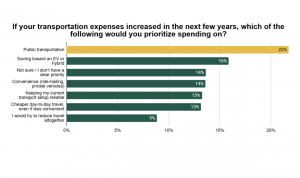
About 1 in 6 say they would prioritize saving toward an electric or hybrid vehicle if transportation costs continue to rise—signaling early momentum toward EV adoption, even as high upfront costs and practical barriers keep full transition out of reach, according to a latest study by Agile Data Solutions Inc.
Based on the data, around 85 percent of Filipinos expect the EV market to grow moderately to rapidly over the next 5 to 10 years. Meanwhile, about 45 percent say they are likely to consider purchasing an EV given their current situation.
The data also showed that mobility plays a big part with 40 percent of Filipinos travel daily for work or essential activities, with the majority (55%) relying on public transportation .
But beyond the immediate pressure, new data from Agile suggests that some Filipinos are beginning to think longer-term as the high cost of fuel is beginning to shock Filipino commuters and motorists.
“Every fuel price increase reshapes how Filipinos think about mobility. What was once routine becomes a daily calculation,” said Jason Gaguan, Chairman and Co-Founder of Agile Data Solutions Inc.
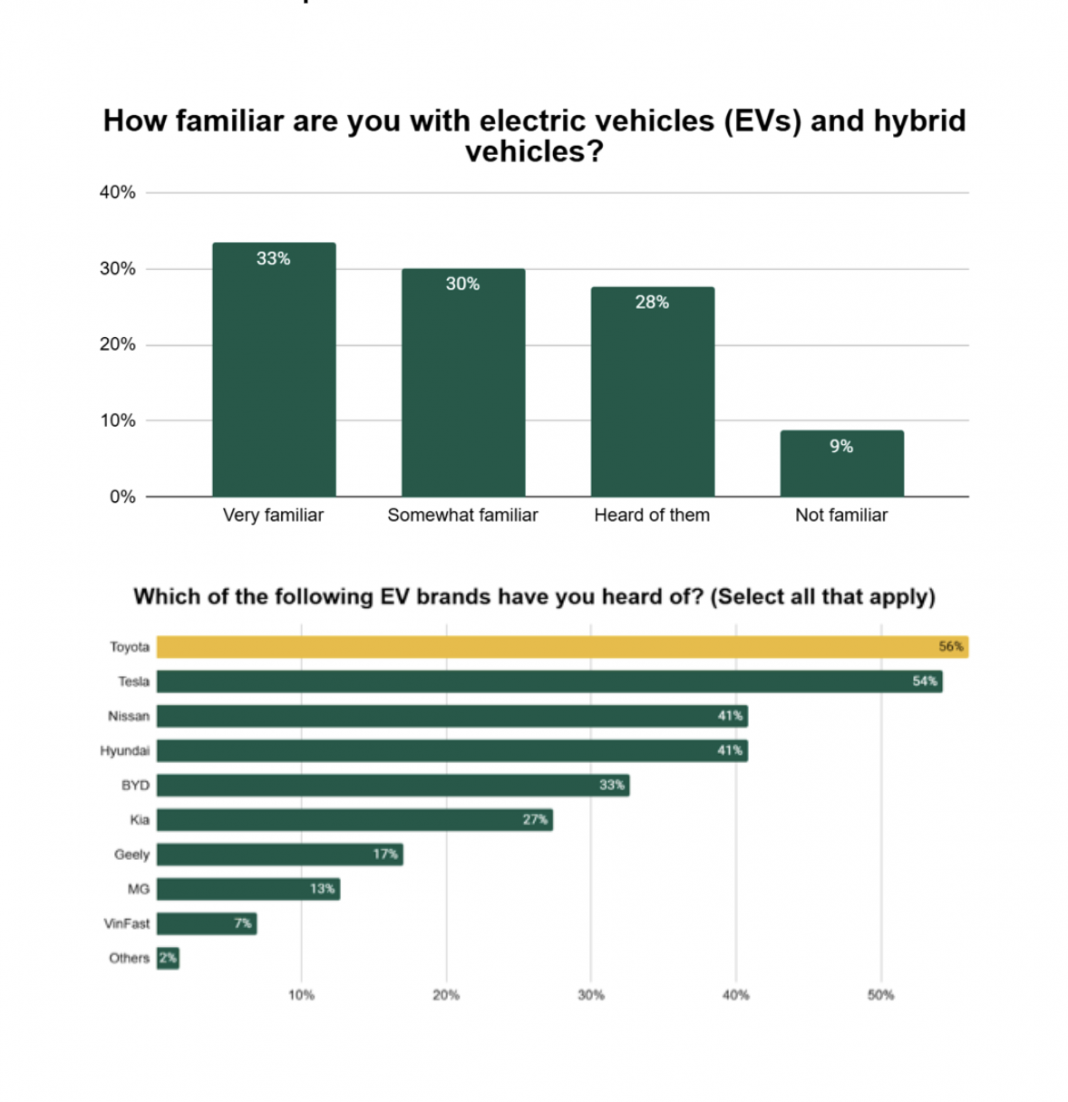
This points to EVs as a solution. The Agile data also showed that electric vehicles are no longer unfamiliar to Filipinos. Awareness is already widespread, with 91 percent of respondents saying they are familiar with EVs or hybrid vehicles.
Yet awareness has not translated into ownership. Around 66 percent of Filipinos still do not own any form of electric or hybrid vehicle. While many have already experienced riding one, regular use remains limited.
The Cost Barrier
Despite growing interest, affordability remains the primary obstacle.
Nearly half of respondents (44%) cite the high purchase price as the main reason for not switching to EVs. Concerns around battery lifespan, replacement costs, and limited charging infrastructure further complicate the decision.
What the data point to is not resistance, but delayed adoption—where familiarity and even openness already exist, but transition is postponed until cost, infrastructure, and day-to-day practicality improve.
“Filipinos are no longer strangers to electric vehicles. The challenge now is not awareness, but whether adoption is realistically within reach,” Gaguan said..
Daily Reality
The study also showed that Filipinos prioritize convenience (33%) and cost (27%) above all else when choosing how to travel. Environmental impact, while acknowledged, takes a back seat to immediate needs.
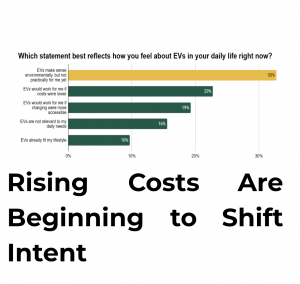
This helps explain why many Filipinos view EVs as appealing—but not yet practical. About one-third say EVs make sense environmentally but do not fit their current lifestyle, while others say they would consider switching only if costs decrease or charging access improves.
In short, EVs are seen as part of the future—but not yet an immediate option.
The current fuel crisis, however, may be starting to change that equation.
As transportation costs rise, some Filipinos are beginning to think beyond short-term adjustments. About 1 in 6 say they would prioritize saving toward an EV or hybrid vehicle, suggesting that rising fuel prices are not only a burden, but also a trigger for long-term planning.
A Potential Turning Point
The current fuel crisis may prove to be more than a temporary disruption. As traditional fuel systems become more volatile, EVs are being reframed not just as an environmental alternative, but as a potential way to reduce economic vulnerability.
Still, widespread adoption will depend on more than consumer intent. Affordability, infrastructure, and policy support will determine whether EVs remain aspirational—or become mainstream.
This reflects a market that is not yet fully converted—but is clearly moving in that direction.
“The real test is whether EVs can move from being a future option to a practical choice today,” Gaguan added.
Many Filipinos are not rejecting EVs. They are waiting for the conditions to make sense.

