


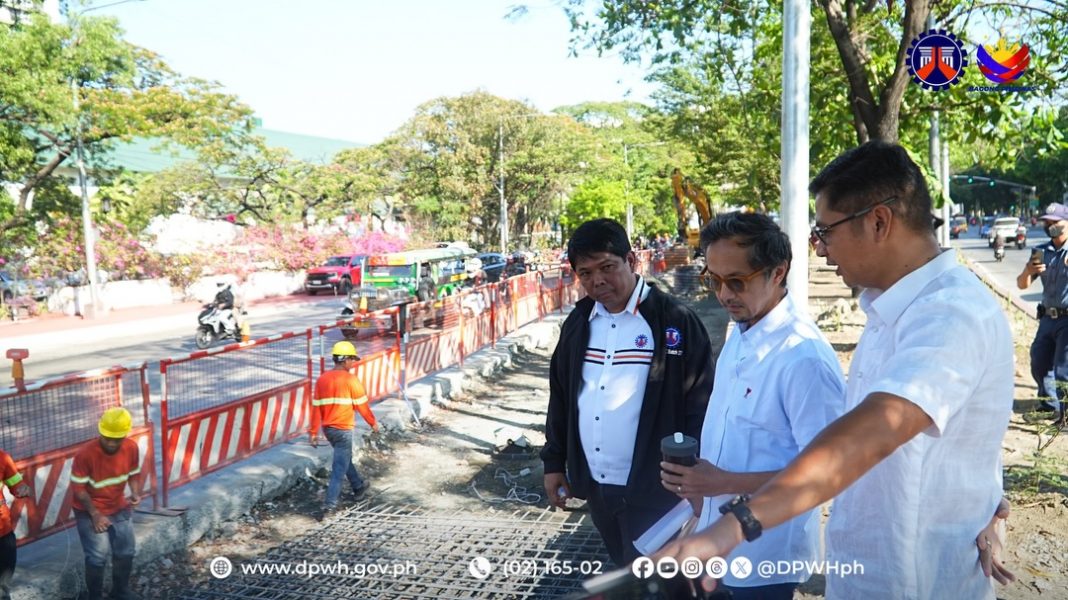
Following a direct directive from President Ferdinand R. Marcos Jr. to fortify the capital’s climate resilience, Public Works Secretary Vince Dizon conducted a site inspection of the Bonifacio Drive drainage project in Port Area, Manila, this Monday.
The inspection marks a critical push to finalize high-priority flood mitigation infrastructure before the peak of the 2026 rainy season. Secretary Dizon emphasized that the administration is fast-tracking “long-standing” solutions to the perennial flooding that has historically paralyzed transit and commerce in the Port Area.
The centerpiece of the Bonifacio Drive project is the installation of advanced High-Density Polyethylene (HDPE) pipes. Unlike traditional concrete culverts, these larger and wider pipes offer superior flow capacity and durability.
“By integrating these wider HDPE pipes into our existing network, we are significantly increasing the volume of water the system can handle,” Secretary Dizon stated. “The goal is simple: ensure that when the heavy rains come, the floodwater subsides in minutes, not hours.”
Key project highlights:
-
Strategic Location: Targeted upgrades along Bonifacio Drive to protect one of Manila’s busiest industrial and commuter arteries.
-
Advanced Materials: Implementation of HDPE technology, known for its resistance to corrosion and high-pressure flow.
-
Accelerated Timeline: The DPWH has committed to a May 2026 completion date, ensuring the system is fully operational ahead of the southwest monsoon (Habagat).
This project is part of a broader, multi-agency initiative ordered by the President to overhaul the drainage systems across Metro Manila. The DPWH is currently coordinating with local government units to ensure that secondary and tertiary drains are cleared of obstructions to complement the new main lines.
Secretary Dizon concluded the inspection by assuring the public that the Department is working “around the clock” to meet the May deadline, viewing the project as a vital component of the national government’s commitment to urban renewal and disaster risk reduction.

