


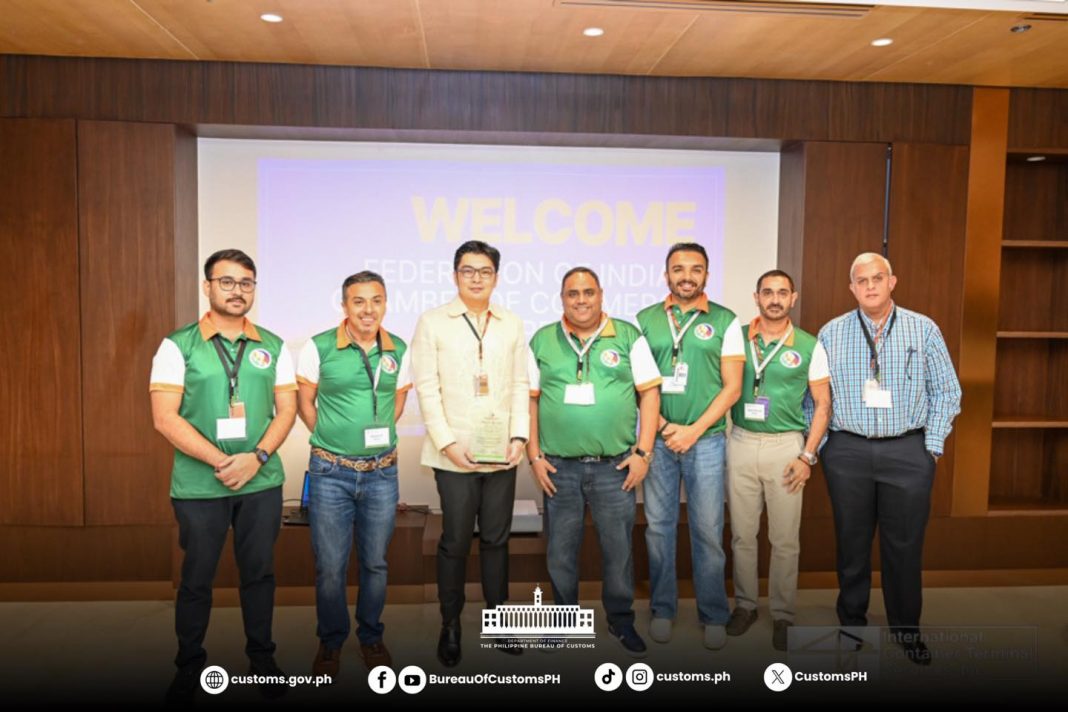
The Manila International Container Port (BOC-MICP) reinforced its commitment to seamless trade facilitation by participating in the “Gateway to Trade: Customs Dialogue and Exclusive ICTSI North Port Tour” held on April 20, 2026.
The industry-led initiative was organized by International Container Terminal Services, Inc. (ICTSI) in collaboration with Catalyst Logistics, Inc. and Sevilla Brokerage, Inc. The event brought together key stakeholders from customs, logistics, and trade to align operational processes and identify practical ways to improve cargo movement.
In his opening remarks, District Collector Felipe Geoffrey K. De Vera IV highlighted that the primary hurdles in modern trade are often logistical silos rather than a lack of effort.
“Trade does not slow down because people are not working. It slows down when people are not working together,” Collector De Vera emphasized. “Engagements like this are vital because they bridge the gap between individual effort and collective efficiency.”
He further pointed out that minor administrative redundancies—often dismissed as “just one more document”—create a cumulative “drag” on the supply chain. By reducing the frequency of follow-ups and clarifications, the Port aims to significantly improve turnaround times for all stakeholders.
The dialogue featured prominent industry leaders, including:
-
Christian Lozano, CEO of ICTSI
-
Representatives from Catalyst Logistics Inc. and Sevilla Brokerage Incorporated
-
Delegates from the Federation of Indian Chambers of Commerce (Phil), Inc.
Discussions centered on bridging operational gaps and streamlining the interface between Bureau of Customs (BOC) protocols and private sector logistics. The participants concluded that meaningful reform is found in addressing the “everyday gaps”—the small, recurring inefficiencies that, when resolved collectively, result in a tangible boost to trade speed and ease of doing business.
Under the guidance of Customs Commissioner Ariel F. Nepomuceno, the MICP continues to prioritize a responsive and coordinated approach to trade. By fostering open communication with industry partners, the Port ensures that its core mandates—lawful revenue collection, border protection, and trade facilitation—are met with modern, efficient precision.
Through these sustained partnerships, the Manila International Container Port is not just moving cargo; it is moving the Philippine economy forward.

