


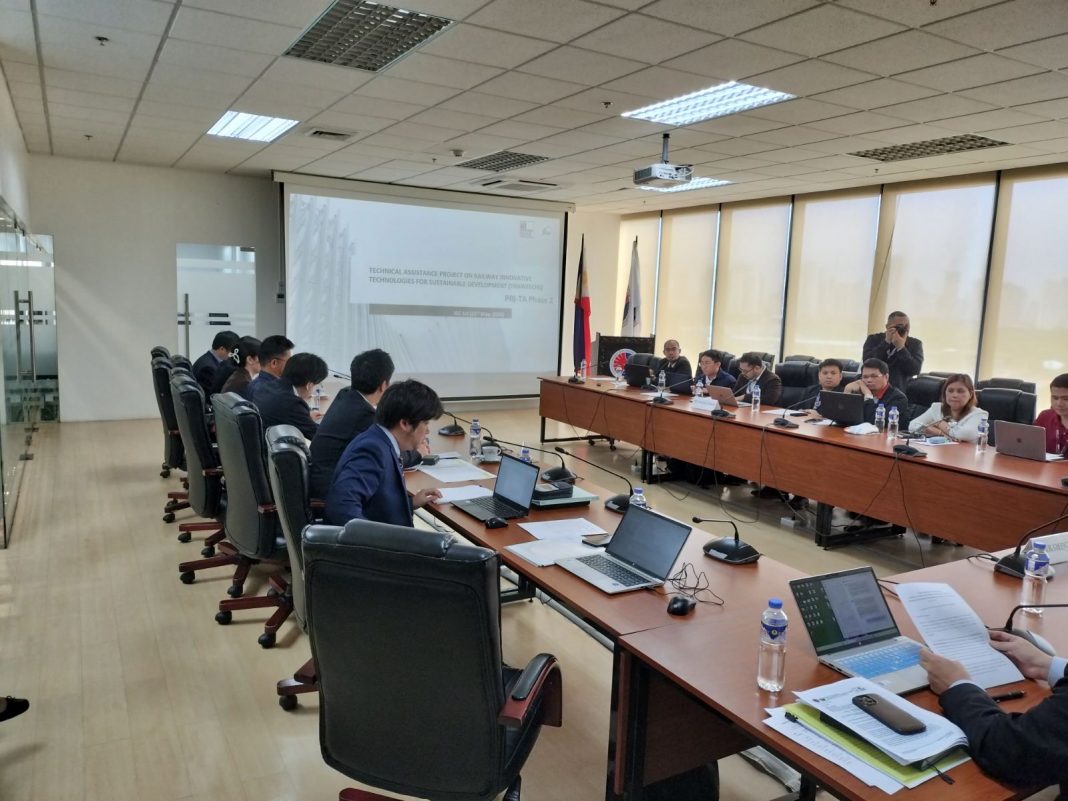
The Japan International Cooperation Agency (ICA) and the Philippine Railways Institute (PRI) have convened the 1st Joint Coordination Committee (JCC) meeting for a landmark technical initiative: the Technical Cooperation Project (TCP) on Railway Innovative Technologies for Sustainable Development, colloquially known as the “TRAINTECHS Project.”
This strategic partnership aims to significantly strengthen the PRI’s institutional capacity just as it prepares to inaugurate its state-of-the-art training center this year. Moving into its second phase of cooperation, the project will focus on three key pillars: delivering new and modernized training courses, integrating digital transformation (DX) training, and providing specialized capacity development opportunities in Japan for the PRI’s core instructional staff.
During the inaugural meeting, officials from JICA, PRI, the Department of Transportation (DOTr), and the JICA Expert Team aligned on the project’s strict milestones, outputs, and future activities.
Representing the DOTr, Undersecretaries Timothy John “TJ” Batan and Anneli Lontoc provided critical updates on the rapidly evolving workforce and safety needs of the Philippine urban railway sector.
“For this project, we have set an overall goal for the safe operation of urban railways and its contribution to sustainable economic development,” said MORISHIMA Takanori, JICA Senior Representative. “JICA is confident that with the strong institutional foundation we have built, we will realize the project goals and outcomes.”
PRI Executive Director and DOTr Undersecretary Anneli Lontoc emphasized the long-term vision of the initiative. “We enter Phase 2 with a renewed commitment and a more ambitious vision—to transform PRI into not just a training institution but a sustainable center of excellence, innovation, and safety culture in railway development.”
As the Philippines aggressively expands its mass transit network, JICA remains committed to pairing hardware infrastructure investments with robust technical cooperation. This twin-track approach ensures that the country’s multi-billion-peso railway systems are backed by high-quality, safe, and sustainable operational expertise for generations to come.

