


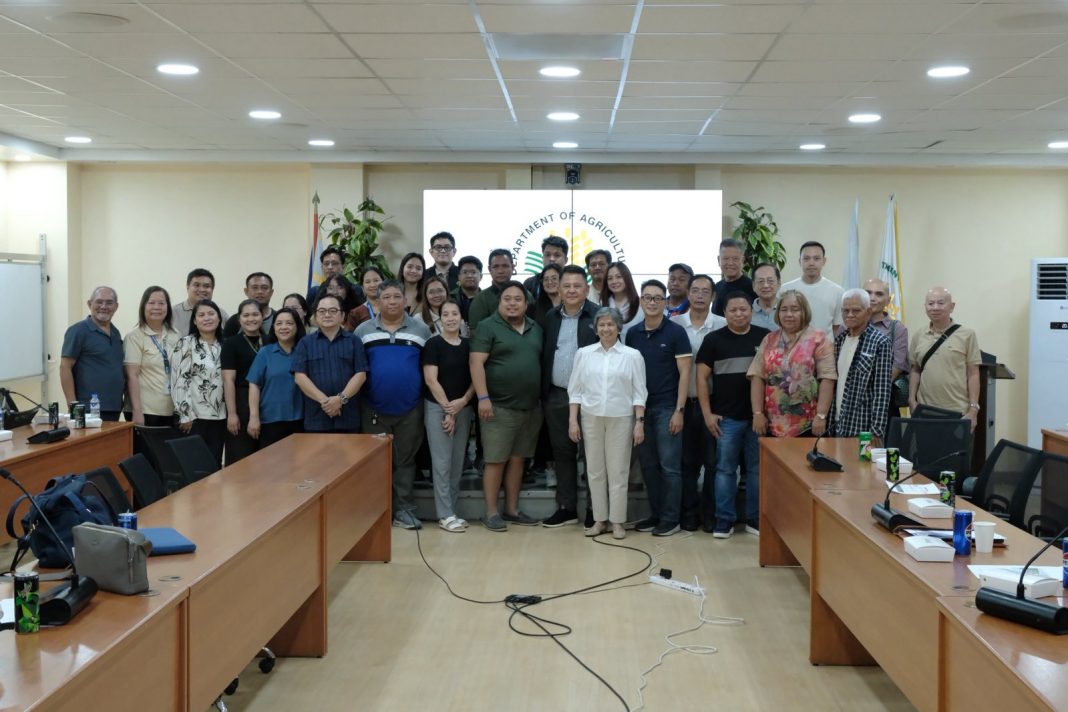
The Department of Agriculture (DA) is advocating a whole-of-government approach to ensure Laguna Lake remains productive for fisherfolk and fishpen operators, sustainable as a critical water source for Metro Manila, reliable for food security, and effective as part of the region’s flood control system.
After a series of consultations with fisherfolk and aquaculture operators around Laguna Lake, Agriculture Secretary Francisco P. Tiu Laurel Jr. and Undersecretary for Fisheries Drusila Esther Bayate underscored the need for stronger coordination among the Department of Agriculture, Department of Environment and Natural Resources (DENR), Laguna Lake Development Authority (LLDA), Philippine Coast Guard (PCG), Metropolitan Manila Development Authority (MMDA), and water concessionaires.
The goal, they said, is to balance fisheries production, environmental sustainability, water security, and flood mitigation through a unified management strategy for the country’s largest freshwater lake.
“Laguna Lake must continue serving multiple national priorities at the same time,” Bayate said. “We need to sustain the lake’s productivity to protect livelihoods, secure fish supply, and maintain a dependable water source for Metro Manila.”
Bayate noted that Laguna Lake has historically supplied about 40 percent of Metro Manila’s bangus and tilapia requirements, making it a vital food production area whose decline could directly affect fish availability and prices in the capital.
“Government has long recognized the need to protect Laguna Lake’s fisheries sector because any decline in production has immediate implications for food security,” she added.
A major issue raised during the consultations was the operation of the Manggahan and Napindan floodgates during the dry season.
Fisherfolk and fishpen operators have proposed keeping the gates open throughout the summer months to improve water circulation, increase dissolved oxygen levels, enhance water quality, and reduce the risk of fish kills and stunted growth.
Secretary Tiu Laurel brought the proposal to MMDA Chairman Atty. Romando Artes. Following discussions, the agencies agreed to keep the floodgates open until the official onset of the rainy season to improve water exchange while preserving Metro Manila’s flood protection requirements.
The MMDA is also considering long-term options for dry-season floodgate operations, although closures will remain necessary once heavy rains begin.
To support science-based policymaking, the DA’s Bureau of Fisheries and Aquatic Resources (BFAR) will expand water profiling activities and conduct year-round monitoring of algal blooms, plankton populations, dissolved oxygen levels, and other key water-quality indicators.
Bayate also cited the support of PCG Commandant Admiral Ronnie Gil Gavan, who committed to improving services for fisherfolk and aquaculture operators.
The Coast Guard plans to establish additional stations closer to key navigation routes to facilitate the faster issuance of dispatch permits and safe-passage clearances.
Additional detachments will also be deployed along routes commonly used by fishing vessels and boats transporting fingerlings into the lake.
Efficient transport is crucial for aquaculture operations, Bayate said, as prolonged travel can stress fingerlings before they are stocked in fishpens, affecting survival rates and productivity.
Tiu Laurel emphasized that Laguna Lake’s long-term sustainability will depend on sustained cooperation among all stakeholders.
“The challenge is no longer identifying the issues,” he said. “The challenge is ensuring that all agencies work together so Laguna Lake can continue supporting food production, water security, environmental sustainability, and flood management for future generations.”

