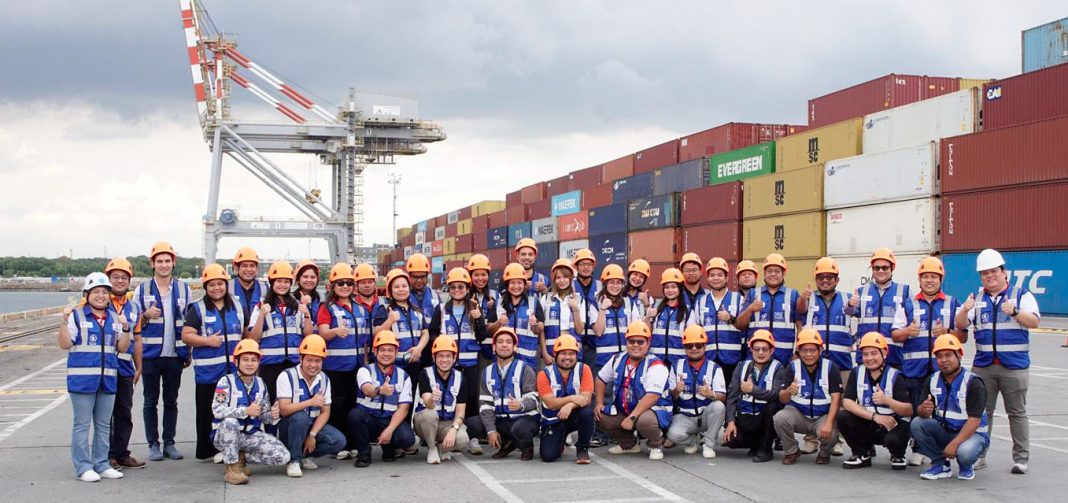
Batangas Integrated Port (BIP), operated by Asian Terminals Inc. (ATI), is now the world’s first ‘READY Port’, establishing a new benchmark for disaster preparedness and humanitarian logistics, Global trade enabler DP World announced today. BIP is the local partner of DP World in the Philippines.
READY Port (Resilience, Emergency Action, and Disaster-ready) is a global capacity-strengthening program advocated by the UN Logistics Cluster, established to strengthen disaster readiness of ports to enable humanitarian resiliency of countries during emergencies.
As climate-related disasters and supply chain disruptions increase globally, the READY Port framework offers a scalable model for enhancing the resilience of critical logistics infrastructure. The Philippines was selected as the pilot location for the initiative due to its exposure to climate-related risks and natural disasters. Bringing together key public and private sector stakeholders, as well as local and international humanitarian organizations, READY Port establishes a coordinated and resilient emergency response ecosystem anchored on seaports and logistics hubs.
The designation follows the completion of a three-day, multi-stakeholder READY Port workshop at BIP in partnership with the World Food Programme (WFP) Philippines, where government agencies, humanitarian organizations and private-sector partners assessed emergency response capabilities, reviewed operational protocols and participated in scenario-based exercises to strengthen crisis preparedness.
BIP serves as a critical gateway for the Philippines, offering comprehensive capabilities for international and domestic cargoes, rolling cargoes, passenger movements, and direct connectivity to nearby islands and key destinations across the Visayas and Mindanao.
Insights from the workshop have been consolidated into a Port Readiness Action Plan to help strengthen strategic frameworks for future implementation of capacity-building initiatives across ports in the Philippines and around the world.
Glen Hilton, DP World Asia Pacific CEO/Managing Director and ATI Chairman said BIP’s collaboration with WFP and partners is a commitment to building resilient port infrastructure that serves not only as gateways for trade, but also as vital lifelines for communities during times of crisis.
“By leveraging DP World’s integrated ports and logistics capabilities through ATI, our local partner in the Philippines, and across our global network, we are strengthening preparedness and ensuring that humanitarian assistance can move swiftly and efficiently in support of disaster response, national recovery efforts, and community resilience,” said Hilton.
Manuel Cabochan III, Department of Transportation Assistant Secretary for Special Concerns, noted that disaster preparedness is not only the responsibility of one government agency alone. “It requires a whole-of-government and whole-of-society approach where national agencies, port operators, logistics providers, humanitarian organizations, local government units, and development partners work together towards a common goal,” he said.
This underscores the importance of READY Port as they prepared through planning, capacity building, and information sharing, and ultimately develop strong mechanisms to ensure continuity of ports and logistics operations during emergencies. “We commend the World Food Programme, DP World, and the Logistics Cluster for pioneering this initiative,” Cabochan said.
For his part, Joao Dos Santos Merencio, World Food Programme Head of Supply Chain in the Philippines, said, WFP is committed to supporting this initiative by fostering coordination, sharing humanitarian experience, and working closely with all stakeholders to align port readiness efforts with national disaster preparedness frameworks.
“The READY Port initiative brings together port authorities, national government agencies, the private sector, and the humanitarian community as one cohesive support unit. This framework helps ensure that ports continue to operate effectively under crisis conditions while prioritizing humanitarian cargoes when it matters most,” he said.