


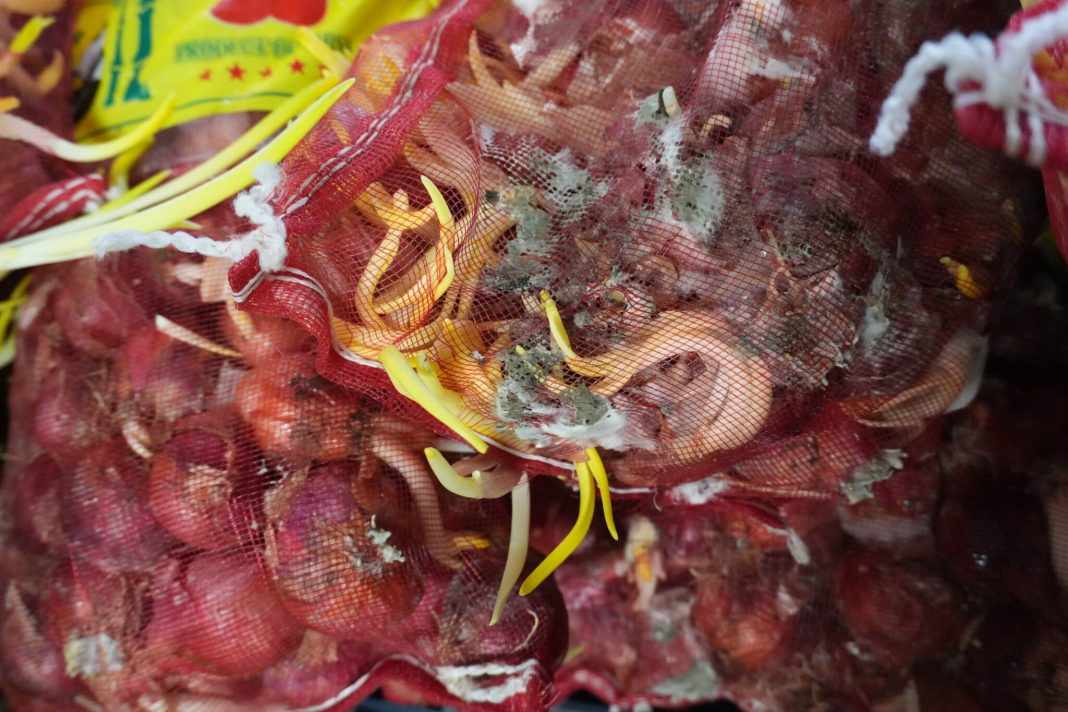
A massive shipment of imported onions left abandoned at the Manila International Container Port (MICP) is now set for disposal after laboratory tests confirmed the cargo poses health risks, intensifying government action against deteriorating perishable imports clogging port facilities.
The Department of Agriculture’s Bureau of Plant Industry (BPI) recommended the destruction of the shipment following a joint inspection with the Bureau of Customs, which found the consignment already in an advanced state of decay.
The shipment consists of 26 twenty-foot containers of red onions from China, totaling 72,215 bags or about 650 metric tons—roughly equivalent to a day’s national onion consumption. Valued at approximately P86.7 million, the cargo also carried an estimated P9.7 million in unpaid duties and taxes.
According to BPI findings, the onions—part of imports that arrived between December 2025 and January 2026—had been abandoned by the importer at the port for reasons still undetermined. Months of exposure and lack of proper handling led to widespread spoilage, including sprouting, rotting, fungal infestation, discoloration, and strong foul odor.
Authorities said laboratory tests confirmed that the shipment is no longer safe for human consumption, reinforcing the recommendation for immediate destruction.
Agriculture Secretary Francisco P. Tiu Laurel Jr. backed the move, stressing that public health considerations must take priority over the financial value of the stranded cargo.
“The results of the laboratory analysis clearly show that the shipment poses serious health risks and is no longer fit for human consumption. We cannot allow these to enter the market,” Tiu Laurel said. “The proper course of action is the immediate destruction of the entire consignment.”
The BPI said the condition of the onions also presents logistical and biosecurity concerns, as long-stored perishables occupy valuable port space while posing risks of contamination and pest infestation.
Officials noted that photo and video documentation will suffice for evidentiary purposes given the extent of spoilage, making further testing unnecessary.
The case underscores a recurring issue in port operations: abandoned food imports that quickly deteriorate into environmental and logistical liabilities, forcing authorities to balance trade facilitation with food safety and infrastructure efficiency.

