


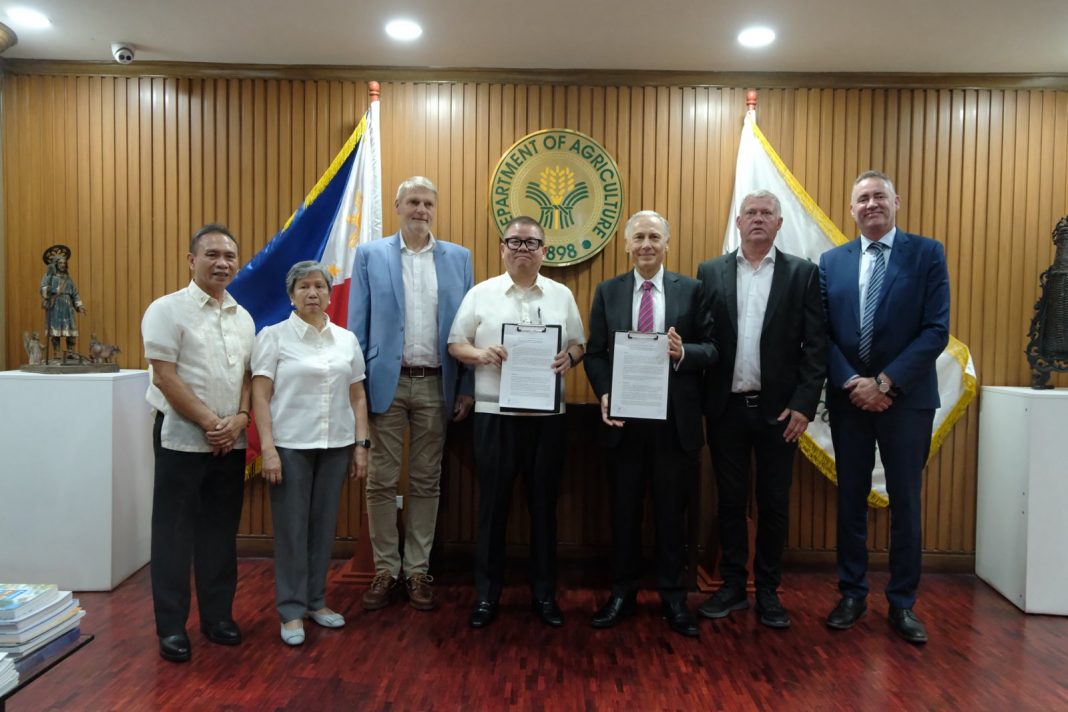
The Philippines and Denmark have launched a pilot project aimed at modernizing the country’s offshore fishing industry, introducing advanced Danish midwater trawl technology to improve fish production, strengthen scientific fisheries management, and promote sustainable harvesting practices.
The Partnership Agreement, signed by the Department of Agriculture’s Bureau of Fisheries and Aquatic Resources (BFAR) and the Danish Fishing Technology Cluster, marks a new phase in bilateral cooperation as the two countries celebrate 80 years of diplomatic relations.
The initiative builds on a 2019 memorandum of understanding between BFAR and the Danish Fishing Technology Cluster, supported by the Danish Embassy in Manila. After years of technical consultations, both sides are now moving forward with the testing and evaluation of Danish pelagic midwater trawl systems and related fisheries technologies in Philippine waters.
Agriculture Secretary Francisco P. Tiu Laurel Jr. said the initiative is designed to improve both productivity and sustainability in the fisheries sector.
“This project is about applying technology and science to unlock the full potential of our fisheries resources. We want to improve fish production, strengthen food security, and ensure that growth in the sector is supported by responsible and sustainable resource management,” he said.
The project is expected to support efforts to increase the efficiency of pelagic fishing operations, helping boost domestic fish supply as the government seeks to strengthen food security and meet growing demand for affordable protein.
Sustainability is another key pillar of the partnership. The initiative promotes fishing methods designed to reduce bycatch, minimize impacts on marine habitats, improve fuel efficiency, lower carbon emissions, and support responsible fisheries management.
A major component of the project involves test-fishing and survey missions, including hydro-acoustic assessments and biomass mapping activities in the West and East Philippine Seas, including the Benham Rise, subject to Philippine laws and regulatory approvals. The data generated will help fisheries managers better understand fish stock distribution, assess offshore resources, and evaluate fishing methodologies that could support future policy decisions.
Beyond technology transfer, the Danish initiative highlights the growing role of innovation and data-driven management in the blue economy. For the Philippines, the pilot serves as a testing ground for modern fishing practices that could improve productivity, strengthen resource stewardship, and help secure the long-term sustainability of one of the country’s most important food-producing sectors.

