


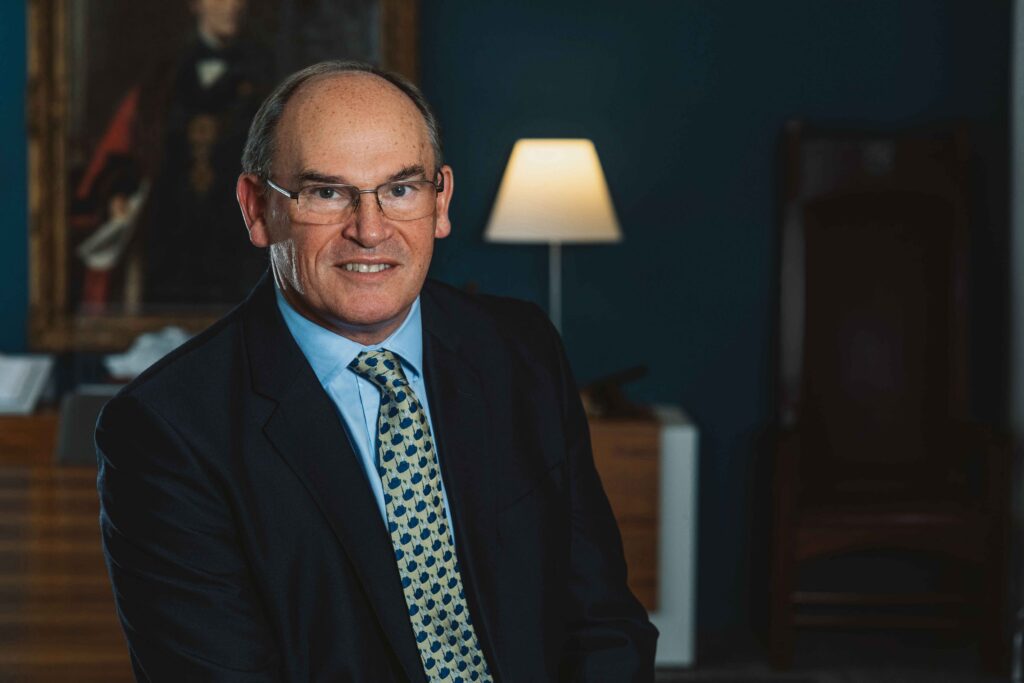
The International Chamber of Shipping (ICS) has officially welcomed its new Chairman, John Denholm CBE. Stepping into the role during a period of profound geopolitical and environmental transformation, Denholm has outlined a clear strategic vision centered on industry consensus, accelerated decarbonization, and an unwavering commitment to seafarer welfare.
In his inaugural address, Denholm emphasized that his primary objective is to cultivate a unified voice for the global maritime sector, ensuring that governments worldwide hear a cohesive, practical industry position on critical issues.
Denholm takes the helm at a time when global supply chains face severe headwinds, particularly due to ongoing instability in the Middle East. He identified immediate geopolitical threats as a key priority for the ICS.
-
Seafarer Safety First: Protecting crew members exposed to regional conflicts remains the industry’s most urgent duty.
-
Freedom of Navigation: Reaffirming and defending the fundamental right to free navigation, which underpins global trade.
-
Rules-Based Order: Championing the vital role of the International Maritime Organization (IMO) in maintaining international shipping standards. “Too often in shipping, we focus on the small areas where we disagree rather than the much larger areas where we agree,” Denholm noted. “I see my role as a coordinator, helping bring different perspectives together so that governments hear a common industry position.”
Addressing the green transition, Denholm acknowledged that while alignment on the need for net-zero emissions is stronger than ever, practical execution remains complex. He highlighted a “chicken-and-egg” dilemma regarding alternative fuels: shipowners hesitate to invest in new vessels without guaranteed fuel availability, while fuel suppliers require market certainty to scale production.
To bridge this gap, Denholm pointed to key operational shifts:
-
Liner Companies as First Movers: Operating on fixed schedules, liner companies are uniquely positioned to spearhead early adoption and establish green corridors at major bunkering hubs.
-
Transitional Fuels: Utilizing available options like LNG and biofuels as vital stepping stones toward scalable, long-term net-zero solutions.
-
Cross-Ecosystem Collaboration: Building binding, long-term partnerships between shipowners, ports, fuel providers, and cargo owners to distribute transition risks and costs equitably.
The new Chairman rejected the notion that maritime careers have lost their luster, arguing instead that the industry must modernize its marketing, particularly in Western Europe. As shipping becomes increasingly digital, the ICS aims to frame maritime roles as highly technical, aspirational careers both at sea and ashore.
When addressing the rise of artificial intelligence, Denholm dismissed the idea of entirely crewless fleets:
-
Augmentation Over Replacement: AI is already optimizing fuel consumption, predicting maintenance, and streamlining voyage data, but human judgment remains irreplaceable.
-
The Future Bridge: Technology will serve to support, not replace, skilled seafarers, making the profession safer and more efficient.
Reflecting on how sudden disruptions like piracy and the COVID-19 pandemic reshaped his previous leadership tenures at BIMCO and the UK Chamber of Shipping, Denholm emphasized that agility will define his chairmanship. Ultimately, he intends to judge his success by how well the industry supports its workforce.
“Without seafarers, we have no industry. Their safety, welfare, and fair treatment must remain at the center of everything we do. If we can continue to champion their interests while helping the industry navigate change, that would be a contribution worth being remembered for.”

