


Citi, one of the world’s leading banks, said the Philippines is expected to continue its economic growth despite political noise, as the domestic economy has increasingly become detached from politics. This, the bank said, has made foreign investors even more optimistic about the country than many Filipinos on the ground.
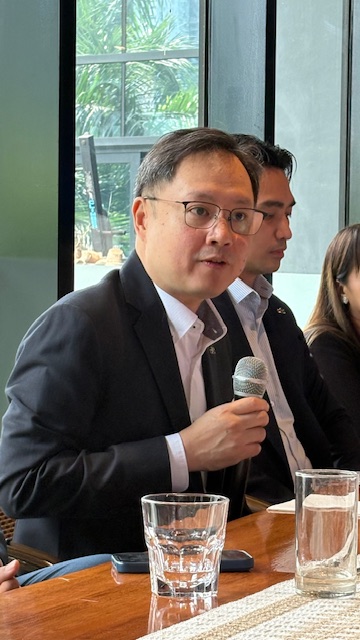
“We are not too fussed about politics because politics, that’s human nature. And we all understand politics from that perspective. This is about individuals playing politics. They’re an industry in itself. But politics has no place in the economy, because politics does not know how to run any economy,” said Paul Favila, Citi Philippines Chief Executive Officer and Banking Head, during a media roundtable.
Favila said the country’s ability to expose and address corruption while keeping the economy on track has strengthened investor confidence.
“We finally figured out how to separate the economy from the politics,” he said.
As an example, Favila cited the Philippines’ recent sovereign bond offering. In April, Citi’s headquarters in New York hosted the Philippine economic team for the country’s bond issuance. Strong investor demand prompted the government to increase the offering to USD2.5 billion from the original USD2 billion.
During a recent Philippine investor roundtable at Citi’s headquarters in New York City, Finance Secretary Frederick Go, National Treasurer Sharon Almanza, Bangko Sentral ng Pilipinas Deputy Governor Zeno Abenoja, Philippine Consul General Senen Mangalile, and other senior officials presented the country’s economic outlook and investment opportunities.
According to Favila, one of the key takeaways from investors was the Philippines’ consistent effort to communicate its economic progress to the international community.
“I guess, not very well appreciated, because we don’t get to see it from inside. But the Philippines for the last two, maybe three decades, has consistently reported to the rest of the world its own progress and its own conditions,” he said.
In summary, Favila said, “The Philippines is a scorecard for itself… This is not something that is common amongst sovereigns. And, which is why the investor reception, notwithstanding the fact that the world was in disarray, was very strong. What the external view on the country is actually a lot more optimistic sometimes than the view from the ground,” he said.
Favila said the country’s biggest challenges today are driven less by domestic politics than by external factors affecting key sectors of the economy.
“If you take that away, then maybe it would have made a lot more progress,” he said.
“I challenge anyone here to compare ourselves 30 years ago to where we are, and no one’s going to say that this country has not progressed. We just take a look outside, this did not exist 30 years ago. And yet, we are a model that everyone outside would say, I feel like I’m in Singapore (referencing Bonifacio Global City). That is the ability to deliver that kind of progress. And we just need to be able to recognize where this can, I guess, support where that is actually happening,” he said.
Economic indicators are good. The country’s merchandise exports grew by 7.6 percent year-on-year to USD7.87 billion in May this year, marking a 17-month growth streak. Gross domestic product is forecast to grow within the 3.5 percent-4.5 percent range this year. The World Bank has just upgraded the Philippines to an upper-middle-income country status.
Politically, Favila said the Philippines is no different from many other countries, particularly in Asia. He cited India as an example of an economy that has continued to succeed despite political challenges.
However, he noted that “Politics is politics, lives in its own realm, if you will. The one thing that makes the Philippines different is that your politics actually seeps into your economy.”
Favila also said that while the Philippines has openly exposed corruption, the issue is not unique to the country.
“I think the objective for us, as a nation, is to limit corruption, so that more of the resources actually go into productive things,” he said.
125th Year
Citi is set to celebrate its 125th year of operations in the Philippines next year, making it the oldest American corporation operating in the country.
For nearly 125 years, Citi has supported clients in both the public and private sectors in the Philippines, partnering with them through periods of economic transformation, expansion, and innovation. The bank reiterated its commitment to helping clients grow and connecting them to opportunities across international markets.
Citi also received recognition from Euromoney as the Philippines’ Best Digital Bank for Large Corporates, underscoring its continued investments in technology, digital capabilities, and client solutions.
Globally, Citi’s 2026 Investor Day showcased the progress the firm has made in simplifying and modernizing its organization, strengthening execution, and deepening connectivity across its businesses. Citi recently reported its strongest quarterly revenue performance in a decade and outlined a clear path toward stronger and more sustainable returns. The firm said its global network and interconnected businesses are generating higher-quality revenues while creating greater value for clients around the world.
“The progress Citi is delivering today reflects years of purposeful investment and consistent execution,” said Favila.
“That momentum is reflected in our second quarter results, which marked Citi’s best quarterly revenue in a decade, with revenues up 14 percent and double-digit growth across the firm and four of Citi’s five core businesses. We’ve built stronger capabilities, deepened our client relationships, and are seeing the impact of those efforts in the momentum across our franchise. Leveraging the strength of our global network and institutional banking platform, we remain committed to delivering value for our clients and supporting the Philippines’ continued growth and development.”

