Mitsubishi Motors Philippines Corp. (MMPC) is planning to make the Philippines a production hub for the export of its proposed locally manufactured hybrid electric vehicle (HEV) model, which it intends to enroll under the Electric Vehicle Incentive Strategy (EVIS) Program.
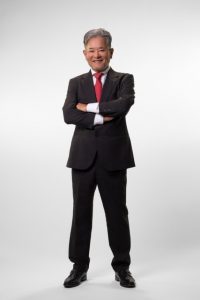
MMPC Chairman Noriaki Hirakata raised the opportunity to export the hybrid EV model to be produced under the EVIS program, for which the company is investing PHP7 billion.
“We are seeking an export opportunity for this new hybrid EV because it’s good for the Philippines. By exporting the vehicle from the Philippines, we can improve the trade balance of the nation,” said Hirakata, adding that the export market would not be limited to the ASEAN region but anywhere in the world, including the Middle East, Latin America, and Africa.
“No limitation as long as safety and emission regulations permit, we can export ‘Made in the Philippines’ anywhere,” he said.
If the project pushes through, this will be MMPC’s first export and the first EV export from the Philippines. The company had shelved earlier plans to export its locally manufactured L-300 due to competitiveness issues. “Now, we are very competitive,” he added.
Hirakata declined to confirm which HEV model MMPC plans to enroll under the EVIS Program but said it would be a family car. Mitsubishi Motors Corp. (MMC) is producing the X-Force HEV model in Indonesia. “There is an opportunity that we can produce X-Force both in Indonesia and the Philippines,” he said.
Timeline
The Board of Investments, which administers the EVIS program, has yet to complete the implementing rules and regulations (IRR) of the program under Administrative Order 121. Once completed, MMPC and other interested manufacturers can apply.
Once approved, Hirakata said the company would conduct a pilot test in the middle of next year, followed by actual production a year later, or by the middle of 2028. The market launch would follow soon after. Hirakata said the company aims to capture 25 percent of the EV market.
As an EVIS participant, MMPC said it will produce the EV battery for its own HEV model. However, Hirakata clarified the company would only undertake battery pack assembly, while the battery itself would be produced outside the Philippines. The battery components would then be brought to the Philippines for final assembly.
Hirakata assured that the company would try to localize parts and components as much as possible through a step-by-step process.
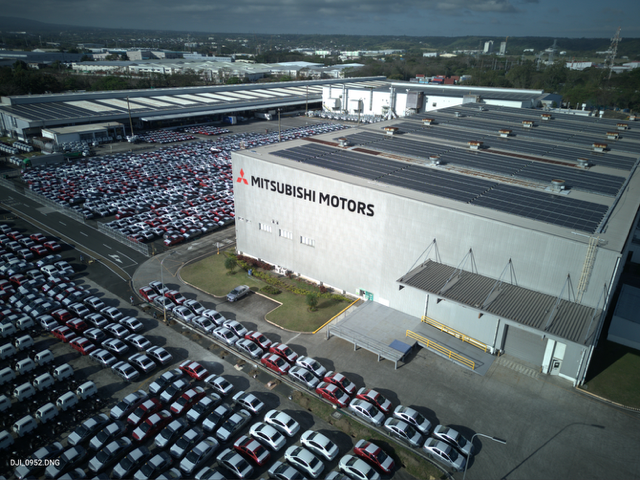
MMPC’s 23-hectare manufacturing complex in Sta. Rosa, Laguna has already reached 90 percent of its total 50,000-unit capacity. The next target is to add another 25,000 units of capacity, he said.
Focus on the Philippines
Hirakata also shared MMC’s focus on the Philippines, citing the country’s untapped growth potential. Within the MMC group, the Philippines is its number one market in ASEAN and second globally. The company’s leadership in Japan has instructed it to make Mitsubishi the number one brand in ASEAN in terms of both quality and performance.
He also shared an observation from the company’s headquarters regarding the country’s relatively slow growth in vehicle sales despite being an emerging market with a growing population. Other countries are recording higher growth of 7-8 percent.
MMPC is also targeting 5-6 percent sales growth this year. The Mirage accounts for 40 percent of MMPC’s total sales.
“That’s why the headquarters is paying huge attention to this country,” he added.