


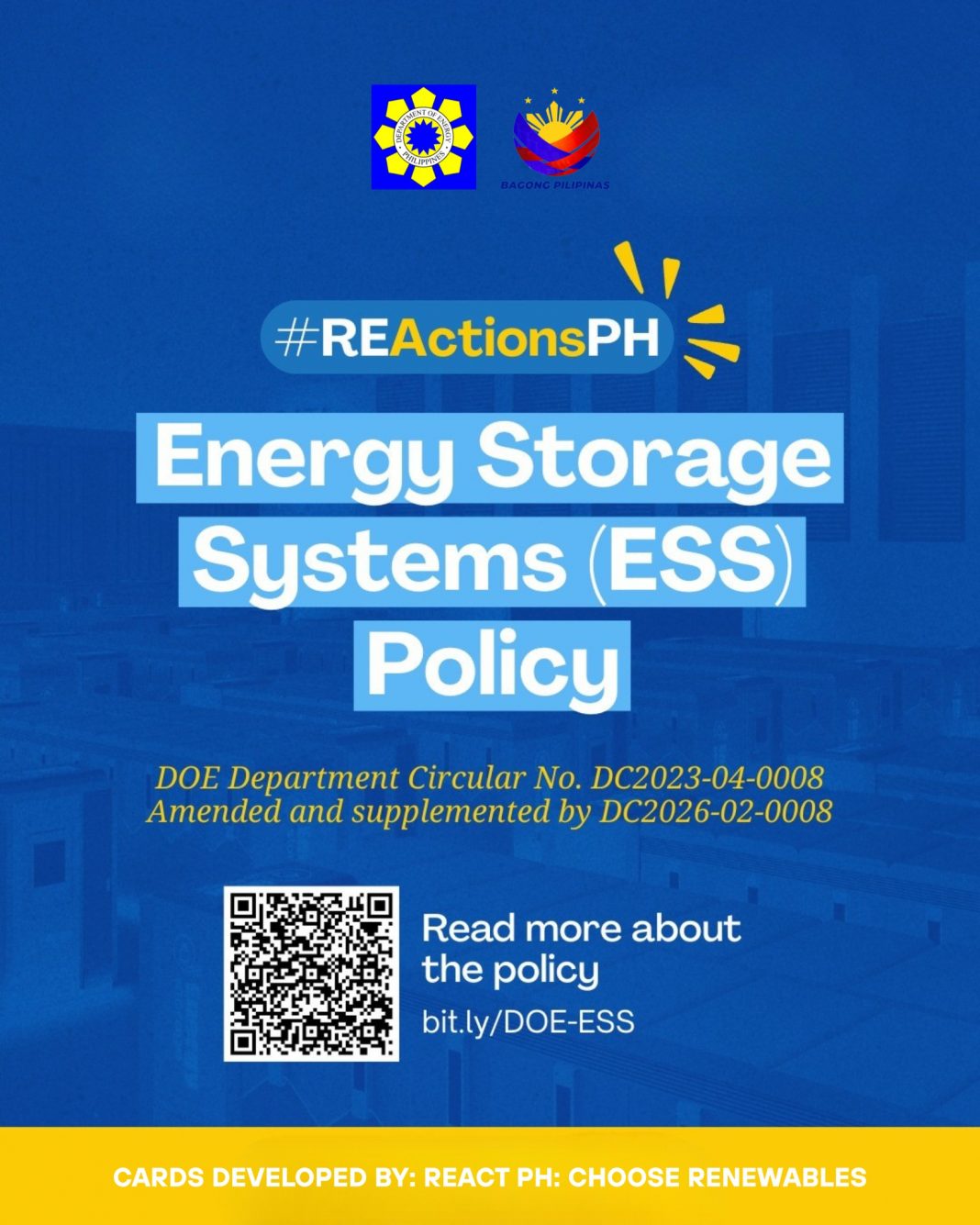
Marking a pivotal shift in the nation’s transition toward a sustainable energy future, the Department of Energy (DOE) has officially released Department Circular No. DC2026-02-0008.
This comprehensive policy framework is designed to catalyze the integration of Energy Storage Systems (ESS) into the national grid, addressing the intermittency of renewable energy and fortifying the country’s long-term energy security.
As the Philippines aggressively pursues its target of a 35% renewable energy share by 2030 and 50% by 2040, the challenge of “variable” power sources like solar and wind has become more pronounced.
Circular DC2026-02-0008 provides the regulatory clarity needed to deploy ESS technologies—such as battery energy storage (BESS), compressed air, and advanced flywheels—to “smooth out” the supply. By storing excess energy during peak production and releasing it during periods of high demand or low generation, the policy ensures a steady, reliable flow of electricity to Filipino homes and industries.
The new guidelines introduce several critical mechanisms to modernize the power sector:
-
Grid Stability & Ancillary Services: ESS providers are now incentivized to offer “Ancillary Services,” which help manage frequency and voltage fluctuations, preventing blackouts and brownouts.
-
Streamlined Licensing: The circular simplifies the permitting process for ESS developers, reducing bureaucratic hurdles and encouraging both local and foreign investment.
-
Market Integration: It defines the participation of ESS in the Wholesale Electricity Spot Market (WESM), allowing storage operators to trade energy competitively.
-
Energy Security: By reducing reliance on imported fossil fuels for “peaking” power, the Philippines moves closer to true energy independence. “Energy storage is no longer a luxury; it is a necessity for a modern, renewable-heavy grid,” DOE said. “With DC2026-02-0008, we are providing the private sector with a clear roadmap. We aren’t just adding more power; we are adding smarter power. This is a massive leap toward a more resilient and price-stable energy landscape for every Filipino.”

