


Philippine exports to the United Kingdom (UK) are expected to further flourish following enhancements to the Developing Countries Trading Scheme (DCTS), particularly the easing of rules of origin and the introduction of regional accumulation provisions that allow duty-free treatment for exports.
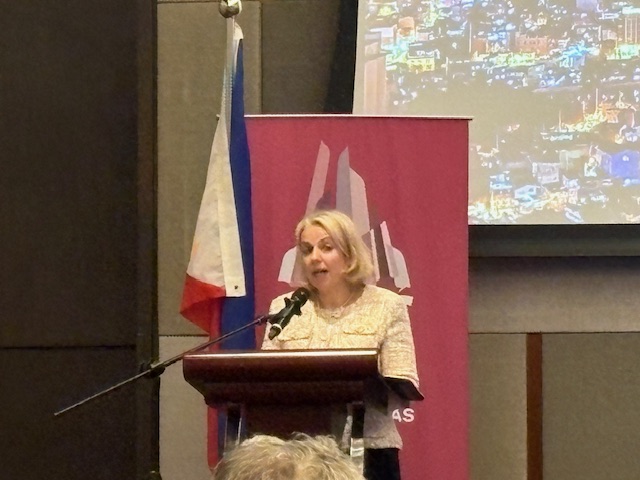
British Ambassador to the Philippines Sarah Hulton told reporters in a chance interview following her keynote address Tuesday at the Foreign Leaders Series of the Makati Business Club that the UK government has introduced several enhancements to the DCTS this year. The scheme reduces tariffs, removes conditions, and simplifies trading rules for 65 developing countries, including the Philippines. It replaced the UK’s previous Generalized System of Preferences (GSP), offering greater privileges to eligible trading partners.
On the improved Asia regional accumulation scheme, the ambassador said DCTS-eligible countries can source inputs from across Asia. This is intended to support inter-regional trade and strengthen supply chain resilience.
The second key enhancement, she said, is the liberalization of rules of origin. For instance, Philippine garment manufacturers are now allowed to source up to 100 percent of their inputs from low- and lower-middle-income countries for further processing, such as printing, bleaching, and dyeing. Processing requirements under this DCTS enhancement have also been reduced.
In her speech, the ambassador said that trade in goods and services by Philippine exporters to the UK continued to grow, reaching £3.2 billion for the whole of 2025—an 8.9 percent increase compared to 2024.
Ambassador Hulton further noted that UK companies continue to see opportunities in the Philippines. “That optimism and confidence is reflected in the depth and breadth of our trading relationship,” she said.
She added that the UK’s Department for Business and Trade, through its Manila Embassy, supports British businesses in investing, expanding, and growing in the Philippines. This, she said, reflects confidence in the domestic economy, which grew by 4.4 percent last year—ranking among the region’s strongest performers despite domestic and global shocks.
“Leading forecasts continue to show that the Philippines is outperforming many peers, and we’re watching the big bold reforms closely, the aim of strengthening governments, safeguarding investment, great credit ratings, and creating a competitive, investor-ready economy,” she said.
The ambassador also emphasized that confidence rests on credibility, noting recent concerns, including flood control and production issues. She added that transparency and strong institutions matter for investor trust.
Despite revised growth expectations, she said the country’s fundamentals—such as demographic strength, reform momentum, and efforts to mobilize private capital in infrastructure and clean energy—continue to point to significant opportunities.

