


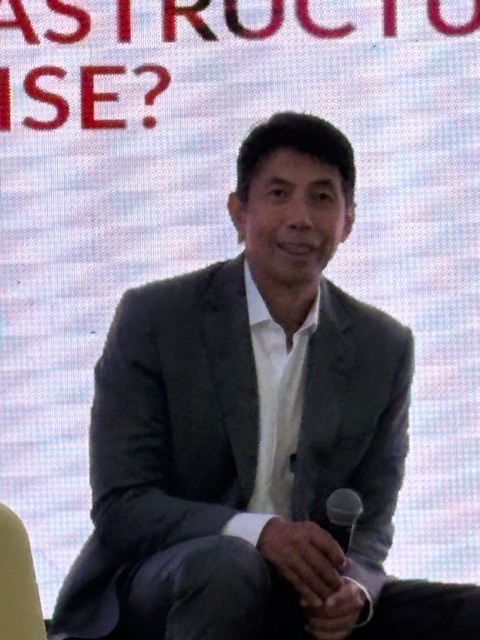
Strong demand for large computing capacities, especially in the age of AI, will push for the acceleration of data center facility completion in the country, even as the Philippines suffers from a talent gap in scaling AI, according to the country’s largest data center builder, ST Telemedia Global Data Centres (Philippines), or STT GDC Philippines.
Carlo Malana, president and CEO of STT GDC Philippines, told reporters following the launch of the company’s “Mind the Gap: Bridging the Philippines’ AI Infrastructure Readiness Divide” report that he has never seen demand for data centers this high.
“This year, I’ve never seen the demand so high. I really think that there is quite a global and regional demand for compute and storage capacities for our servers,” he said, noting that many other countries are falling behind demand.
According to Malana, requests are no longer for 0.5- or one-megawatt capacities, but for three, four, 10, or even 20 megawatts. “If these initial discussions with this level of demand actually becomes reality, you’re gonna see a massive acceleration, not only with us, but I’m sure the all industry,” he added.
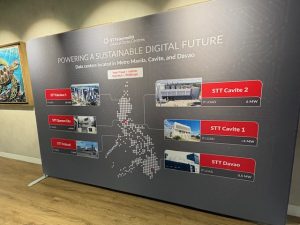
So far, STT has five data center sites in the country located in Fairview I, Quezon City; Makati; Cavite 1; Cavite 2; and STT Davao, with a total IT load of 146 MW dedicated to customers.
The largest is Fairview, with a total capacity of 124 MW, of which 28 MW, or Phase 1, has already been made available in one building. There are three more buildings planned for the succeeding phases. STT GDC Philippines has already invested in a 200-megawatt substation to power the entire facility. A data center is capital intensive operation, with investment estimated at USD15 million per megawatt capacity.
As demand comes in and depending on customer requirements, operations are being rolled out floor by floor. Facilities are not being built all at once because technology is constantly evolving, he said.
Fairview 2
As such, he said the succeeding phases of the Fairview data center campus will look very different from Phases 1 and 2. “So, plans haven’t changed. It’s still looking to service that level of capacity in that campus. It’s just the current timing, and we’re trying to match the market demand with our capacity, and make sure that what the customers require is what we’ll be able to provide,” he added.
For Phase 2, he said it would have a capacity of 32 MW, with four floors of designed data halls, addressing 10x to 20x capacity requests. The company is initially looking to complete the designs later this year. Deployment could take 18 to 24 months before the facility becomes fully operational.
When asked about potential expansion in the Visayas, particularly Cebu, Malana said they are beginning to see opportunities in those areas. “We’re continuing to explore how, where else would the demand look like and where would they want to be located. So, you know, again, as the other metro areas could be developed, I suspect, we’ll be looking at investments in those areas as well,” he said.
Talent
To seize the significant economic potential in the data center space, Malana cited the need to close the talent gap in the country’s digital workforce.
Based on their “Mind the Gap: Bridging the Philippines’ AI Infrastructure Readiness Divide” report, 53 percent of survey respondents said they lack the expertise to manage data center infrastructure, yet only 3 percent prioritize expertise when choosing partners.
The report also showed that 76 percent face a significant workforce gap and lack the people needed to hire, retain or deploy AI talent effectively.
“This gap must be addressed directly,” he urged.
To address this concern, STT GDC Philippines has been relying on international certifications. The Data Center Operators of the Philippines, of which STT GDC Philippines is a founding member, is working to promote the country as a regional destination for data centers.
Part of this effort is ensuring there is enough talent capable of running data centers. Candidates are being screened based on international certifications.
They are also working with the government to accelerate the development of digital skill sets needed for digital infrastructure. “It could be as simple as basic, you know, even the electricians, and the people that service the ACs, all the way to the engineers, the design these systems.”

