The Intellectual Property Office of the Philippines (IPOPHL) and Congress pushing for the passage of key amendments to the Intellectual Property (IP) Code and related legislation, citing the need to modernize the IP framework in step with evolving technological and economic realities as the law marks its 29th anniversary today.
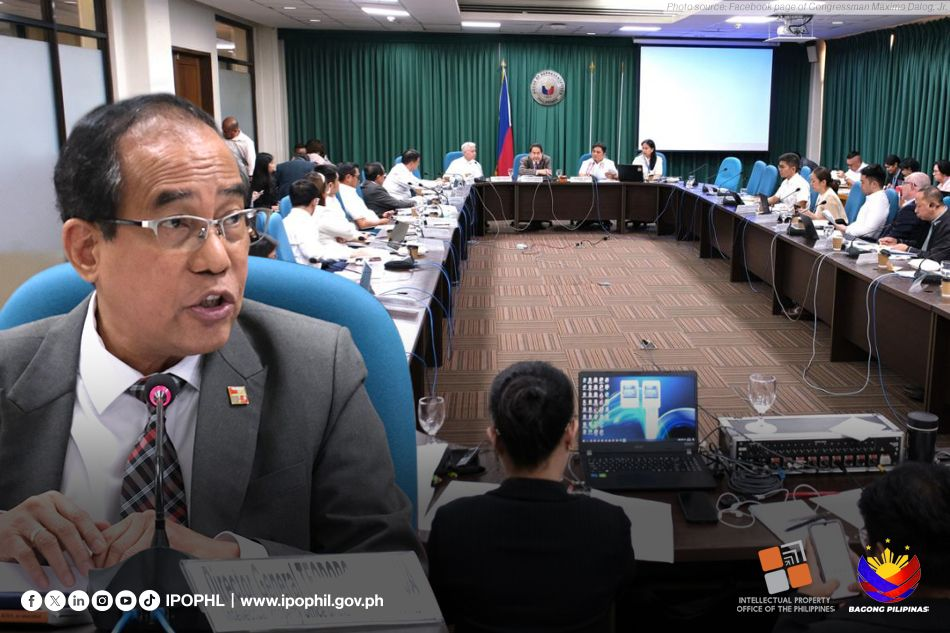
IPOPHL Director General (DG) Teodoro C. Pascua said that while the agency has introduced policy measures to address emerging challenges in IP governance and enforcement, these efforts require legislative support to provide IPOPHL with clearer and stronger authority to effectively carry out its mandate. “It is only natural that the innovation landscape would change significantly over nearly three decades. In particular, the advent of the internet and the rise of a more discerning consumer base now call for corresponding updates to the IP Code and related legislation,” DG Pascua said.
DG Pascua’s statement refers to several IP-related measures currently under consideration in the 20th Congress, including four bills on the governance of Geographical Indications (GIs), three bills expanding site-blocking powers against piracy platforms, and one bill enabling the registration of non-traditional marks. Proposed measures. Of these, the GI bills would create a dedicated legal framework for GI governance, while the others entail amendments to the IP Code itself.
At present, the Philippine sui generis GI framework is governed by IPOPHL Memorandum 2022- 022 (Rules and Regulations on Geographical Indications), which provides limited avenues for enforcement against infringement.
In addition to codifying IPOPHL’s provisions on registration and administration of GIs, the proposed bills also define infringement as an offense against the State’s economic interests and introduce criminal penalties that may be prosecuted independent of stakeholders and other private parties.
Bills seeking to expand IPOPHL’s enforcement powers against distributors of pirated goods and content are also under deliberation, with proposals that would grant the agency direct authority to order the disabling of access to online platforms engaged in copyright infringement.
At present, IPOPHL implements a voluntary site-blocking mechanism under Memorandum Order No. 2023- 025, through which it may request internet service providers (ISPs) to disable public access to infringing content.
The last bill under consideration seeks to expand the registration of non-traditional marks, particularly non-visual identifiers such as sounds and scents. This measure would expand the tools local businesses and creators can leverage to protect their brand identity and prevent the misappropriation of distinctive non-visual elements with commercial value.
“These proposed measures form part of a broader, long-term effort to comprehensively modernize the IP Code and, more broadly, IP governance in the Philippines. They are necessary to keep the legal framework responsive to contemporary challenges and improve protection for innovators, creators and rights holders in an increasingly complex IP landscape,” DG Pascua concluded. Sustaining legislative momentum The proposed reforms have already gained momentum in the House of Representatives, with the approval of the House Committee on Trade and Industry this week on these measures, subject to amendments. DG Pascua emphasized the importance of solidarity in sustaining legislative initiatives that generate long-term benefits to the economy and society. “The advancement of these measures shows how government institutions can work together for the greater good of creating more opportunities in the present and the future of the ordinary but creative and innovative Filipino,” he added. The IP Code has undergone a few targeted amendments over the years.
In 2001, Republic Act No. 9150 established a legal framework to protect the layout-designs or topographies of integrated circuits. In 2008, Republic Act No. 9502, or the Universally Accessible and Cheaper and Quality Medicines Act, amended key provisions primarily to improve access to affordable medicines while balancing IP protection. In 2013, Republic Act No. 10372 introduced the most extensive set of amendments to date. The act marked a significant expansion of the law through the creation of the Bureau of Copyright and Related Rights, the introduction of more robust provisions on copyright enforcement and infringement and the establishment of requirements for adopting intellectual property policies in schools and universities.